Search
[give_form id="19690"]

Three Generations Of Incontinence

Sometimes it’s hard to open up with others about what’s happening with our health. But doing so can help you gain valuable insights into your background and may help you take preventative action to avoid some conditions. Read this story about the importance of sharing your health history and the impact it can make on the entire family.

Growing up in a very conservative family in the 20’s, my Grandmother learned at an early age how to “act properly”. She was a lady, for sure, always looking immaculate, with great manners and a strong sense of pride. She was a private person – never sharing too much and kept any troubles or personal concerns to herself. She passed these traits along to my own mother and then, by default, on to me.  What none of us knew, until recently, is that while acting ladylike is well and good in many cases, keeping things inside can sometimes cause rippling effects throughout generations, especially as it relates to health concerns.

You see, we all suffer from bladder leakage. My Grandmother gave birth to three children in her younger years, and as she inched toward middle age, she began experiencing the symptoms of stress urinary incontinence, causing her to leak urine when extra “stress” (coughing, laughing, sneezing) is placed on the bladder.

For her, this was simply something that she had to live with. She would never dream of talking to anyone about it, especially her doctor. It just became a part of who she was and she managed as well as she could on her own, in silence.

My mother suffered a similar fate, dealing with her bladder leakage in much the same way as my Grandmother did for all those years. It wasn’t until I started experiencing symptoms a few years after the birth of my second child that I ever knew it was something that had plagued generations of my family.

I was on the phone with my mom when, after a particularly intense sneezing fit, had to excuse myself to use the restroom. When I got back to the phone, my mother very delicately asked me if everything was ok. And though I had never spoken with her candidly about this before, I suddenly felt a need to know if she had also experienced the problem. I asked her very calmly if she had ever had “issues” holding her bladder, and suddenly it was if the flood gates had opened – she shared her struggles over the years, and also her suspicion that her own mother had experienced the same things. We decided to ask my Grandmother at our next monthly visit and finally, the three of us sat down and spoke frankly about this very common problem.

What I learned shocked me, but also sounded vaguely familiar. My Grandmother had never spoken to anyone about her issue – not even once. She purchased incontinence supplies as discreetly as she could and never even told my Grandfather that she was experiencing problems (although I can’t imagine that he didn’t know).  My mother, at least, did tell her doctor, but after a trying, and failing, on one medication, decided to just try to manage it herself and live with the issue.

I had only just been experiencing light leaks for the past few months, but after hearing their stories and learning about the years of living with the condition, I was determined to do something. That very day I made an appointment with my doctor to learn my options. I read everything I could find about incontinence and  before my appointment and was armed with a list of questions for my doctor.

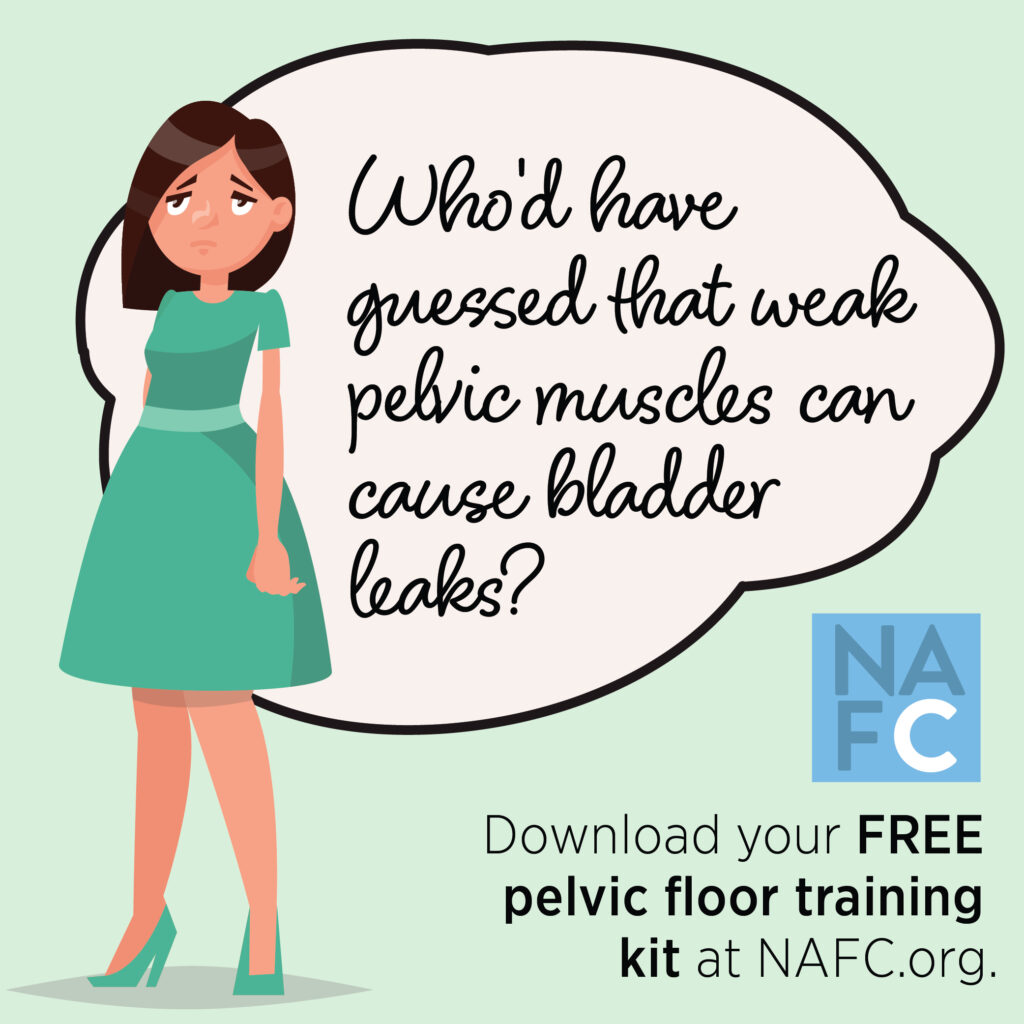
At my appointment we talked about my options, and I started out by making several lifestyle changes – including taking a hard look at my diet, and practicing several core and pelvic floor exercises to gain some of the strength back that I lost after having kids.

It’s been about a year since my conversation with my Mom and Grandmother, and I’m so glad that I finally opened up to them and learned their struggle. Too many keep conditions such as incontinence to themselves, instead of speaking up about it – especially to those they love. Knowing that I wasn’t the only one, and in fact, that this problem likely had at least a little bit to do with genetics helped me immensely.

During my research into my own problem, I came across a study that showed incontinence that occurs before you reach middle age is likely determined by your genes. I only wish that I would have had the conversation with my family earlier.

May is Women’s Health Month. And Mother’s Day just happens to be coming up as well. Use this time with your family wisely – make it a point to ask them about their health history. You’ll be able to better arm yourself with information on your background and how to treat your own condition simply by speaking up and starting the conversation. And who knows – you may find that you have someone else who knows exactly what you’re going through who is right under your nose.

Comments

Leave a Reply

Your email address will not be published. Required fields are marked *

This site uses Akismet to reduce spam. Learn how your comment data is processed.

Related Articles

Five women of varying ages stand close together, smiling and laughing. The text discusses vital conversations on health—from postpartum to incontinence after prostate cancer surgery—on the Life Without Leaks NAFC podcast.

From Postpartum to Postmenopause: The Conversations Women Need to Have

In this episode of Life Without Leaks, we’re joined by Dr. Barbara Frank of Harvard Medical School and Brigham and Women’s Hospital, along with Alex Fennell, co-founder of Attn: Grace, an innovative manufacturer of incontinence products.

Together, we explore the realities of bladder leaks and pelvic floor health during pregnancy, postpartum recovery, perimenopause and menopause, and we discuss why more women are finally beginning to talk more openly about their experiences.

The conversation covers:
• The connection between hormones, menopause and bladder leaks
• Why pelvic floor therapy is having a major moment
• The surprising relationship between pelvic floor tension and incontinence
• How products can impact skin health, comfort and UTIs
• The truth about hormone replacement therapy
• Why community and conversation matter so much in women’s health

Alex also shares the story behind Attn: Grace and the company’s mission to create cleaner, plant-based incontinence products designed to support women with comfort, dignity and confidence.

Whether you’re navigating postpartum recovery, menopause symptoms or simply looking to better understand pelvic health, this episode offers expert insights, practical advice and an encouraging reminder that no one should feel alone in these experiences.

A person sitting on a beige bath mat is placing an incontinence pad into their underwear for skin protection. A box labeled Attn: Grace with blue designs sits on the mat nearby.

Ask The Expert: From A Doctor’s Perspective What Are Some Common Questions You Hear?

If you’ve ever sneezed and held your breath hoping for the best, you’re not alone. Bladder leaks, pelvic floor issues, and the constellation of symptoms that go with them are incredibly common — and incredibly under-discussed. We sat down with two of our favorite experts who are changing the bladder leak conversation: Dr. Barbara Frank, Attn: Grace medical advisor and board certified OB/GYN, and Dr. Sara Reardon, pelvic floor physical therapist (and the woman your pelvic floor has been waiting to meet). They took turns asking each other the questions their patients ask most — and answered them with the same candor they bring to the exam room. They cover everything from how to prepare for postpartum, to what question to ask your own pelvic floor PT, to how to manage incontinence during menopause. This is a knowledge drop you don’t want to miss.

Two older women smiling and walking together on a sunny neighborhood sidewalk, one holding a coffee cup. Both enjoy the confidence provided by discreet incontinence products for women. Trees and houses line the street in the background.

How Aging Changes Bladder Control — What Most People Don’t Expect

As an RN who’s worked in geriatrics for over 14 years, I know first hand that changes in bladder control can be a common part of aging. However, what I’ve also learned is that the treatment and management of these changes differ depending on whether they are due to aging or other conditions.
If you’re experiencing more frequent trips to the bathroom or sudden, intense urges to urinate, you might be wondering what is going on and what you can do about it. Let’s talk through some of the changes that might be going on in your body and how you can be better prepared to manage your bladder control.

Five women of varying ages stand close together, smiling and laughing. The text discusses vital conversations on health—from postpartum to incontinence after prostate cancer surgery—on the Life Without Leaks NAFC podcast.

From Postpartum to Postmenopause: The Conversations Women Need to Have

In this episode of Life Without Leaks, we’re joined by Dr. Barbara Frank of Harvard Medical School and Brigham and Women’s Hospital, along with Alex Fennell, co-founder of Attn: Grace, an innovative manufacturer of incontinence products.

Together, we explore the realities of bladder leaks and pelvic floor health during pregnancy, postpartum recovery, perimenopause and menopause, and we discuss why more women are finally beginning to talk more openly about their experiences.

The conversation covers:
• The connection between hormones, menopause and bladder leaks
• Why pelvic floor therapy is having a major moment
• The surprising relationship between pelvic floor tension and incontinence
• How products can impact skin health, comfort and UTIs
• The truth about hormone replacement therapy
• Why community and conversation matter so much in women’s health

Alex also shares the story behind Attn: Grace and the company’s mission to create cleaner, plant-based incontinence products designed to support women with comfort, dignity and confidence.

Whether you’re navigating postpartum recovery, menopause symptoms or simply looking to better understand pelvic health, this episode offers expert insights, practical advice and an encouraging reminder that no one should feel alone in these experiences.