
Search
[give_form id="19690"]

pelvic floor health center

JOIN OUR NEWSLETTER

Receive custom tools to help you manage your condition and get the latest in bladder and bowel health from NAFC!

IT ALL STARTS AT THE CORE

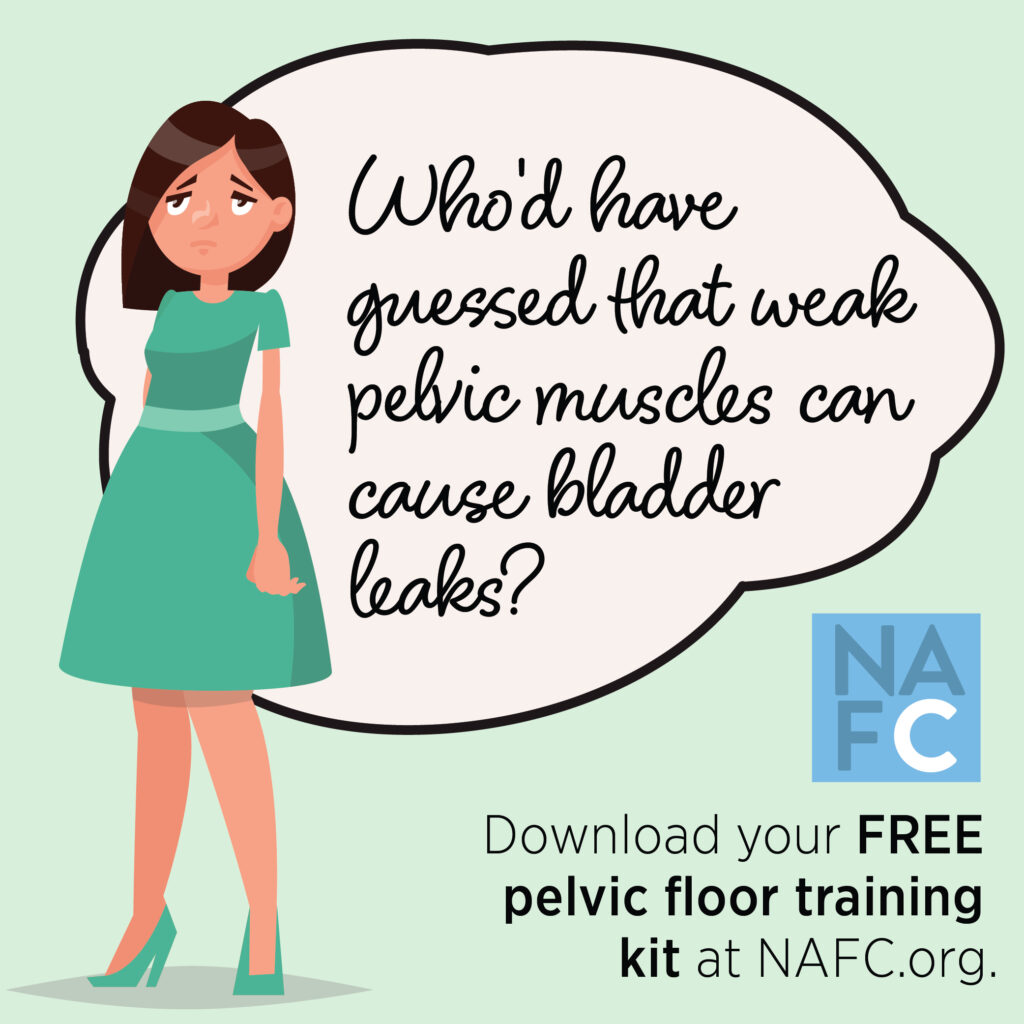
The pelvic floor is critically important to your health, but this set of muscles is often overlooked until there’s an issue. Paying attention to your pelvic floor before continence problems arise can be helpful in preventing or reducing symptoms, and caring for your pelvic floor even if you’re already experiencing issues can help you get better control of your bladder.

That’s where we come in. This section of our website was created in conjunction with physical therapists and is designed to help you learn all the fundamentals that you need to know about your pelvic floor and provide you with the resources you need to keep it strong and healthy. Click on any of the boxes below to explore and learn more.

RELATED ARTICLES

Integrate Kegels Into Your Daily Workout 1980 × 1600 px

A Step-By-Step Video For Kegels

Strengthening your pelvic floor will help restore muscle function and lessen the symptoms of incontinence. Kegels are the primary pelvic floor exercise. Here are a few suggestions for including kegels in your warm-up routine.

Introducing NAFCs New Pelvic Floor Health Center IG 1980 × 1600 px

Introducing NAFC’s Pelvic Floor Health Center

NAFC’s Pelvic Floor Health Center is a fantastic resource for learning to keep the pelvic floor healthy and strong. Access education, tips, tools, videos, downloadable workout sheets, and a 6-week guided program to keep your pelvic floor in shape!

featured image

Gender Neutral Pelvic Floor Tips

Simply stated – the pelvic floor isn’t just a female thing – it is a muscular sling supporting the pelvic and abdominal organs of men and women. Here are some great pelvic floor tips for both men and women.

What Is Pelvic Organ Prolapse

What Is Pelvic Organ Prolapse?

Many women live with pelvic organ prolapse, which is caused by a weakening of the pelvic floor. Learn more about POP and what you can do to treat it here.