



Search
[give_form id="19690"]

Breaking The Silence On Bowel Urgency

Most people don’t talk about bowel urgency. Not with their friends. Not with their partners. Often, not even with their doctor.

So they live with it. They plan their days around bathrooms, skip meals before long drives, and decline invitations rather than risk an accident — all to manage a symptom that, for many, has a treatable cause.

It’s time to change that.

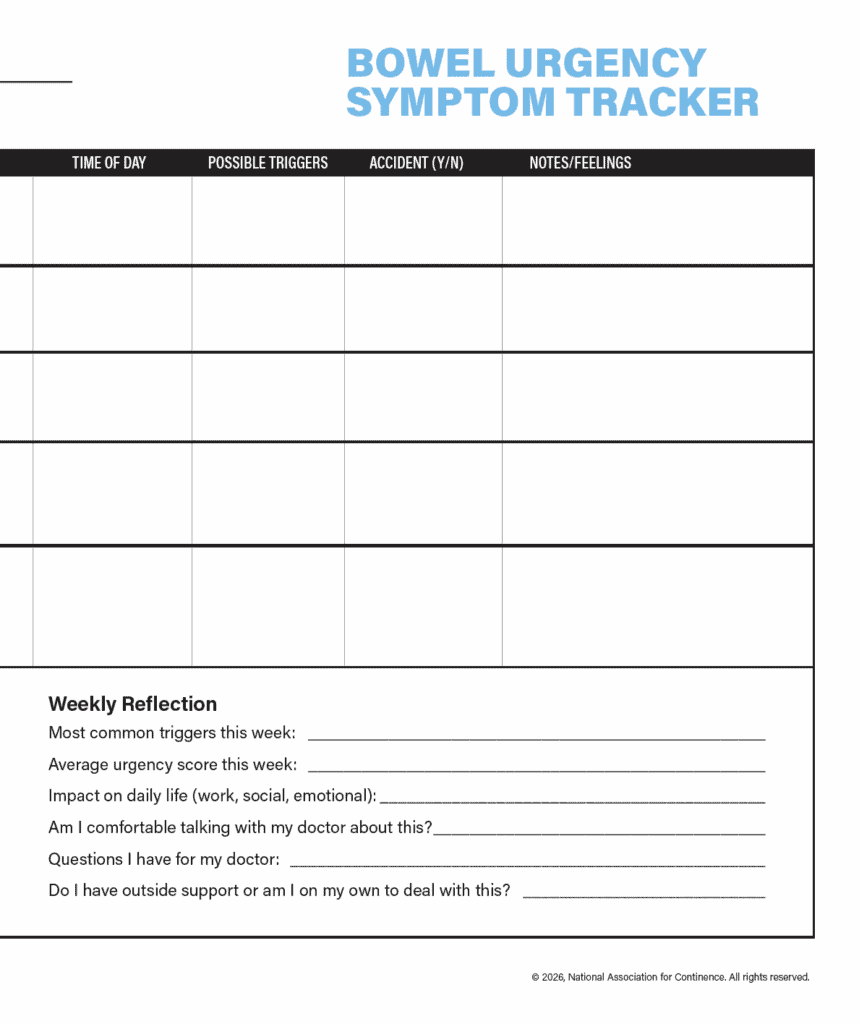
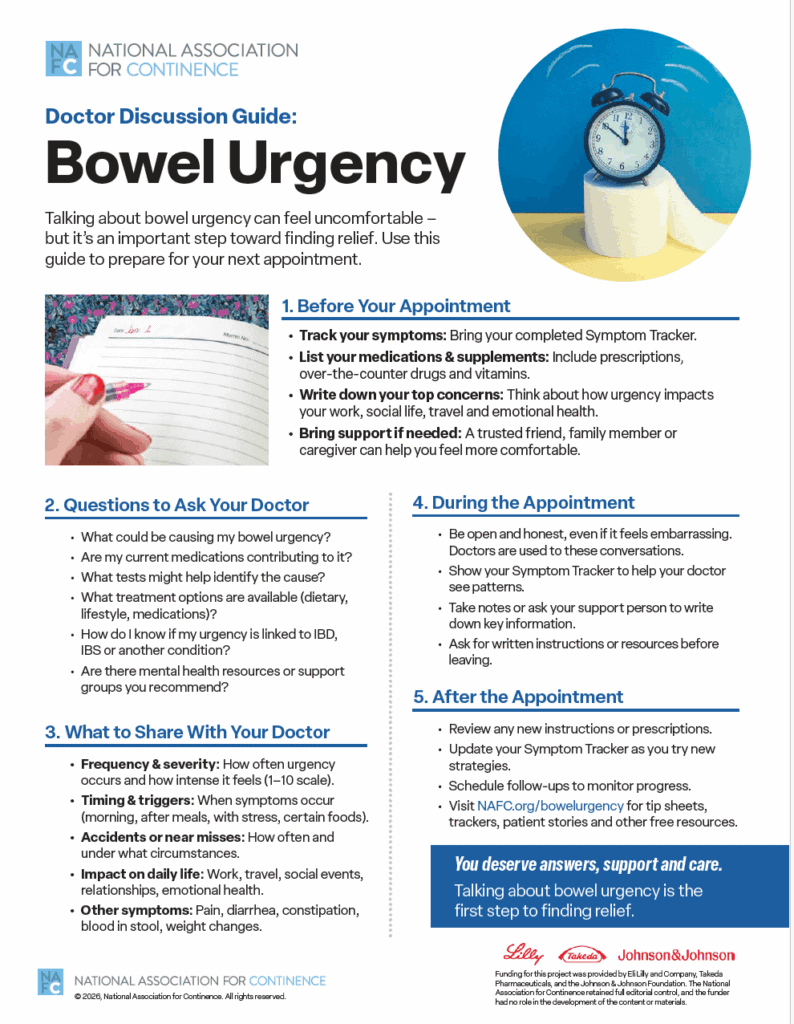
This campaign is a collection of honest conversations: six new episodes of our Life Without Leaks podcast, featuring patients who lived with bowel urgency for years before getting help, and the gastroenterologists who treat it every day. You’ll also find a full-length video, a symptom tracker, a doctor discussion guide, and more — all designed to help you move from silence toward answers.

Your story matters. Your symptoms matter. And the conversation starts here.

Recognizing Bowel Urgency. The First Step Is Speaking Up

Bowel urgency often shows up before you have a name for it. An occasional “I need to go, right now” moment that’s easy to brush off as a one-off. Over time, those moments grow into a pattern. But naming the symptom, and giving yourself permission to talk about it, is often the first real step toward getting help.

In the two episodes below, gastroenterology resident Dr. Maria Roell explains what bowel urgency actually is, what can cause it, and why it’s worth paying attention to. Then Brad, who quietly lived with urgency for 18 years, shares the moment that finally pushed him to speak up, and what changed once he did.

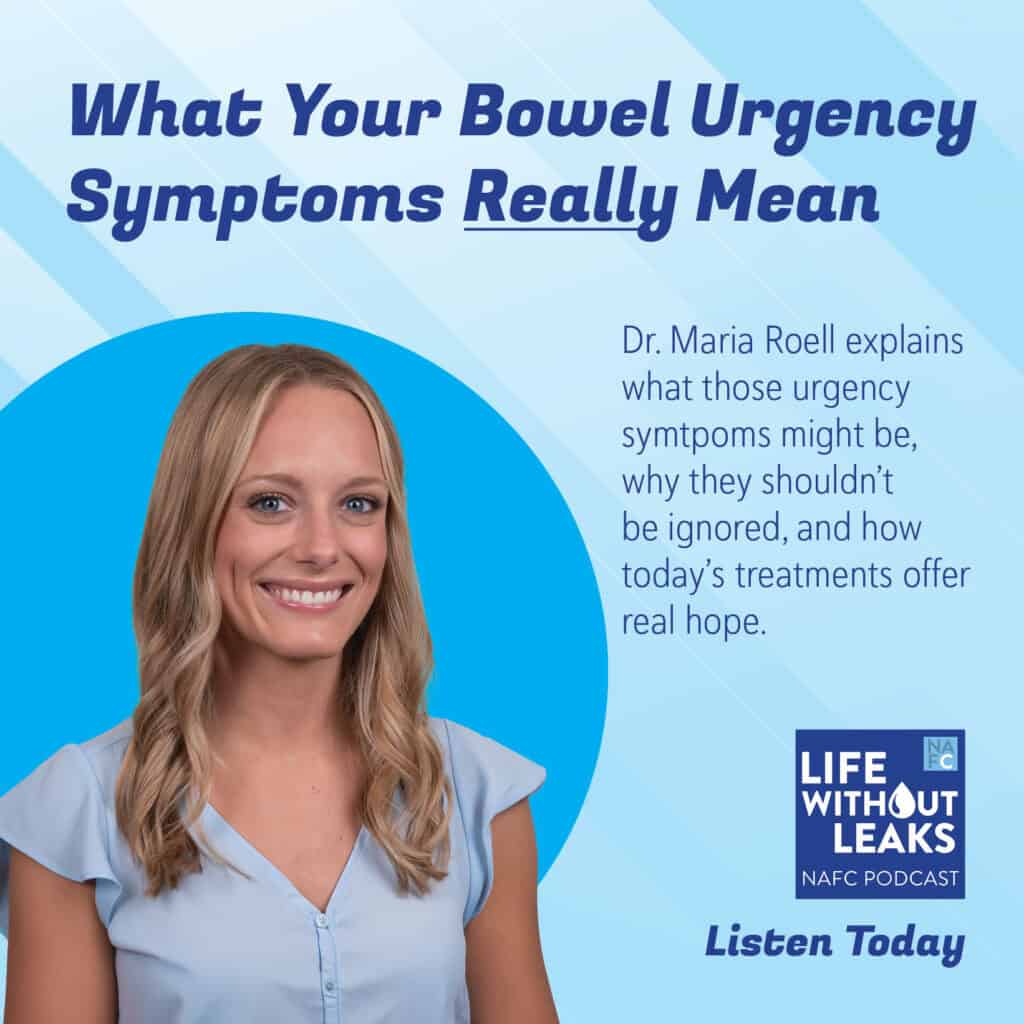
What Your Bowel Urgency Symptoms Really Mean

A smiling woman with long blonde hair stands in front of a blue background with text about bowel urgency symptoms and the Life Without Leaks pelvic floor podcast, encouraging people to listen for more information.

Dr. Maria Roell, an internal medicine resident at the Medical University of South Carolina, breaks down what bowel urgency actually is and the conditions that most often cause it.

She clarifies the difference between IBS and IBD, walks through what to expect from the diagnostic process, and opens up about the emotional toll urgency can take — from anxiety to social isolation. Her key message: bowel urgency is more common than people realize, and it’s treatable. If it’s affecting your life, it’s worth speaking up.

Bowe Urgency Didn't Go Away, So He Got Stronger

Silhouette of a man boxing with blue lighting and a spotlight. Text reads: “It didn’t go away, so he got stronger.” Promotes the NAFC pelvic floor podcast Life Without Leaks featuring Brad, a bowel urgency patient. Listen Today.

Brad, a 44-year-old former Marine and outdoor enthusiast, opens up about his long, personal journey with bowel and urinary incontinence, and the turning point that finally pushed him to say something after years of silence.

He walks through the path from rare, unexplained accidents to frequent, unpredictable urgency, and the relief of finding treatments that worked: pelvic floor physical therapy, counseling, and lifestyle adjustments. He also talks candidly about stigma, dating, work, and mental health, and the parts of living with incontinence most people never hear about. Honest, raw, and empowering.

Don't Go It Alone. Learn How & When To Seek Help - Coming Soon on

For many people, bowel urgency becomes a private logistics problem. Bathrooms to map, meals to skip, plans to quietly decline. The coping strategies work, sort of, and life keeps moving. But over months and years, the cost of managing it alone adds up.

In the two episodes below, gastroenterologist Dr. Navabi explains why bowel urgency so often goes untreated for years, and how understanding the underlying cause can change the picture entirely. Then Andy Larsen, who managed his urgency privately for more than a decade before a public accident became a turning point, shares what he wishes he’d known sooner, and what finally asking for help made possible.

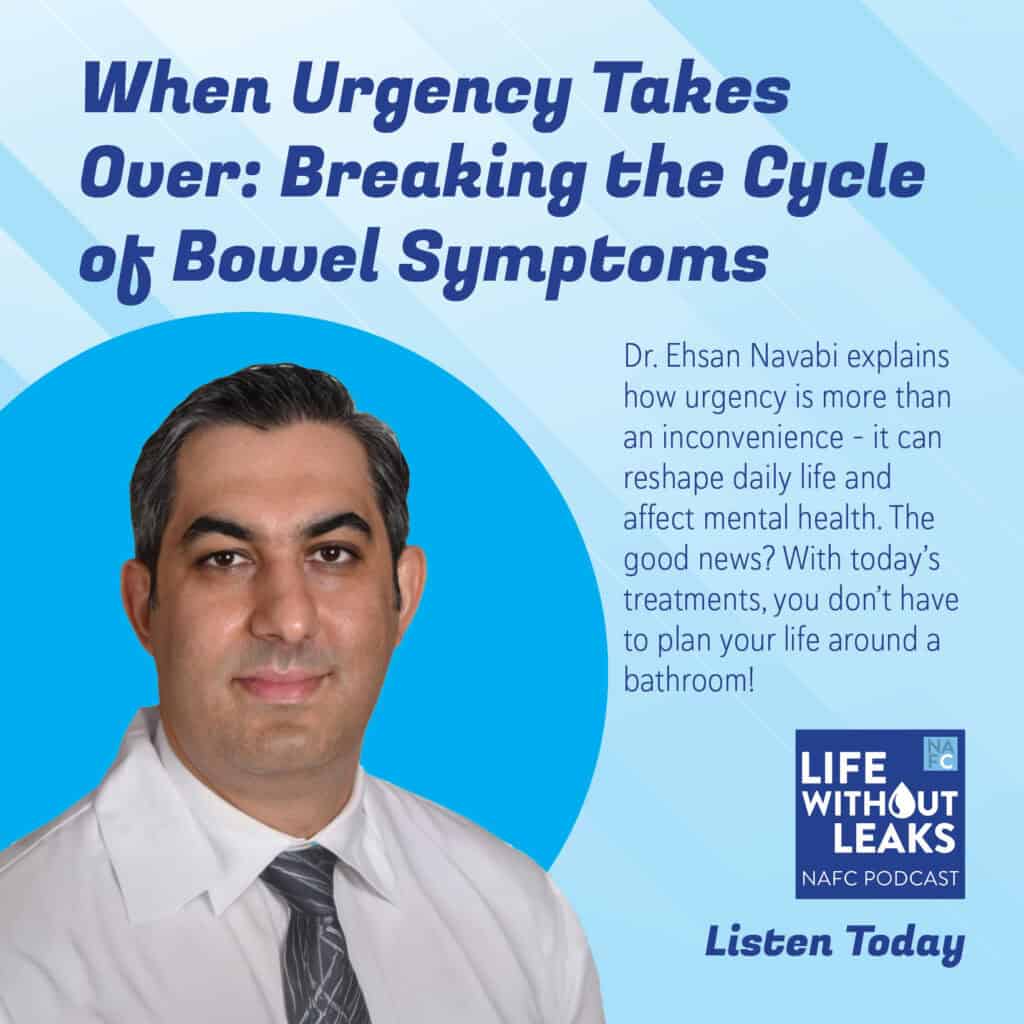
When Urgency Takes Over: Breaking The Cycle Of Bowel Symptoms - Coming Soon! Launching April 26th.

A man in a suit stands beside text promoting a pelvic floor podcast episode titled When Urgency Takes Over: Breaking the Cycle of Bowel Symptoms, featuring Dr. Ehsan Navabi. Tune in to the Life Without Leaks podcast for expert advice.

Dr. Ehsan Navabi, director of the IBD Center and GI Motility Disorders Lab at United Medical Doctors in California, takes a closer look at one of the most disruptive digestive symptoms patients face.

He explains why urgency develops, how the brain-gut axis can amplify symptoms, and why anxiety and bowel disorders so often feed into each other. Most importantly, he emphasizes that urgency is treatable — with the right diagnosis, multidisciplinary care, and early intervention, many patients regain predictability, confidence, and freedom in their daily lives.

From Silence to Solutions: How One Conversation Changed Everything. Coming Soon! Launching April 26th.

A person sits on a bed with head in hand, appearing distressed. Overlay text reads: From Silence to Solutions: How One Conversation Changed Everything. Life Without Leaks pelvic floor podcast. Listen Today.

Andy, a 40-year-old truck driver from Utah, shares his 12-year struggle with bowel urgency and incontinence — and the public accident that finally pushed him to have the conversation he’d been avoiding for over a decade.

What followed was a diagnosis of celiac disease and a treatment plan that transformed his quality of life. Andy talks honestly about what it felt like to live in silence, the fear of speaking up, the relief of finally getting answers, and the dramatic improvements that came once he stopped trying to cope alone.

Finding Hope & Reclaiming Everyday Life

For many people living with bowel urgency, the smallest moments carry the biggest weight — leaving the house, sitting through a meeting, taking a walk without a bathroom in sight. When symptoms improve, everything around them improves too. Quality of life isn’t a side benefit of treating bowel urgency; for many patients, it’s the whole point.

In the two episodes below, gastroenterologist Dr. Ryan O’Leary discusses why bowel urgency is getting renewed attention as a quality-of-life issue, and what the expanding landscape of treatment options means for patients today. Then Judy — who began experiencing urgency after cancer treatment — shares how she navigates daily life with the symptom, and the hope she’s found along the way.

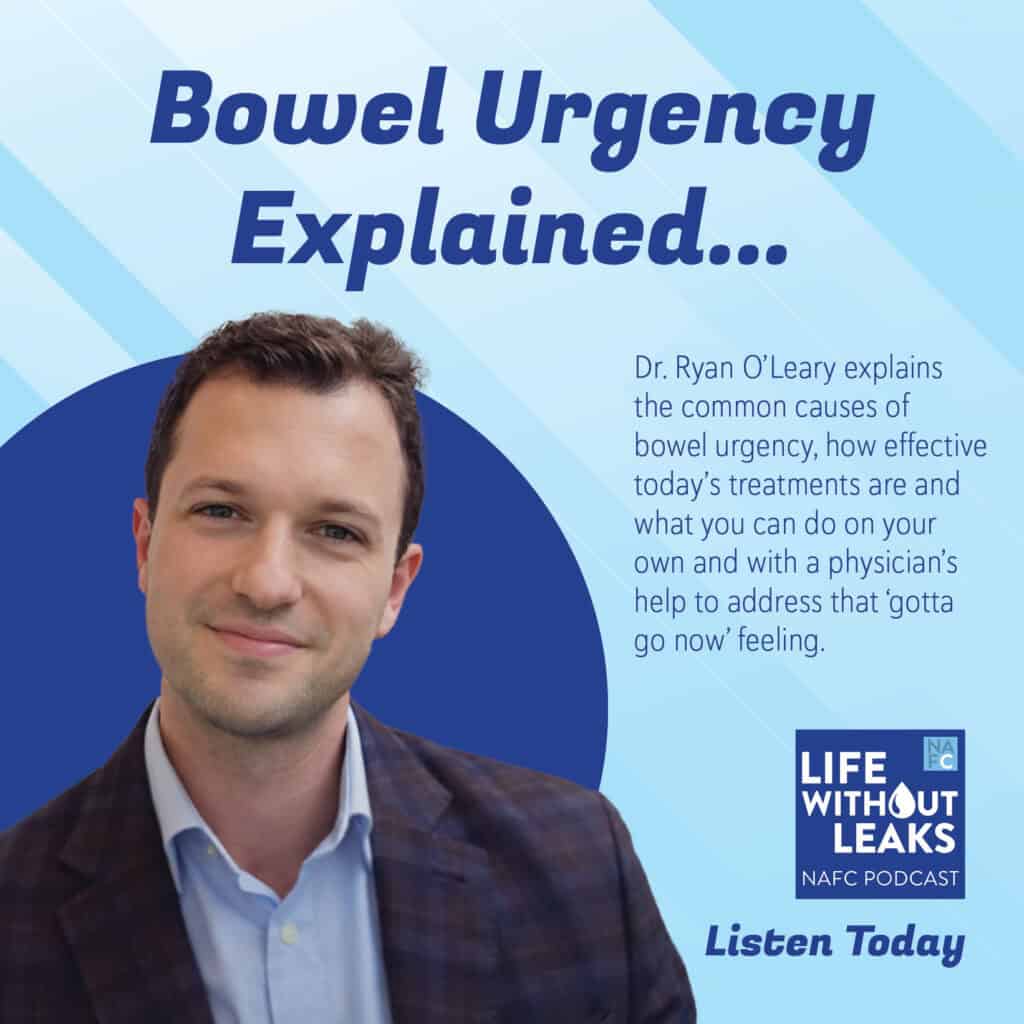
Bowel Urgency Explained. Coming Soon! Launching May 3rd.

A man in a suit smiles in front of a blue background with text about bowel urgency and the Life Without Leaks NAFC pelvic floor podcast. The image promotes an episode featuring Dr. Ryan O’Leary discussing causes and solutions for bowel urgency.

Dr. Ryan O’Leary, an advanced fellow in inflammatory bowel disease, takes a closer look at one of the most disruptive — and most misunderstood — GI symptoms: bowel urgency.

He explains what’s actually happening in the body during an urgency episode, why it can stem from anything from inflammation to medications to underlying conditions, and why a proper diagnosis matters so much. He also shares an encouraging reality: modern IBD treatments are highly effective, and many patients are able to return to full, active lives.

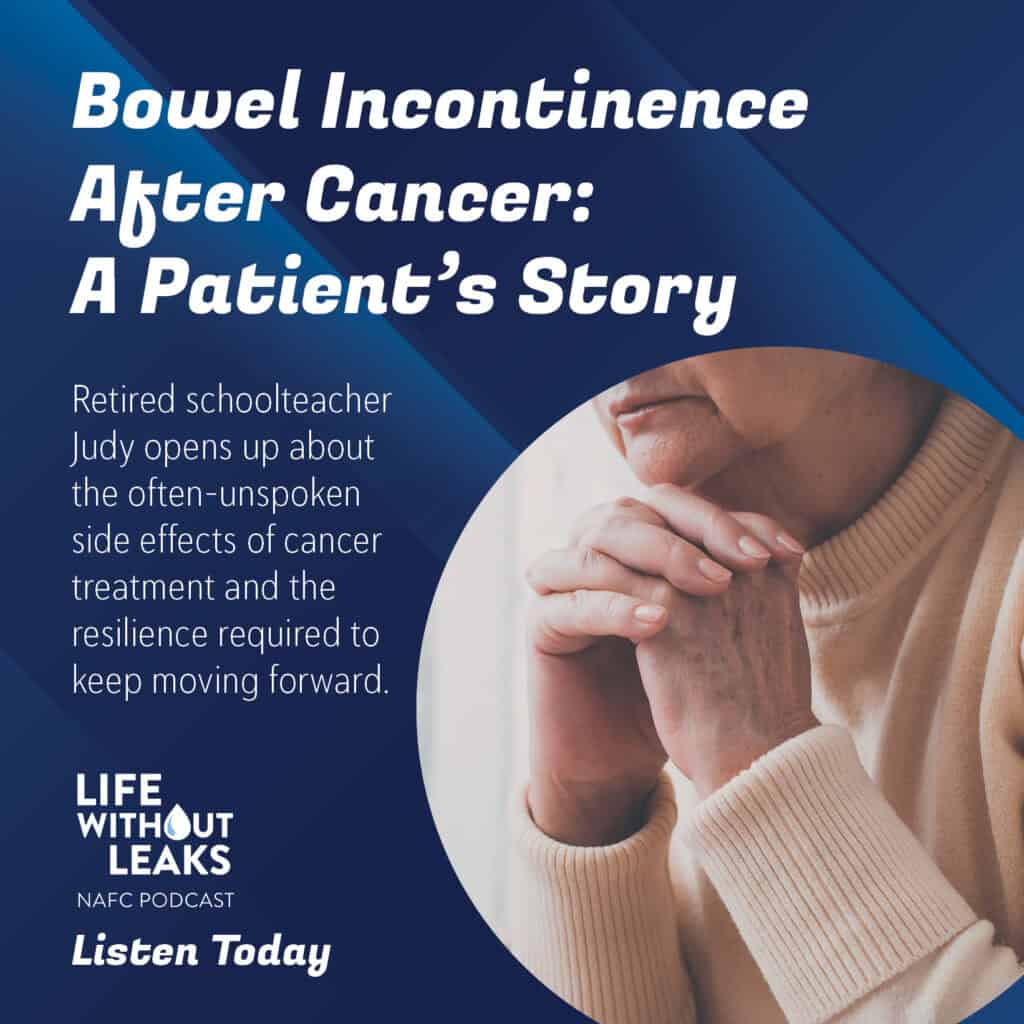
Bowel Incontinence After Cancer - A Patient's Story. Coming Soon! Launching May 3rd.

A close-up of a person’s folded hands with text about a pelvic floor podcast episode titled “Bowel Incontinence After Cancer: A Patient’s Story,” featuring retired schoolteacher Judy as she shares her experience.

Judy, a retired school secretary, shares her deeply personal story of living with bowel incontinence that began after she survived stage three endometrial cancer.

Following chemotherapy, radiation, and extensive lymph node removal, she gradually developed worsening bowel control issues that now shape nearly every part of her day — from persistent urgency and accidents to recurring obstructions and emergency hospital visits. Judy speaks candidly about the therapies she’s tried, the difficult decisions she’s now facing, and the role that friendship, honesty, and resilience have played in helping her keep moving forward.

Tools to Help You Take the Next Step

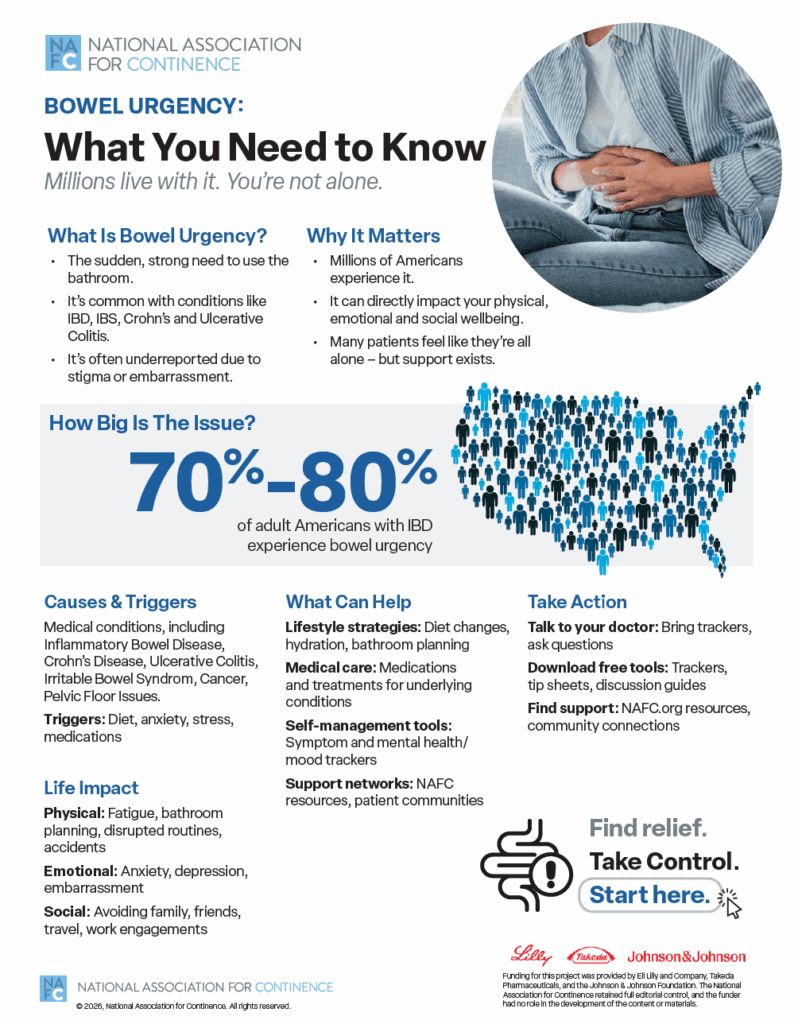
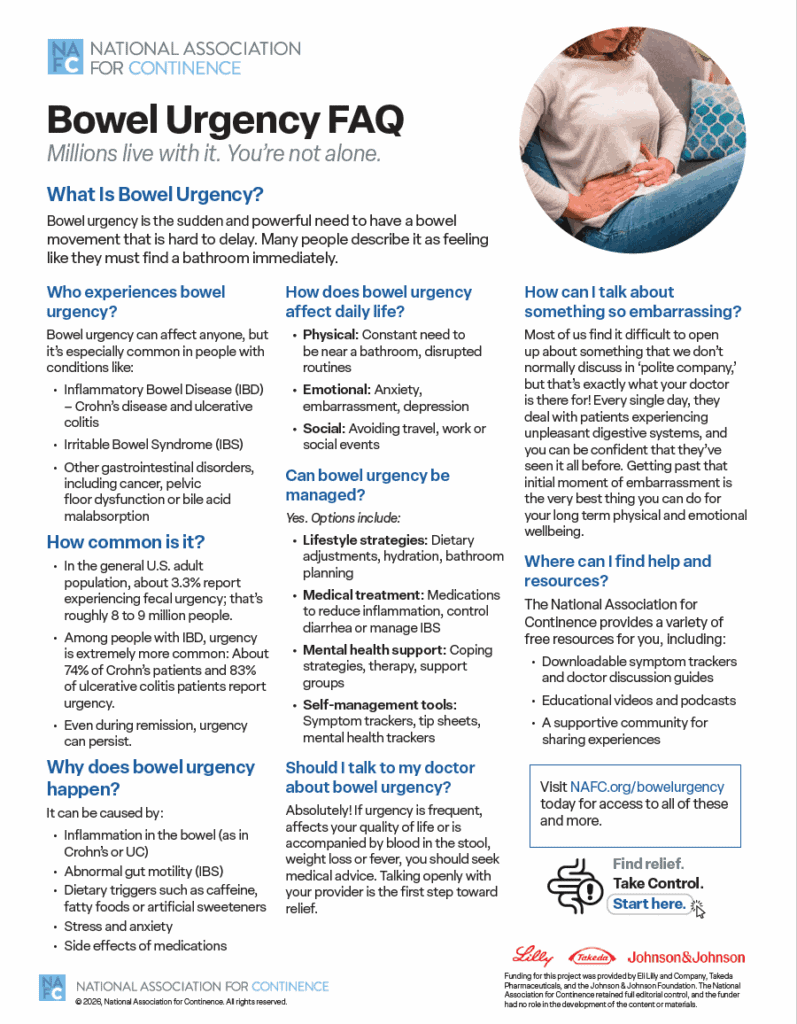
Breaking the silence starts with the right words — and the right information. These free, printable resources are built to help you recognize your symptoms, prepare for a conversation with your doctor, and answer the questions that come up along the way. Use what’s useful. Share what’s helpful.

Click any of the tools below to download.

This educational resource was made possible through the generous support of the Johnson & Johnson Foundation, Eli Lilly and Company, and Takeda Pharmaceuticals. The National Association for Continence retained full editorial control, and the funder had no role in the development of the content or materials.

Logos for J&J Foundation, Takeda, and Lilly—each in red font—are displayed side by side on a white background, featured in a recent pelvic floor podcast episode.

Latest Articles

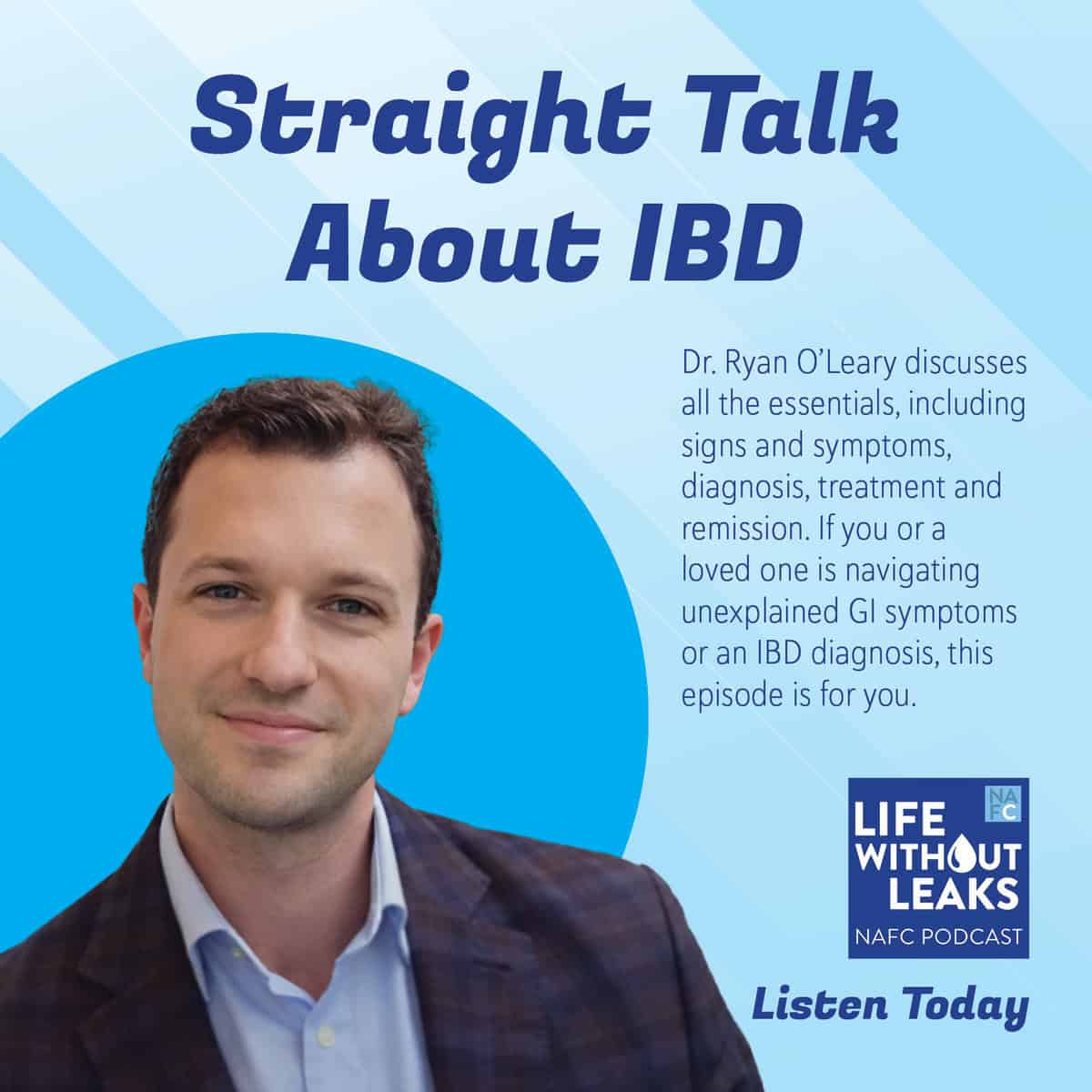
A man in a suit is shown next to text promoting a podcast episode called Straight Talk About IBD. The episode covers IBD symptoms, diagnosis, and treatment. The Life Without Leaks NAFC Podcast logo appears in the corner.

Understanding IBD: From Diagnosis to Remission… What You Need to Know – Copy

In this episode of Life Without Leaks, we’re joined by Dr. Ryan O’Leary, advanced fellow in inflammatory bowel disease, for a deep dive into inflammatory bowel disease (IBD).

Dr. O’Leary breaks down what sets Crohn’s disease and ulcerative colitis apart from other digestive conditions, explaining how IBD can affect patients at any age, from early childhood to later adulthood, and why diagnosis can sometimes be delayed. He explores the complexity of inflammation, the role of the immune system and how IBD can impact far more than the gut, including joints, skin, eyes and mental health.

The conversation also covers realistic treatment goals, the expanding range of medications available today, dietary considerations, when surgery becomes part of care and why personalized treatment plans are essential. Importantly, Dr. O’Leary addresses the emotional toll of living with a chronic condition and emphasizes the importance of persistence, advocacy and specialist care.

If you or a loved one is navigating unexplained GI symptoms or an IBD diagnosis, this episode offers clarity, reassurance and a hopeful look at what’s possible with modern care.

Learn more about a wide range of bowel conditions and get free resources here.

Navigating OAB for UUI!

Join us for a FREE Webinar on Overactive Bladder management! Click below to register!