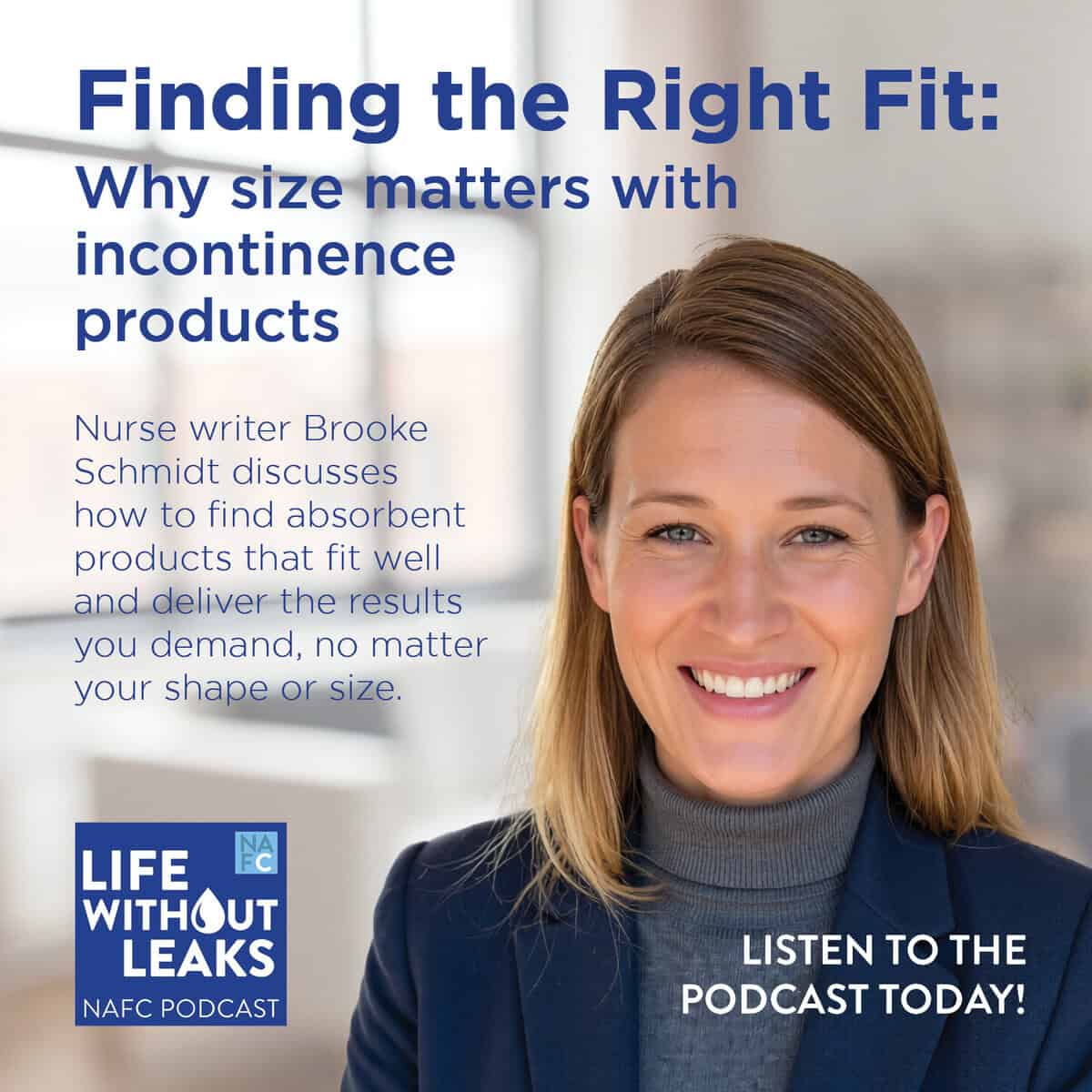
Finding the Right Fit: Why Size Matters With Incontinence Products
In this episode of Life Without Leaks, we welcome registered nurse and health writer Brooke Schmidt for a practical conversation about selecting and using absorbent products. Drawing on more than

Managing Male Bladder Leaks in Everyday Life: A Practical Guide to Comfort, Fit, and Discretion
A few drops after leaving the bathroom. Leakage when you cough or lift something. A sudden urge that makes it difficult to reach the restroom in time.
Bladder leaks

Ask The Expert: How Can I Manage The Odors, Furniture Stains & Skin Irritation With Leaks?
Helping a loved one manage heavy to severe incontinence can be physically and emotionally demanding, and it’s natural to worry about whether you’re doing enough to support and protect them.

Reusable Incontinence Underwear: Pros And Cons
Is washable incontinence underwear for you? Read our FAQs on this type of absorbent product and see if it’s something you might try.
Finding the Right Fit: Why Size Matters With Incontinence Products
In this episode of Life Without Leaks, we welcome registered nurse and health writer Brooke Schmidt for a practical conversation about selecting and using absorbent products. Drawing on more than a decade of nursing experience, Brooke explains how to measure for a proper fit, why sizing varies between products, and what to consider when shopping for plus-size options.

Managing Overnight Incontinence for a Better Night’s Sleep
A good night’s sleep plays an important role in maintaining overall health, comfort, and emotional well-being. For individuals managing incontinence, nighttime can sometimes feel uncertain. Overnight leaks may interrupt sleep, create concern about bedding or clothing, and make mornings feel more stressful than restful. These experiences are common, and they are something many adults navigate at different stages of life.

How To Stop Waking Up At Night To Pee
Want to stop frequent urination at night? Follow these five tips to stop waking up at night to pee.

What Does A Prolapsed Bladder Feel Like?
Wondering what a prolapsed bladder feels like and curious if you have one? Maybe you’ve started feeling a heaviness in your pelvic floor region. Or,

How Do I Know If I Have A UTI Or A Kidney Infection?
It may feel like all urinary tract infections (UTIs) are the same – they all feel pretty uncomfortable! But a UTI can occur anywhere within