Q: Why Do I Experience More Incontinence at Night Than During the Day?
Answer:
Many people notice that bladder control feels more difficult at night than during the day. Nighttime incontinence, also called nocturia, is a common experience for adults of many ages and health backgrounds. While it can feel frustrating or even isolating, it is important to know that this situation is more common than many people realize.
Nighttime symptoms can feel especially challenging because they interrupt sleep, affect comfort, and may create worry about leaks while resting. Understanding why nighttime incontinence happens and what can help manage it can make a meaningful difference in both sleep quality and confidence.
Understanding Nighttime Incontinence
Nighttime incontinence refers to unintentional urine leakage that occurs while sleeping. It can show up in several ways, including waking frequently to urinate, bedwetting, or leaking during sleep without waking. These experiences are often connected to normal changes in the body during rest.
During the day, the body is more alert to bladder signals, and muscles are actively engaged in maintaining control. At night, several natural processes shift, which can increase the likelihood of leaks for some individuals.
Understanding these differences helps remove uncertainty and creates a clearer path toward managing symptoms.
The Science of Nighttime Leaks
While sleeping, the brain receives weaker bladder signals than it does during waking hours. Muscles throughout the body relax, including those that support bladder control. This combination can make it harder to respond quickly when the bladder fills.
Some people also produce more urine overnight, a condition known as nocturnal polyuria. This may happen because of circulation changes, certain medical conditions, or fluid redistribution when lying down.
Hormones also play a role. Antidiuretic hormone, or ADH, typically signals the kidneys to reduce urine production during sleep. Changes in this hormone’s timing or levels can lead to increased nighttime urination.
Body position matters as well. When lying down, fluid that has accumulated in the legs during the day can reenter circulation and be processed by the kidneys, increasing urine production. Together, these natural nighttime changes can explain why symptoms sometimes feel more noticeable after going to bed.
Medical and Lifestyle Triggers
Several health and lifestyle factors may contribute to nighttime incontinence. Bladder conditions such as overactive bladder, urge incontinence, or stress incontinence can continue into sleep. Pelvic floor weakness or prostate concerns may also affect bladder control overnight.
Certain medications, including diuretics or sleep aids, may increase nighttime urination or reduce awareness of bladder signals. Chronic health conditions such as diabetes, heart failure, or sleep apnea may also contribute.
Evening habits can influence symptoms. Drinking large amounts of fluid late in the day, consuming caffeine or alcohol, or eating heavy meals close to bedtime can increase bladder activity overnight.
The Emotional and Physical Impact
Interrupted sleep affects more than just energy levels. Poor sleep can influence mood, concentration, and overall well-being. Over time, fatigue from repeated nighttime awakenings may affect daily routines and comfort.
Nighttime incontinence can also create emotional concerns. Some individuals worry about mattress protection, disturbing a partner, or managing cleanup in the middle of the night. These concerns are understandable and shared by many people managing bladder control challenges.
Open conversations and reliable solutions can help reduce embarrassment and normalize the experience. With the right strategies in place, many people find that nighttime incontinence becomes more manageable and less stressful.
Recognizing both the physical and emotional impact is an important step toward better rest and improved confidence.
Strategies to Reduce or Manage Nighttime Incontinence
Managing nighttime symptoms often involves a combination of small adjustments that work together to support bladder health and sleep comfort.
Lifestyle Adjustments
Reviewing evening habits can make a difference. Limiting fluids in the hours before bedtime and reducing bladder irritants such as caffeine or alcohol may help decrease nighttime urgency. Eating dinner earlier in the evening may also support better overnight bladder control.
These changes are simple but can have a meaningful effect over time.
Bedtime Routine
A consistent nighttime routine supports bladder management. Double voiding, which means urinating once and then trying again a few minutes later, helps empty the bladder more completely before sleep.
Including a final bathroom visit as part of the nightly routine can help reinforce this habit and reduce overnight interruptions.
Medical Management
If nighttime incontinence continues or worsens, a healthcare provider can help identify underlying causes and treatment options. Adjusting medications or addressing related health conditions may improve symptoms.
Seeking guidance early can help prevent small concerns from becoming larger challenges.
Sleep Environment Preparation
Preparing the bedroom environment can provide reassurance and convenience. Keeping a clear, well-lit path to the bathroom reduces fall risk during nighttime trips. Waterproof mattress covers and easily changeable bedding can make overnight care simpler and less stressful.
These preparations help create a sense of readiness and peace of mind.
Pelvic Floor Exercises

Pelvic floor exercises, often called Kegels, help strengthen the muscles that support bladder control. Practicing these exercises may improve both daytime and nighttime symptoms.
Like any muscle-strengthening activity, consistency is important for results. Together, these strategies support both comfort and confidence at bedtime.
The Importance of Quality Overnight Protection
Even with strong routines and healthy habits, reliable overnight protection remains an important part of managing nighttime incontinence.
Essential Features in Overnight Products
Overnight products are designed differently from daytime protection. Higher absorbency helps manage larger volumes of urine produced during sleep. Quick absorption channels help keep moisture contained while lying down and changing positions.
Breathable materials support skin health, while odor control features help maintain comfort and confidence. A secure, sleep-friendly fit helps prevent shifting throughout the night. These features work together to support uninterrupted rest.
Emotional Benefits of the Right Product Choice
Knowing that dependable protection is in place can reduce worry about leaks and allow for more restful sleep. Confidence at bedtime often leads to improved relaxation and better sleep quality.
Reliable overnight protection supports both physical comfort and emotional well-being.
Product Spotlight: Attends Sleep Comfort™ Premium Overnight Underwear
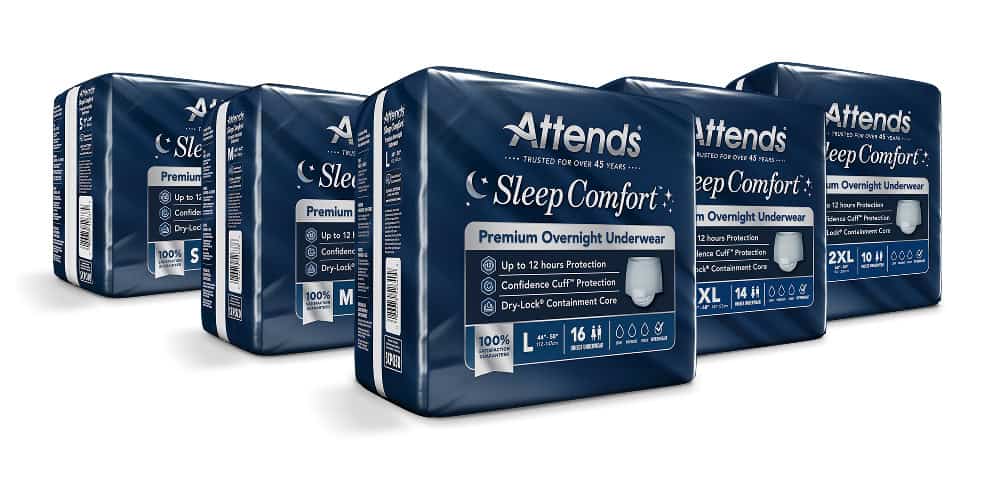
Attends Sleep Comfort™ Premium Overnight Underwear is designed specifically for nighttime needs. With absorbency designed for up to 12 hours of protection, it supports comfort throughout the night.
The contoured shape helps provide a secure and comfortable fit, while quick absorption channels help keep moisture contained. Breathable materials support skin health, and odor control features help maintain freshness.
Sleep Comfort™ Premium Overnight Underwear is available in sizes S through 2XL and provides dependable overnight protection at an affordable price. For many people, having reliable overnight protection helps create a more comfortable bedtime routine and greater confidence when waking in the morning.
When to Consult a Doctor
Occasional nighttime incontinence can happen for many reasons, but certain changes should be discussed with a healthcare provider. Sudden increases in nighttime urination, pain during urination, fever, blood in the urine, or persistent worsening symptoms may indicate an underlying condition that needs attention.
A medical professional can evaluate symptoms, recommend treatments, and help create a plan for long-term bladder health. Addressing concerns early supports both comfort and overall health.
Support for More Peaceful Nights
Nighttime incontinence can feel frustrating and isolating, especially when it interrupts sleep and daily routines. Small adjustments to routines, conversations with healthcare providers, and dependable overnight protection can all support comfort, confidence, and overall well-being.
Attends Sleep Comfort™ Premium Overnight Underwear is designed for extended absorbency, comfort, and discretion throughout the night.
Shop Attends Sleep Comfort™ Premium Overnight Underwear to add dependable overnight protection for a worry-free bedtime routine.
This article was developed in partnership with, and sponsored by Attends. NAFC collaborates with select partners to bring our community information and resources that support bladder and bowel health.