
6-Week Guided Pelvic Health Program
JOIN OUR NEWSLETTER
Receive custom tools to help you manage your condition and get the latest in bladder and bowel health from NAFC!
6-WEEK GUIDED PELVIC HEALTH PROGRAM
Not sure where to start on your journey? We can help! We’ve developed our 6-Week Guided Program with the help of physical therapists trained in women’s health.
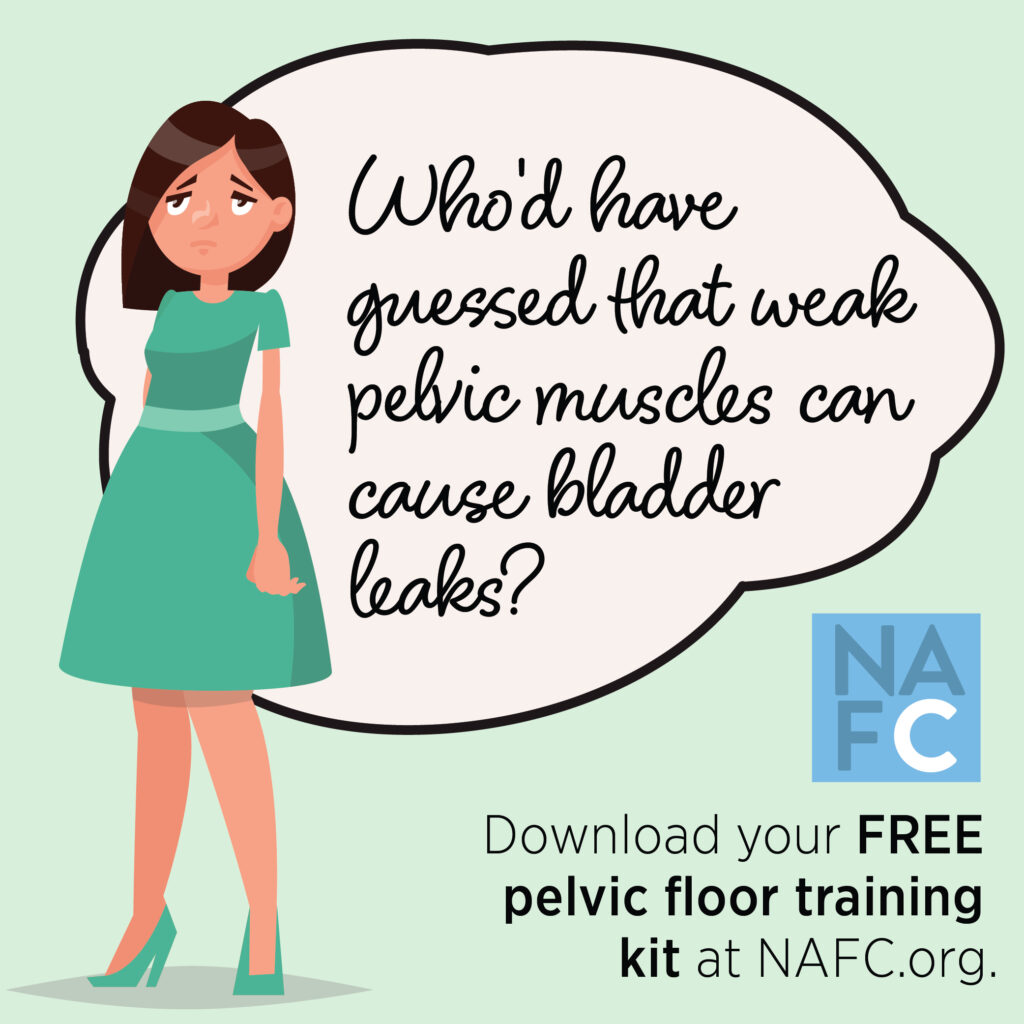
Throughout this program, you’ll receive pelvic health tips and recommendations for building a strong and healthy pelvic floor. This guide is designed for anyone looking to keep their pelvic floor healthy, and specifically for women experiencing urinary incontinence or bladder leaks.
NOTE: The information shared within NAFC’s Pelvic Floor Health Center is meant to be used as a guide but should not be considered a replacement for medical advice. Not all pelvic floor exercises are for everyone, and we strongly urge you to talk to your doctor before beginning any new workout routine, and, if possible, see a physical therapist trained in pelvic floor health to receive a diagnosis and treatment recommendation.
RELATED ARTICLES

Not All Leaks Are the Same: Understanding the Difference Between LBL (Light Bladder Leakage) and HBL (Heavy Bladder Leaks)
Most incontinence products on the market were made for Light Bladder Leakage (LBL), such as the occasional drip or the small dribble triggered by a sneeze or laugh. For millions of people, that’s not the full story. Heavy Bladder Leaks (HBL) involve larger volumes and/or multiple full releases throughout the day or night. Store-brand products, even those labeled “maximum” or “overnight”, aren’t designed to handle that level of need.
If products keep failing, it can start to feel personal. But when a product was never built for your reality in the first place, that’s not a personal failure. It’s a product gap.
Understanding the difference between LBL and HBL is the first step toward finding trusted protection that actually works.

Finding A Restroom Before It Becomes Urgent: A Free Tool That Can Help
For many people living with bladder or bowel symptoms, leaving home can involve more planning. than others may realize.A quick errand, a long commute, a road trip, a doctor’s appointment, a child’s school event, or
dinner with friends can all come with the same quiet question: Will I be able to find a restroom when I need one?

“Am I going to be heard here?” How to Advocate for Yourself and Get the Care You Deserve
Embarrassment. Frustration. Unanswered questions. For many people living with bladder or bowel conditions, these feelings can become just as challenging as the symptoms themselves.
In this episode of Life Without Leaks, we’re joined by board-certified urogynecologist Dr. Jannah Thompson and patient advocate Morgon for an honest and inspiring conversation about navigating the healthcare journey. Morgon shares his deeply personal story, from developing debilitating bladder symptoms as a young U.S. Marine to years of searching for answers, learning to advocate for himself, and ultimately finding treatments that transformed his life.

Not All Leaks Are the Same: Understanding the Difference Between LBL (Light Bladder Leakage) and HBL (Heavy Bladder Leaks)
Most incontinence products on the market were made for Light Bladder Leakage (LBL), such as the occasional drip or the small dribble triggered by a sneeze or laugh. For millions of people, that’s not the full story. Heavy Bladder Leaks (HBL) involve larger volumes and/or multiple full releases throughout the day or night. Store-brand products, even those labeled “maximum” or “overnight”, aren’t designed to handle that level of need.
If products keep failing, it can start to feel personal. But when a product was never built for your reality in the first place, that’s not a personal failure. It’s a product gap.
Understanding the difference between LBL and HBL is the first step toward finding trusted protection that actually works.