Working out is an essential part of a healthy lifestyle, but it can be challenging if you are dealing with incontinence. Incontinence is a condition that affects millions of people, and it can cause embarrassment and discomfort.
Many women actually stop working out for fear of having a bladder leak in public.1 In a recent NAFC survey, nearly half of the respondents said that incontinence prevented them from working out or being more active.2
However, there are still plenty of exercises you can do to stay active and healthy. In fact, staying active and keeping your body strong may actually help reduce your bladder leaks. Here are some great exercises you can do if you have incontinence.
Safe exercises you can do when you have incontinence.
First, a note about the type of exercise you should look to. Because many people who experience bladder leaks while exercising often have weakened pelvic floor muscles, you’ll want to look for low-impact exercises. Low-impact exercises won’t put as much of a strain on your pelvic floor. But, these will still give you a good cardiovascular workout and will help you strengthen your muscles. Below are a few exercises to try if you have incontinence.
1. Walking
Walking is an excellent low-impact exercise that can be done anywhere, with little equipment needed.. It’s an excellent way to get your heart rate up and improve your overall fitness level. Walking also helps to strengthen your legs and can help to improve your balance. This is one of our favorite exercises since it’s so easy to do and is accessible to pretty much anyone.
Click here for some tips on starting a walking group! Working out is always more fun with friends!
2. Pilates
Pilates is a low-impact exercise that focuses on strengthening your core muscles (very important for a healthy bladder!), including your pelvic floor. It’s a great way to improve your balance, flexibility, and posture. Pilates exercises can also help to improve your breathing and reduce stress.
3. Yoga
Yoga is another low-impact exercise that can help to improve your balance, flexibility, and strength. It’s a great workout to help you improve your posture, which is important for keeping your pelvic floor healthy. Yoga exercises can also help to reduce stress and anxiety. There are many yoga poses that can be modified for people with incontinence, so it’s a great way to stay active.
4. Pelvic Floor Exercises
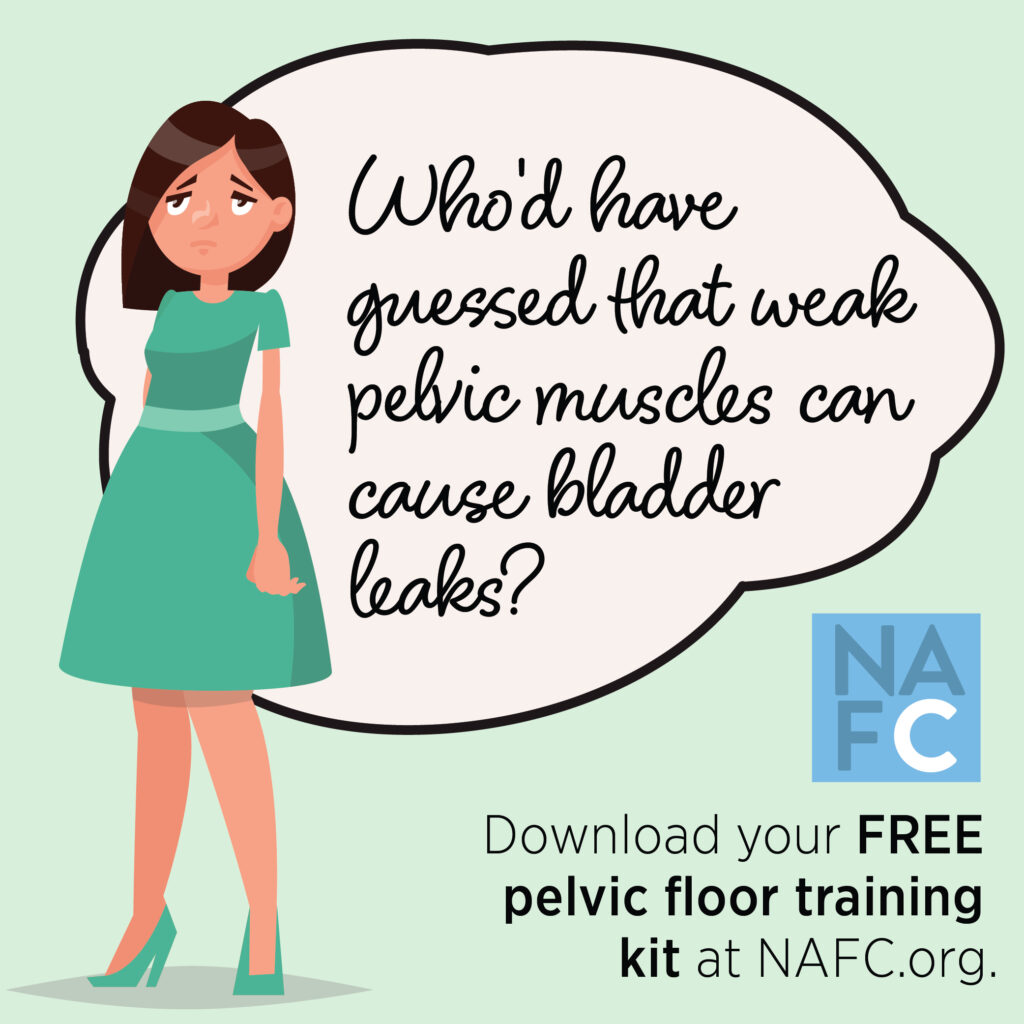
If you’ve followed along with us for long, you’ll know that we’re huge proponents of getting your pelvic floor in shape. Pelvic floor exercises are an essential part of any exercise routine for people with incontinence. These exercises help to strengthen the muscles that control urination and can help to reduce leakage. While pelvic floor exercises are often associated with Kegels, that’s not the only move that strengthens the pelvic floor. The pelvic floor is made up of 14 different muscls and connects to even more muscles throughout your core. It’s important to ensure all of these muscles are strong and healthy so that your body doesn’t overcompensate in some areas for the weaker muscles.
Kegels are a popular pelvic floor exercise. They can be done anywhere, and they’re easy to incorporate into your daily routine. Just be careful – those who have a hypertonic pelvic floor should NOT do kegels so it’s important to check with a trained pelvic floor physical therapist before you start this exercise.
If you’re interested in learning more about the pelvic floor visit NAFC’s pelvic health center. You’ll find tons of great exercises and a FREE 6-week program to improve your pelvic health.
5. Swimming
Swimming is a great low-impact exercise that can give you a great workout. Not only does it improve your muscle strength, flexibility, coordination and balance, swimming is also a peaceful exercise that can help to reduce stress and anxiety.
If you’re not a swimmer, don’t worry. Working out in the water is still a great way to get in shape. Try using a kick-board to do short laps, or participate in a water aerobics class. The resistance from the water helps to strengthen your muscles.
6. Elliptical Machine
The elliptical machine is another low-impact exercise that is easy on your joints. It’s a great way to get your heart rate up and improve your overall fitness level. The elliptical machine can also help to strengthen your legs, hips, and glutes.
Exercises To Avoid
There are some exercises that you may want to avoid if you experience bladder leaks. Of course, this list may not apply to everyone, nor is it exhaustive, but be mindful when engaging in any of these workouts. They may be more likely to cause a bladder leak if you already experience incontinence.
High-Impact Exercises
High-impact exercises, such as running or jumping, can put too much pressure on your pelvic floor muscles and can make incontinence worse. It’s best to avoid these types of exercises if you have incontinence.
Heavy Lifting
Heavy lifting can also put a strain on your pelvic floor muscles and can make incontinence worse. It’s best to avoid lifting heavy weights if you have incontinence.
Abdominal Exercises
Some abdominal exercises, such as sit-ups, can put a strain on your pelvic floor muscles and can make incontinence worse. It’s best to avoid these types of exercises if you have incontinence.
High-Intensity Exercises
High-intensity exercises, such as HIIT workouts, can put a lot of stress on your body and can make incontinence worse. It’s best to avoid these types of exercises if you have incontinence.
Having incontinence does not mean you have to stop exercising altogether. There are still plenty of exercises you can do to stay active and healthy. Walking, Pilates, yoga, pelvic floor exercises, swimming, and the elliptical machine are all safe exercises to do if you have incontinence. However, high-impact exercises, heavy lifting, abdominal exercises, and high-intensity exercises should be avoided.
Talk to your doctor or a physical therapist to develop an exercise plan that works for you and your specific needs. Remember to listen to your body and stop any exercise that causes pain or discomfort.
Sources
- Nygaard I, Delancey JO, Arnsdorf L. Exercise and incontinence. Obstet Gynecol. 1990;75:848-51
- NAFC 2019 State of Incontinence Survey.