Search
[give_form id="19690"]

Why So Many Women Put Themselves Last — and Why It Matters

Women are often the caregivers, planners, problem-solvers, and emotional anchors for everyone around them. They manage households, careers, children, aging parents, relationships, schedules, and responsibilities that rarely stop.

And somewhere in the middle of taking care of everyone else, many women quietly stop taking care of themselves.

They ignore symptoms. Delay appointments. Push through exhaustion. Normalize discomfort. Tell themselves they’ll deal with it “later.”

But later can turn into years.

This Women’s Health Month, it’s worth asking: When was the last time you truly prioritized your own health

The Symptoms Women Learn to “Live With”

Many women spend years minimizing symptoms that affect their quality of life every single day.

Especially conditions tied to:

  • bladder leaks
  • pelvic floor dysfunction
  • menopause
  • heavy periods
  • sleep disruption
  • chronic stress
  • anxiety
  • pain
  • fatigue


Women are often told directly or indirectly that these experiences are simply: “part of aging” or “normal after kids” or “something all women deal with”

So they adapt instead.

They wear pads every day. They stop exercising. They avoid long car rides.
They stop laughing freely. They skip social events. They memorize bathroom locations. They wake up exhausted from nighttime bathroom trips. They quietly plan their lives around symptoms.

And over time, quality of life shrinks.

Bladder Leaks Are Common — But That Doesn’t Mean You Have to Just Accept Them

Bladder leaks and urinary symptoms affect millions of women, yet many never bring them up to a healthcare provider.

Why? Because of embarrassment. Because they think nothing will help. Because they don’t know treatment options exist. Because they’ve spent years putting everyone else’s needs ahead of their own.

But bladder symptoms are not simply “inconveniences.”

They can affect:

  • confidence
  • exercise
  • sleep
  • work
  • intimacy
  • travel
  • mental health
  • social connection

And many treatment and management options exist today — from pelvic floor physical therapy and lifestyle changes to medications and advanced therapies.

No woman should feel like suffering in silence is her only option.

Women Are Often Experts at Caring for Everyone Except Themselves

Many women will:

  • schedule everyone else’s appointments first
  • make sure everyone else eats healthy meals
  • encourage loved ones to seek medical care
  • push family members to rest when they’re exhausted

Yet ignore their own symptoms for years.

There’s often guilt attached to self-care, especially for women balancing caregiving, careers, and family responsibilities.

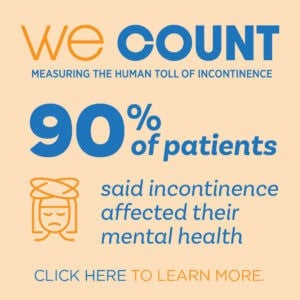
But taking care of your health is not selfish.Infographic titled We Count shows that 90% of patients said bowel health conditions and incontinence affected their mental health. Includes a sad face icon and a prompt to click for more information.
It’s foundational.

Your health affects:

  • your energ
  • your mental well-being
  • your relationships
  • your mobility
  • your independence
  • your long-term quality of life

This Women’s Health Month, Give Yourself Permission to Pay Attention

You do not need to wait until symptoms become unbearable to seek support.

This month can be an opportunity to:

  • schedule overdue check-ups
  • ask questions you’ve been avoiding
  • discuss bladder or pelvic symptoms
  • prioritize sleep and movement
  • learn about treatment options
  • talk openly about menopause or hormonal changes
  • stop minimizing symptoms that are affecting daily life

Sometimes the hardest step is simply acknowledging:

“This is affecting me more than I admit.”

You Deserve Quality of Life, Too

Women are incredibly resilient. But resilience should not require silent suffering.

You deserve:

  • restful sleep
  • confidence leaving the house
  • the ability to laugh without worry
  • freedom to exercise and travel
  • support for your physical and emotional health
  • answers to your questions
  • treatment options
  • care that takes your symptoms seriously

And most importantly:
you deserve to put yourself on your own priority list.

A Reminder This Women’s Health Month

Your symptoms matter.
Your comfort matters.
Your emotional well-being matters.
And your quality of life matters, too.

If you’ve been putting your health last, this month is a reminder that your body deserves attention, care, and support — not just endurance.

ResourCes

Comments

Leave a Reply

Your email address will not be published. Required fields are marked *

This site uses Akismet to reduce spam. Learn how your comment data is processed.

Related Articles

A person in gray sweatpants stands with hands covering their crotch, showing a large wet stain indicative of bladder leakage. A bed with white sheets appears in the background, highlighting the need for absorbent products or bladder leakage pads.

Is Bladder Leakage a Normal Part of Aging?

There is a quiet, widespread belief among women that at a certain age, after children, after menopause, and after “a lot of living,” bladder leaks just happen. You carry a pad. You know which restrooms are the cleanest. You skip the trampoline park with the grandkids. You don’t say anything to your doctor because, honestly, what would they even say? This is just…aging.

Using appropriate absorbent products and a gentle skin-care routine may help support skin integrity.
The medical community is clear: urinary incontinence is common, but it is not a normal or inevitable part of aging. The Mayo Clinic Health System states it directly that “although urine incontinence is common, it’s not normal.” The condition has causes, those causes have treatments, and those treatments, for many women, work remarkably well.

A woman with long red hair and a black shirt stands in front of a blue background. Text reads: “Leaks & Longevity. Dr. Mia Duncan explores incontinence after prostate cancer surgery and how early signals can shape long-term health.”.

Bladder Health and Longevity: What Your Symptoms Are Trying to Tell You

In this episode of Life Without Leaks, we sit down with Dr. Mia Duncan, a dual board-certified urologist and urogynecologist, to explore the connection between bladder health and longevity.

Dr. Duncan explains why incontinence is often just the “tip of the iceberg,” and how early bladder symptoms can signal broader health issues. From root-cause diagnosis and bladder diaries to sleep disruption, UTIs, and prevention strategies, this conversation offers practical insights to help listeners take control of their health, now and for the long term.

To learn more about Dr. Duncan and Columbus Urogynecology, visit here.

A person in gray sweatpants stands with hands covering their crotch, showing a large wet stain indicative of bladder leakage. A bed with white sheets appears in the background, highlighting the need for absorbent products or bladder leakage pads.

Is Bladder Leakage a Normal Part of Aging?

There is a quiet, widespread belief among women that at a certain age, after children, after menopause, and after “a lot of living,” bladder leaks just happen. You carry a pad. You know which restrooms are the cleanest. You skip the trampoline park with the grandkids. You don’t say anything to your doctor because, honestly, what would they even say? This is just…aging.

Using appropriate absorbent products and a gentle skin-care routine may help support skin integrity.
The medical community is clear: urinary incontinence is common, but it is not a normal or inevitable part of aging. The Mayo Clinic Health System states it directly that “although urine incontinence is common, it’s not normal.” The condition has causes, those causes have treatments, and those treatments, for many women, work remarkably well.

Your voice Matters

Men with stress urinary incontinence are invited to complete a confidential 20-minute survey about daily symptoms, treatment experiences, and quality of life.