New findings from NAFC’s Access to Care Survey reveal a troubling gap in the patient journey: Too many people are left without a clear path forward when their first treatment doesn’t provide relief.
For someone living with incontinence, deciding to seek help can be a significant first step. It may take months or even years to work up the courage to discuss bladder symptoms with a healthcare provider.
But what happens when the treatment they recommend doesn’t work?
For many patients, that’s where the journey stalls.
Findings from our 2026 Annual Survey on Access to Care suggest that while many people take the important step of seeking medical attention, far too many struggle to find lasting relief or even understand what to do next.
And the consequences can extend well beyond bladder symptoms.
Seeking Care Is Only the Beginning
The good news? People living with incontinence are seeking help.
NAFC’s Access to Care Survey found that 84% of respondents had spoken with a healthcare provider about their bladder symptoms.
But getting into the doctor’s office doesn’t necessarily mean patients leave with the answers they need.
In fact, only 34% reported leaving their appointment with a clear understanding of their condition and treatment options.
That’s a significant disconnect.
Imagine finally finding the courage to talk about a personal health concern, only to leave the appointment unsure of what is happening, whether the recommended treatment will work, or what to do if it doesn’t.
For patients already dealing with the physical and emotional challenges of incontinence, that uncertainty can become another barrier to getting better.
When the First Treatment Fails, What’s Next?
Incontinence treatment is rarely one-size-fits-all.
What works for one person may not work for another. Some patients respond well to lifestyle changes or pelvic floor physical therapy. Others may need medications, additional therapies, or more advanced treatment options.
Finding the right approach can take time.
But NAFC’s survey suggests that many patients aren’t successfully navigating that process.
An alarming 75% of respondents reported stopping at least one treatment.
And 41% said they were no longer receiving care.
While these findings don’t tell us exactly why every patient discontinued treatment, they raise an important question:
Are patients giving up on treatment or is the healthcare system failing to help them understand what comes next?
For someone who has already tried a treatment without success, the prospect of starting over can feel overwhelming.
They may assume they’ve exhausted their options. They may worry that nothing else will work. Or they may simply not know that other treatments exist.
Without clear guidance and follow-up, a disappointing first experience can become the end of the treatment journey.
Living With Symptoms That Aren’t Improving
Perhaps one of the most revealing findings from the survey is that 47% of respondents reported that their current approach to managing incontinence wasn’t working.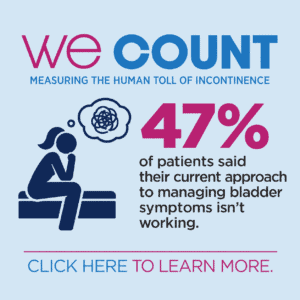
That’s nearly half of those surveyed.
It suggests that many people are continuing to live with symptoms despite having taken steps to address them.
For some, that may mean planning their days around bathroom access. For others, it could mean avoiding exercise, travel, social gatherings, or activities they once enjoyed.
Over time, these adjustments can become so routine that people begin to accept them as part of everyday life.
But living with symptoms shouldn’t mean accepting that nothing more can be done.
When a treatment isn’t providing adequate relief, that should be an opportunity to reassess the approach not a reason to abandon care.
The Missing Piece: Knowing What Comes Next
One of the clearest messages from NAFC’s Access to Care Survey is that patients want more information.
The findings revealed that:
- 64% wanted a guide explaining their treatment options.
- 37% wanted more information about advanced treatment options.
These findings point to an important opportunity to improve the patient experience.
People aren’t necessarily unwilling to pursue additional care. Many simply need help understanding what’s available.
For example, someone who hasn’t found relief with pelvic floor exercises or medication may not realize that other approaches could be appropriate for their particular condition.
Depending on the type of incontinence and individual circumstances, additional options may include supervised pelvic floor physical therapy, bladder training, medication adjustments, minimally invasive procedures, or other specialized treatments.
Not every treatment is appropriate for every patient. That’s why ongoing conversations with a qualified healthcare provider are essential.
The important message is that one unsuccessful treatment does not mean every treatment will fail.
Why Patients Don’t Always Take the Next Step
If additional treatments are available, why do so many people remain without effective care?
The survey identified several barriers that may help explain why patients struggle to move forward:
- 29% cited cost or insurance concerns.

- 26% reported embarrassment or anxiety.
- 22% identified fear of treatment as a barrier.

These challenges can become even more difficult after an unsuccessful treatment experience.
A patient who has already invested time, money, and emotional energy into a treatment that didn’t work may understandably hesitate before trying something else.
Without reassurance, education, and a clear plan, continuing care can feel like another risk rather than an opportunity for improvement.
This is why access to care must mean more than access to an initial appointment.
It must also include access to information, follow-up support, and the ability to explore additional treatment options when necessary.
What Patients Can Do When Treatment Isn’t Working
If you’ve tried a treatment for incontinence and haven’t experienced the improvement you hoped for, you’re not alone.
And you don’t have to assume that you’ve reached the end of your options.
Consider taking these steps:
- Schedule a follow-up conversation.
Let your healthcare provider know what has and hasn’t improved. Be specific about your symptoms and how they’re affecting your daily life.
- Ask whether your treatment needs more time or adjustment.
Some treatments require consistent use over several weeks or months. Others may need to be adjusted or replaced. Your provider can help determine whether your current approach is worth continuing.
- Ask about alternatives.
A simple question—”What else can we try?”—can open the door to a broader conversation about available treatments.
- Consider seeing a specialist.
Depending on your symptoms, a urologist, urogynecologist, or pelvic floor physical therapist may offer additional expertise and treatment approaches.
- Don’t assume your symptoms are something you just have to live with.
Incontinence is common, but that doesn’t mean it’s an inevitable part of aging or something that cannot be improved.
Moving From a First Treatment to a Long-Term Plan
NAFC’s Access to Care Survey highlights a critical gap in incontinence care: helping patients move forward when their first treatment doesn’t work. Patients need clear guidance, awareness of additional options, and ongoing support to find lasting relief.
Because the first treatment shouldn’t be the last conversation.
If you’re struggling with incontinence, don’t give up. Talk with your healthcare provider about your next steps and explore the resources available through NAFC.