

More than 15 million Americans have been diagnosed with COPD – that’s over 6% of the population. Chances are that you either have COPD or know someone with it.
What most people don’t know is that incontinence is a fairly common complication of COPD that can have major effects on quality of life. But lifestyle changes and other interventions can make a big difference!
Read on to get facts, tips, and advice on COPD and incontinence!
What Is COPD?
COPD Definition
Chronic obstructive pulmonary disease (COPD) is a chronic, progressive, and incurable respiratory condition.
It’s an umbrella term for several conditions – chronic bronchitis, emphysema, and refractory (incurable) asthma. Someone with COPD may have several of these conditions or only one.
COPD Symptoms
- Chronic bronchitis inflames the lining of your bronchi (the main airways of your lungs). This causes them to overproduce mucus, which can lead to frequent coughing and difficulty breathing.
- Emphysema changes the tissue in your lungs. Healthy lungs are like a brand new kitchen sponge – they’re filled with numerous tiny spaces (alveoli) that expand and contract with ease. Emphysema causes holes to develop between the alveoli, causing the tissue to collapse and making it harder to take a breath
- Refractory asthma causes your airways to swell, which blocks off airflow. Wheezing, shortness of breath, and treatment-resistant asthma attacks are common.
No matter what type of COPD somebody has, they’re likely to experience frequent coughing and difficulty breathing.
COPD Treatments
COPD is a progressive disease without a cure, but it’s extremely treatable. Lifestyle interventions, certain therapies, and medication can all help COPD sufferers live full and active lives.
The most common and effective COPD treatment is quitting smoking. Sufferers are also urged to avoid secondhand smoke.
Bronchodilators, medications that relax the muscles around your airways, and inhaled steroids, which reduce inflammation, are the most common medications given for COPD.
Oxygen therapy is another option. Some patients only use oxygen while sleeping or moving around, while others use it continuously.
Surgery to remove diseased tissue from the lungs can also be done, and a small number of COPD sufferers receive lung transplants.
What Is Incontinence?
Urinary incontinence, or the inability to control one’s bladder, can be broken up into several types:
- Urge incontinence is sometimes known as overactive bladder. It’s characterized by frequent, sudden urges to urinate. This can sometimes result in bladder leakage if you don’t get to the bathroom in time.
- Stress Urinary Incontinence is caused by weak muscles around your bladder. These muscles make it harder for your bladder to hold urine in, especially if you’re moving around or coughing.
- Mixed incontinence is a combination of the two other types. Doctors typically start by treating the most severe symptoms.
How Does COPD Contribute to Incontinence?
COPD and Bladder Control
Why do people with COPD become incontinent? The chronic cough experienced by most COPD sufferers contributes to stress urinary incontinence (SUI).
A cough causes your abdominal and pelvic muscles to quickly expand and contract. If you cough hard and often enough over many years, you cause your pelvic muscles to stretch. In time, the muscles can even develop tears.
These stretches and tears can weaken your muscles and make them less able to control your bladder in certain situations, like getting up from a chair, walking, or sneezing.
Other Risk Factors
A lot of other factors can contribute to SUI as well. These include:
- Childbirth – giving birth, especially vaginally, can weaken and tear pelvic floor muscles.
- Pelvic surgery – prostate surgery and hysterectomies can also weaken or tear pelvic floor muscles.
- Overweight – additional weight puts additional strain on the muscles around your bladder.
- Age – all of the body’s muscles start to weaken with age, and pelvic floor muscles are no exception.
Managing COPD and Incontinence
Both COPD and incontinence can be incredibly isolating conditions. You may not feel comfortable traveling too far from home, and you may be embarrassed talking about your medical conditions.
However, it is possible to live a full life with COPD and SUI. A few small tweaks can really boost quality of life.
Lifestyle
Losing Weight
Weight can put stress on the muscles surrounding your bladder, putting them at additional risk of stress tears. Losing weight can help to relieve some of the strain. Talk with your doctor before you start any weight loss plan.
Quitting Smoking
The number one best thing you can do for both your COPD and incontinence is to stop smoking. Smoking obviously makes COPD worse, but it also irritates the lining of the bladder. That can cause frequent urination on top of any other SUI symptoms that you’re dealing with.
Quitting smoking is easier said than done, and you’ve probably already tried it before. It’s always worth making another attempt, though. Talk with your doctor – medication, nicotine patches, and other interventions can make the process much easier.
Pelvic Exercises
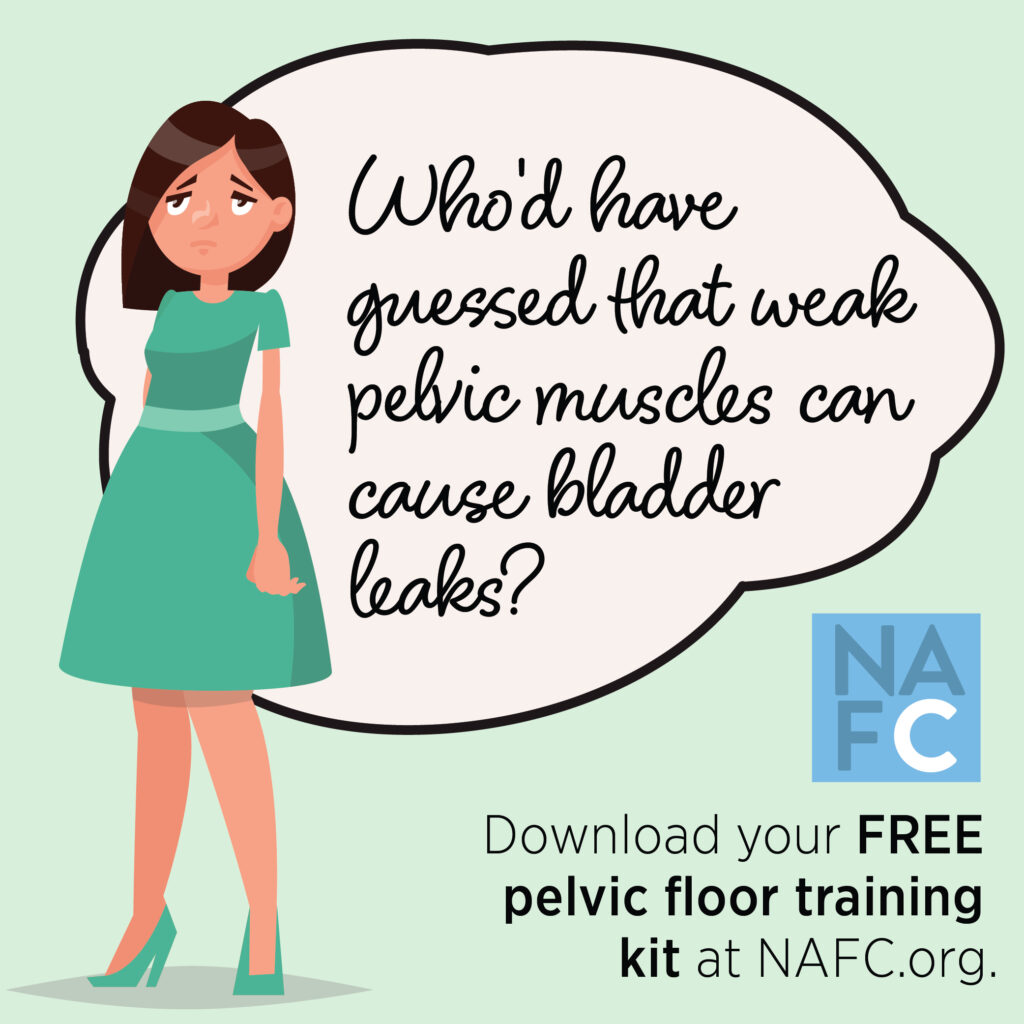
Strengthening your pelvic muscles can make a big difference when it comes to SUI. Stronger pelvic muscles are more resistant to stretching and tearing.
Pelvic exercises can be done if you’re at any level of fitness, though you should always check with a doctor or therapist before starting any new exercises. Check out NAFC’s downloadable exercise sheets here!
Medication
COPD medication that controls your coughing generally helps with the associated SUI, as well. As you cough less, your pelvic muscles get some time to repair themselves.
Conclusion
Urinary incontinence is an under-discussed complication of COPD and something many patients feel embarrassed about bringing up with their doctors. However, COPD-related incontinence can be managed with exercises, lifestyle interventions, and medication.
NAFC has tips on talking with your doctor, as well as message boards where you can connect with other patients. You are not alone!



5 Responses
I’m 59 years old and female. I was diagnosed a couple of months ago with COPD, and I was beyond scared! My lung function test indicated 49% capacity. After having had the flu a year ago, the shortness of breath, coughing, and chest pains continued even after being treated with antibiotics. I’ve been smoking two packs a day for 36 years. Being born without a sternum caused my ribs to be curled just one inch away from my spine, resulting in underdeveloped lungs. At age 34, I had surgery, and it was fixed. Unfortunately, my smoking just caused more damage to my already underdeveloped lungs. The problem I was having is that I enjoy smoking and don’t want to give up! Have tried twice before and nearly went crazy, and I don’t want to go through that again. I saw the fear in my husband and children’s eyes when I told them about my condition; then they started to find solutions on their own to help my condition. I am a 59-year-old now who was diagnosed with COPD emphysema, which I know was from my years of smoking. I started smoking in school when smoking was socially acceptable. I remember when smoking was permitted in hospitals. It was not known then how dangerous cigarettes were for us, and it seemed everybody smoked, but I was able to get rid of my COPD lung condition through the help of Madiba Herbal Center. My husband bought madibaherbalcenter. com offers a herbal formula to help you address and repair lung conditions and support your overall health with natural organic herbs. I wish anybody who starts smoking at a young age would realize what will eventually happen to their bodies if they continue that vile habit throughout their life.
Thank you for sharing useful information
I’ve been living with Parkinson’s disease for quite some time, and for years, I struggled to find lasting relief. While medications offered some temporary help, the symptoms always returned and often worsened.Out of a mix of hope and hesitation, I decided to try an herbal treatment program from NaturePath Herbal Clinic. I’ll admit, I was skeptical at first. But around the fourth month, I began to notice real, steady progress.my tremors became less frequent the stiffness in my body eased My balance and coordination gradually improved It wasn’t an overnight transformation, but it was consistent and life changing. For the first time in years, I feel more in control of my body. I can move with greater freedom, sleep more peacefully, and enjoy daily activities without the constant discomfort I once accepted as normal.The improvement I’ve experienced physically, emotionally, and mentally has been nothing short of upliftings.If you’re exploring natural options for managing Parkinson’s, I wholeheartedly recommend looking into NaturePath Herbal Clinic. Their approach has made a real difference in my life, and I’m truly grateful I gave it a chance.
For the past few years I have had difficulty working out in the yard, and then in 2018 it got harder and harder to breathe. After many tests, it was a CT scan that showed Emphysema, and scarring in my lungs. I quit smoking 8 years ago, but the damage has been done. I got to a point I couldn’t catch my breath and was coughing so hard I thought the top of my head would blow off; nothing was really working to help my condition. Finally, I started on the COPD formula, and with the help of this treatment, I’m active again. Its effects on emphysema are amazing; all my symptoms gradually faded away. I breathe much more freely now and no longer need my oxygen cylinder! Visit Uine healthcentre . ne t to get this formula. I’m surprised a lot of people with COPD/emphysema haven’t heard of the formula.
I was diagnosed with COPD over 5 years ago and struggled with breathing daily. After trying many treatments with no real results, I came across EarthCureHerbalClinic.com. I followed their natural remedy program for several months, and I’m honestly amazed — my symptoms have completely cleared up. I feel like I’ve got my life back. Thank you!