


The Top 3 Reasons To Use A Bowel Diary When You Have Fecal Incontinence
It sounds weird, doesn’t it? Keeping a journal for your bowel or bladder? Maybe, but a Bowel Diary is actually a very useful tool to

4 Common Myths About Accidental Bowel Leakage
Accidental Bowel Leakage (ABL) is something no one likes to talk about. Even more so than urinary incontinence, fecal incontinence carries a stigma that is

New Options For Managing Fecal Incontinence
It wasn’t long ago that those suffering with fecal incontinence had just a handful of options. They could try behavioral modifications (still largely used
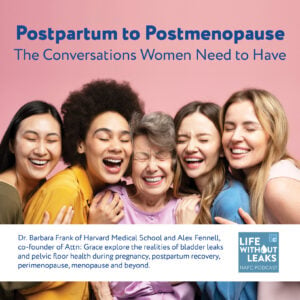
From Postpartum to Postmenopause: The Conversations Women Need to Have
In this episode of Life Without Leaks, we’re joined by Dr. Barbara Frank of Harvard Medical School and Brigham and Women’s Hospital, along with Alex Fennell, co-founder of Attn: Grace, an innovative manufacturer of incontinence products.
Together, we explore the realities of bladder leaks and pelvic floor health during pregnancy, postpartum recovery, perimenopause and menopause, and we discuss why more women are finally beginning to talk more openly about their experiences.
The conversation covers:
• The connection between hormones, menopause and bladder leaks
• Why pelvic floor therapy is having a major moment
• The surprising relationship between pelvic floor tension and incontinence
• How products can impact skin health, comfort and UTIs
• The truth about hormone replacement therapy
• Why community and conversation matter so much in women’s health
Alex also shares the story behind Attn: Grace and the company’s mission to create cleaner, plant-based incontinence products designed to support women with comfort, dignity and confidence.
Whether you’re navigating postpartum recovery, menopause symptoms or simply looking to better understand pelvic health, this episode offers expert insights, practical advice and an encouraging reminder that no one should feel alone in these experiences.