Search
[give_form id="19690"]

When It’s More Than a Dribble, A Guide to Heavy Incontinence 

By Northshore Care Supply

Incontinence is a common and often challenging condition that affects people of all ages. While you’re sure to see television commercials from store brands whispering about small drips or the occasional wet sneeze, for many people dealing with incontinence losing control can feel more like a flood and less like a dribble. It’s important to recognize that not all instances of incontinence are the same.

Whether you’re dealing with light urinary incontinence or heavy bladder and bowel incontinence, you need to choose the solutions that work best for your specific situation. In this blog article, we will explore the fundamental differences between heavy incontinence and light incontinence and provide recommendations for managing heavy incontinence. 

Understanding Incontinence

Before delving into the differences between heavy and light incontinence, let’s clarify what incontinence means. Incontinence is a condition characterized by the loss of bladder or bowel control, resulting in involuntary leakage of urine or feces. It can affect people of all ages, although it is more prevalent among older adults.

The condition has many causes and variations. An assessment by a medical professional is necessary to determine the type of incontinence and severity. Such an evaluation is usually conducted by a urologist who specializes in conditions relating to the bladder, urethra, ureters, kidneys and adrenal glands. Typically, incontinence will be categorized as light, moderate, or heavy, depending on the frequency and volume of leakage.

Light Incontinence

The most common type of incontinence is stress incontinence. These are small leaks caused by physical exertion. Stress incontinence leaks may occur when pressure — or stress — is put on the bladder, such as when coughing or sneezing, lifting something heavy, exercising or bending over. As many as 1 in 3 women experience stress incontinence during their lifetime. Men are affected as well, but not as often. In men, stress incontinence can occur after prostate cancer treatment, while in women it is usually experienced after childbirth or menopause.

Key Characteristics of Light Incontinence

  1. Occasional Leakage: Leaks are minor and sporadic, usually brought on during specific activities
  2. Minimal Volume: The amount of urine leaked is generally small 
  3. Common Triggers: Leaks brought on by stress activities like coughing, sneezing, laughing, or exercise


There are many options for managing and treating light stress incontinence. First, it’s important to speak to your doctor. Avoiding or delaying treatment may increase the severity of the issue. For many, incontinence can be difficult to discuss, and individuals with light incontinence may think the occasional small leak is nothing to worry about and will go away with time, or they believe it is a normal part of aging. Incontinence is not normal, but it is very common, often treatable, and extremely manageable, so don’t hesitate to seek professional help from your healthcare provider. Your doctor may recommend pelvic floor exercises, lifestyle modifications, or incontinence pads. 

When choosing products for light incontinence be sure to choose a pad or liner designed for incontinence rather than a menstrual pad. Because many women are used to menstrual pads, it’s easy to assume they’re acceptable for mild incontinence protection as well, but incontinence products aren’t interchangeable with feminine hygiene supplies.

Heavy Incontinence

If you’ve been experiencing more than the occasional minor leak, you may be dealing with moderate to heavy incontinence. Heavy incontinence, also known as severe or total incontinence, represents a more challenging and persistent form of the condition.

Key Characteristics of Heavy Incontinence

  1. Frequent & Substantial Leakage: Heavy incontinence involves recurring leaks or voids throughout the day, may include urinary and bowel voids
  2. Day & Night Leaks: Loss of control may occur during the day, and at night leading to interrupted sleep 
  3. Limited Control: Those with heavy incontinence can have limited control over their bladder, resulting in higher risk of accidents

Managing Heavy Incontinence

Heavy incontinence can be disruptive to daily life. It may necessitate frequent changes, disrupt sleep, and lead to emotional and psychological challenges. Fear of leaks, odors, and embarrassment can keep many with heavy incontinence stuck at home, isolated from friends and family. It’s important to remember that even heavy incontinence can be managed successfully and that there are treatment options. 

Absorbent products can be an immediate way to manage heavy incontinence, while you wait for a doctor’s appointment and explore your treatment options. There are a variety of absorbent products available including: 

  • Incontinence Pads, Liners, and Guards: Adhesive pad stuck into your existing washable underwear to absorb leaks, some heavy absorbency options exist, but pads are usually best for light incontinence.
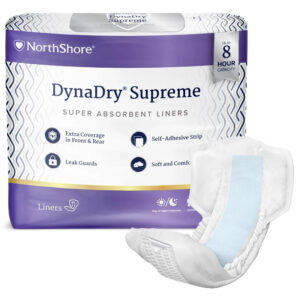
DynaDry Supreme Package

  • Pull-on Style Absorbent Underwear: Pull on and off like traditional underwear but include an absorbent core. Usually made of a breathable cloth-like material that stretches to fit your body.
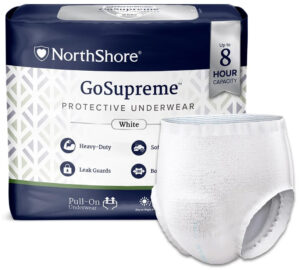
GoSupreme Package.

  • Diaper-Style Briefs with Tabs: Tab-style briefs benefit people looking for a more secure fit. Tabs give a tighter fit around the leg area and allow you to tighten the product throughout the day to prevent sagging after multiple voids.
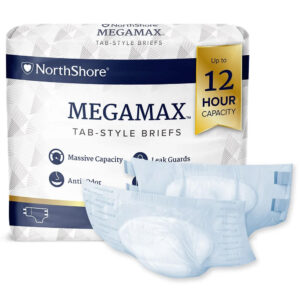
MegaMax Product.

You can find absorbent products at your local pharmacy, home medical equipment store, or you can order discreetly online via an online retailer. Local retail stores tend to cater toward light incontinence, so if you’re experiencing heavy incontinence an online retailer will usually have a larger selection and more options with higher absorbencies so you can change your products less frequently. NorthShore Care Supply offers premium, maximum absorbency products along with convenient, discreet home delivery. NorthShore brands offer up to 3x the leak protection of retail brands.

Many people tend to start with the lightest product and work their way up when dealing with incontinence, but if you’re experiencing heavy incontinence, you’ll likely want to start with pull-up underwear or an adult diaper. These products will offer protection for more than one void, allowing you to avoid frequent changes and get back to your daily routine. Remember to be patient with yourself. Using adult diapers can be a new and unfamiliar experience, but with a little practice you’ll get the hang of it in no time. 

It may take some time to effectively manage incontinence, but don’t give up hope. Everyone experiencing incontinence deserves to live their life to the fullest with freedom and dignity. Whether you’re dealing with the occasional leak or heavy control problems, there are products and treatments available. 

Learn more about NorthShore Care Supply and our mission to help individuals manage incontinence with life-changing products and initiatives. 

About Northshore Care Supply

NorthShore was founded in 2002 to empower people to live with the freedom and dignity they deserve and has helped over 2.5 million families keep their loved ones protected from leaks. The company is committed to helping 80 million Americans manage bladder or bowel incontinence, especially those with the heaviest control problems. Our featured NorthShore® brand is the leading premium adult diaper brand in the U.S. and is available at NorthShore.com or by calling (800) 563-0161. Follow us on LinkedIn, Facebook, Twitter, and Instagram.


Comments

One Response

  1. I’m very new to this world…and I’m finding some problems with the learning curve in reference to products intended to help me. Because of my build and very small genitals I’ve found that products intended for women seem to work best. Is this common or am I missing something?

Leave a Reply

Your email address will not be published. Required fields are marked *

This site uses Akismet to reduce spam. Learn how your comment data is processed.

Related Articles

Five women of varying ages stand close together, smiling and laughing. The text discusses vital conversations on health—from postpartum to incontinence after prostate cancer surgery—on the Life Without Leaks NAFC podcast.

From Postpartum to Postmenopause: The Conversations Women Need to Have

In this episode of Life Without Leaks, we’re joined by Dr. Barbara Frank of Harvard Medical School and Brigham and Women’s Hospital, along with Alex Fennell, co-founder of Attn: Grace, an innovative manufacturer of incontinence products.

Together, we explore the realities of bladder leaks and pelvic floor health during pregnancy, postpartum recovery, perimenopause and menopause, and we discuss why more women are finally beginning to talk more openly about their experiences.

The conversation covers:
• The connection between hormones, menopause and bladder leaks
• Why pelvic floor therapy is having a major moment
• The surprising relationship between pelvic floor tension and incontinence
• How products can impact skin health, comfort and UTIs
• The truth about hormone replacement therapy
• Why community and conversation matter so much in women’s health

Alex also shares the story behind Attn: Grace and the company’s mission to create cleaner, plant-based incontinence products designed to support women with comfort, dignity and confidence.

Whether you’re navigating postpartum recovery, menopause symptoms or simply looking to better understand pelvic health, this episode offers expert insights, practical advice and an encouraging reminder that no one should feel alone in these experiences.

A person sitting on a beige bath mat is placing an incontinence pad into their underwear for skin protection. A box labeled Attn: Grace with blue designs sits on the mat nearby.

Ask The Expert: From A Doctor’s Perspective What Are Some Common Questions You Hear?

If you’ve ever sneezed and held your breath hoping for the best, you’re not alone. Bladder leaks, pelvic floor issues, and the constellation of symptoms that go with them are incredibly common — and incredibly under-discussed. We sat down with two of our favorite experts who are changing the bladder leak conversation: Dr. Barbara Frank, Attn: Grace medical advisor and board certified OB/GYN, and Dr. Sara Reardon, pelvic floor physical therapist (and the woman your pelvic floor has been waiting to meet). They took turns asking each other the questions their patients ask most — and answered them with the same candor they bring to the exam room. They cover everything from how to prepare for postpartum, to what question to ask your own pelvic floor PT, to how to manage incontinence during menopause. This is a knowledge drop you don’t want to miss.

Two older women smiling and walking together on a sunny neighborhood sidewalk, one holding a coffee cup. Both enjoy the confidence provided by discreet incontinence products for women. Trees and houses line the street in the background.

How Aging Changes Bladder Control — What Most People Don’t Expect

As an RN who’s worked in geriatrics for over 14 years, I know first hand that changes in bladder control can be a common part of aging. However, what I’ve also learned is that the treatment and management of these changes differ depending on whether they are due to aging or other conditions.
If you’re experiencing more frequent trips to the bathroom or sudden, intense urges to urinate, you might be wondering what is going on and what you can do about it. Let’s talk through some of the changes that might be going on in your body and how you can be better prepared to manage your bladder control.

Five women of varying ages stand close together, smiling and laughing. The text discusses vital conversations on health—from postpartum to incontinence after prostate cancer surgery—on the Life Without Leaks NAFC podcast.

From Postpartum to Postmenopause: The Conversations Women Need to Have

In this episode of Life Without Leaks, we’re joined by Dr. Barbara Frank of Harvard Medical School and Brigham and Women’s Hospital, along with Alex Fennell, co-founder of Attn: Grace, an innovative manufacturer of incontinence products.

Together, we explore the realities of bladder leaks and pelvic floor health during pregnancy, postpartum recovery, perimenopause and menopause, and we discuss why more women are finally beginning to talk more openly about their experiences.

The conversation covers:
• The connection between hormones, menopause and bladder leaks
• Why pelvic floor therapy is having a major moment
• The surprising relationship between pelvic floor tension and incontinence
• How products can impact skin health, comfort and UTIs
• The truth about hormone replacement therapy
• Why community and conversation matter so much in women’s health

Alex also shares the story behind Attn: Grace and the company’s mission to create cleaner, plant-based incontinence products designed to support women with comfort, dignity and confidence.

Whether you’re navigating postpartum recovery, menopause symptoms or simply looking to better understand pelvic health, this episode offers expert insights, practical advice and an encouraging reminder that no one should feel alone in these experiences.