How to properly size briefs
Most leaks and skin irritation are caused by improper fit. Since no two people are the same, height, weight and absorbency needs are as unique as they are. Sizing can also be affected by factors other than height and weight. Sometimes people have anomalies such as large thighs or medical conditions such as amputations or hernias that make sizing a bit more challenging.
So how do you size someone for absorbent products? What do you need to keep in mind when doing sizing and what should proper fit look like?
Ways of Sizing
There are two ways to size for absorbent products. One is the chart method and the other is the measurement method. Choose the method that works best for you.
Chart Method
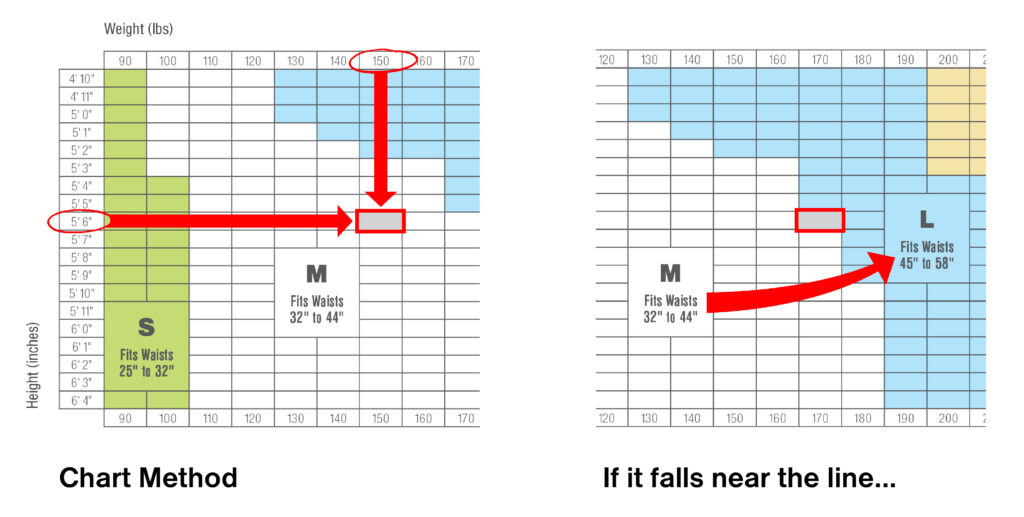
First is the chart method. Size charts are normally found on the sides of the brief packaging. On the left, you’ll see the heights and across the top will be the weight. Draw a line across from the height and down from the weight as shown below. The area where the two points intersect will be the proper size. Since the box falls in the white area, a medium would be the correct choice. If you find that your size falls on or very near the dividing line, choosing the larger size seems to work best.
Measurement Method
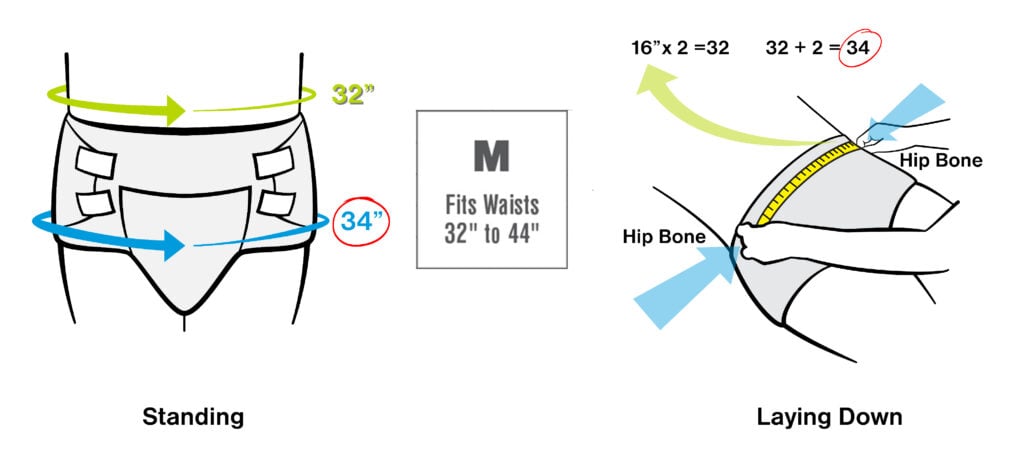
Another option is the measurement method. All you need is a simple tape measure. If you are standing, wrap the tape measure around their waist and hips. The correct size is the larger of these two measurements. If you are lying in bed, have someone take a tape measure and go from hip bone to hip bone. Use that measurement and multiply by two. Then add 2 more inches to get the correct size. In both of these cases, chose a medium since 34” falls in the fit range of the medium.
.
PREPARATION
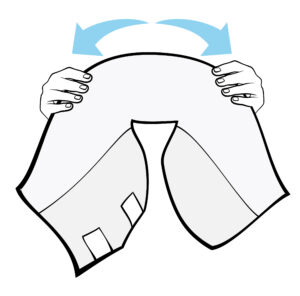
Briefs are tightly packed in their bag for transport. A quick and easy way to increase the absorbency and make them work faster is to fold the brief, then run your hands down the spine of the brief quickly. You’ll feel the brief get thicker and the leg elastics spring into shape. It makes getting that brief where it should be so much easier. When we do this, we separate the polymer and fluff. This allows the urine to pass into the brief more quickly and efficiently.
Proper Fit
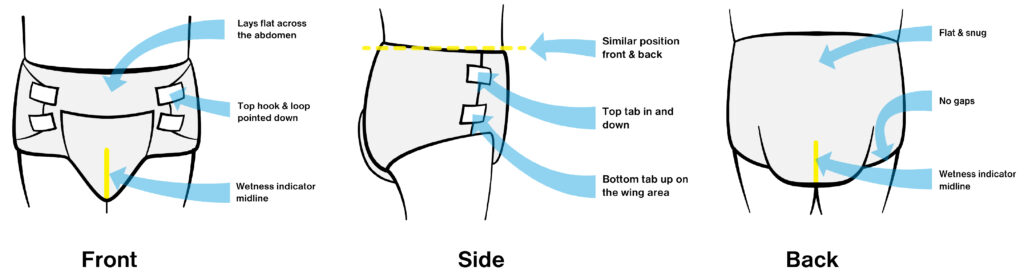
The key to a good fit is both sizing and proper application. The brief should lay flat across the abdomen. The wetness indicator should be midline. The top hook and loop fastener should be pointed down to tighten up the waist band and reduce leakage. The bottom tabs should be angled slightly up to tighten up the leg gathers.
From the side, we’d expect proper fit to look something like this. Similar position on the body both front and back. Top tab in and down and the bottom tab up on the wing area. Notice there is very little extra material on either side to get turned under and become an irritant.
And from the back we can see that the wetness indicator is midline. The brief is flat and snug against the body and there are no gaps around the leg. The leg gathers should be comfortable and non-binding.
These sizing and application principles apply to all protective undergarments.
IMPROPER FIT
Although we might think that bigger is better, it’s not. Improper application can and will have a negative effect on performance and skin health.
If the tabs meet in the middle or if there’s lots of extra material on the sides and bunched up in the middle, the brief is not fit correctly. If the brief is too loose, there will be no firm seal around the legs thus allowing urine to leak right out the side. When it’s not on properly in the front, there’s a good chance it’s not fitting properly in the back. If the brief doesn’t cover both cheeks, you’ll have wet clothing or a wet bed. The easiest way to make sure this doesn’t happen is to double check to see that the wetness indicator is midline on the body both front and back.
THINGS TO REMEMBER
The wetness indicator is just that, an indicator. It will turn dark blue, green, black or even partially disappear. This is not a gas gauge. It was never meant to tell you when the brief is half used or when it needs to be changed. It’s only there to remind you that you need to further investigate. Another thing to remember is that perspiration and moisture can also cause the wetness indicator to change colors.
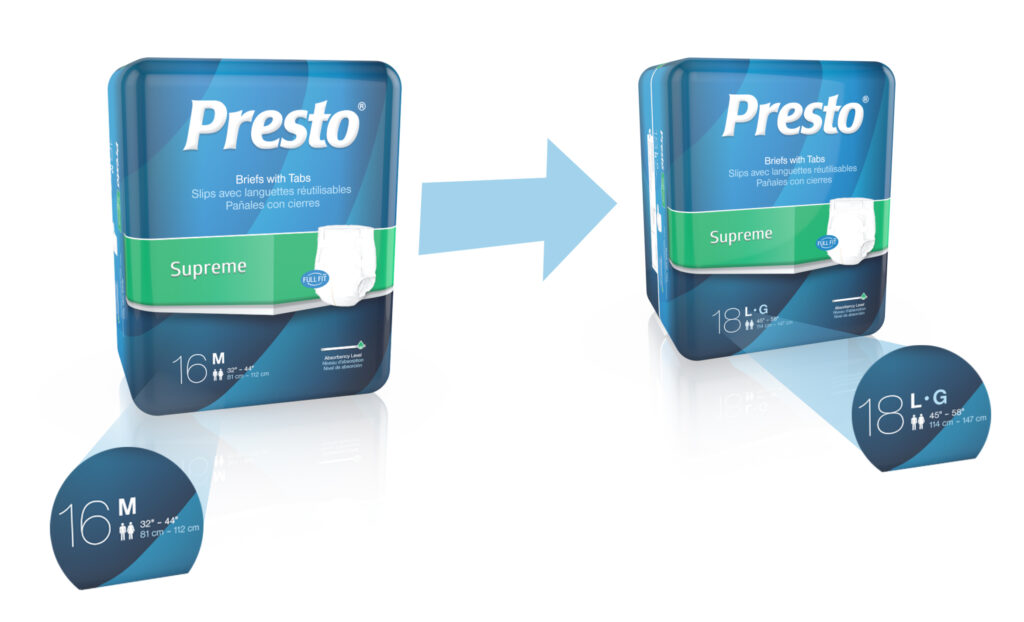
Sizing is the key to maximizing the performance of the product and comfort level for you Remember the sizing guide is just that… A guide. Sometimes you need to experiment since measuring doesn’t give the best fit. You may need to try a few sizes to get one that works best for you. If you try on a product that’s too big, get the next size down and give it a try.
For more information
Watch our video on how to properly size briefs.