[give_form id="19690"]

Combining Low Impact Workouts With High-Performance Protection

The calendar is flipping to summer and temperatures are heating up around the U.S., making it a great time to get out, get moving and enjoy some fresh air. Or maybe you’re just looking to add a little more activity into your life, no matter what time of year it is. 

Regardless of your motivation, if you want to increase your activity but have been hesitant to exercise more due to incontinence, read on for low-impact ways to improve your health and well-being. You will also learn about special absorbent products that can keep you protected and discreet, every step, pedal or stroke of the way.

Note: Whether you experience light urinary incontinence while coughing or have more severe incontinence involving loss of bowel control, if you desire and are physically able to exercise more regularly, you should talk with your doctor about a plan that is right for you. This article offers several suggestions for exercises and activities, but please make sure to confirm with your physician before starting any new workout.


Getting back in the pool

Common exercises such as crunches or leg raises may require you to clench your abdominal muscles, which can increase your chance of an accident. Instead of these activities, if you experience loss of bladder or bowel control, you might consider adding water aerobics, aqua-therapy, or other swimming activities into your exercise routine. 

Swimming is an excellent way to get a full-body workout without putting unnecessary strain on the pelvic region. Most swimming strokes naturally lift your chest, lengthen your spine, and do not force you to bear down, so they can help you avoid movements that can trigger leaks. Because water is much more resistive than air, you activate your muscles with every movement, making water exercises extremely efficient. Water also provides natural buoyancy, supporting a portion of your body weight to allow slow, smooth movements and avoid joint strain. Plus – after a good swimming workout, you can reward yourself with a relaxing float in the water!

If the idea of gettingimage of a swimmates swim product with the packaging behind. back in the pool does not appeal to you due to concerns about fecal incontinence,  we’d like to introduce you to a unique product that may change your mind. Tranquility® Swimmates® are underwear-style swim products that provide protection and security in the water. If you have fecal incontinence,  you should not attempt to use standard adult diapers, absorbent pads, or other incontinence care products when swimming, as they will become bloated with water and could cause waste to leak into the pool. However, Swimmates are made specifically for the water, providing reliable protection and security, thanks to their innovative design:

  • Worn subtly under a bathing suit by men or women, for discreet bowel incontinence protection
  • Kufguards® (inner leg cuffs) help contain bowel incontinence, giving extra security that the pool and your bathing suit will stay clean
  • Not made from normal absorbent materials found in typical incontinence care products, so they have minimal swelling and will not break apart in water
  • Disposable, so there is no need to clean your swimsuit after an episode. 
  • Tear-away side seams make disposal easy. No more struggling to remove a wet garment!
  • Available in adult sizes Medium (waist size 34″-48″ and 120 – 175 lbs) to 2X-Large (62″-80″ and 250+ lbs)

Swimmates are ideal forfamily swimming in pool.little swimmers, too. If you care for a child with bowel loss, Swimmates keeps them and those around them in the pool protected, giving you the confidence to let the child have fun in the water. 

Tranquility offers these products in a “Small/Youth XL” size for waist measurements of 22” – 36” and a weight of 80 – 125 lbs. Swimmates may even be covered under state waivers or other programs for children with complex healthcare needs!

Learn more about Swimmates or request a FREE sample pack today!

Other low-impact exercise ideas

Besides swimming, other activities are ideal for those with incontinence, such as using an elliptical device, doing Kegel exercises or just taking a pleasant stroll. Higher-impact activities like weight training and core strength-building can be modified slightly to reduce the risk of an accident, and even cycling can be fun and healthy if a few precautions are taken.

Elliptical machine

Also called a cross-trainer, it’s a lower-impact version of a treadmill. Instead of walking or running atop a moving belt, your feet stay connected to two platforms while moving in a smooth, elongated circular pattern. Some elliptical machines have arm handles so you can also work out your shoulders, chest, and back.

Kegel Exercises

Your doctor may have instructed you on these popular pelvic-floor strengtheners to help manage stress incontinence. If not, the National Association for Continence offers this great Kegel exercise video to get you started.

Walking

Want to start out a bit slower? Walking is a simple activity that is free, does not require a gym membership, and can be done with friends or by yourself. Ask about organized walking programs at your local library, community center, hospital, or your place of work, and you could receive a free or low-cost pedometer or other step-counting device to easily track your progress.

Modified Activities

Mild- to higher-impact exercises, such as lifting weights, can be modified to reduce stress on your core and mid-section to lower the risk of an accident. This is especially important if you experience incontinence that is related to pelvic floor weakness. 

To make weight training safer, lighten your weights so that you are not bearing down or grunting; remember to breathe in and out slowly throughout the movements; and when possible, lift from a seated position versus standing or bending over. 

Core strength exercises can also be modified. While planking, instead of stretching your legs out, try balancing on your knees. Do push-ups against a wall rather than the ground. Bridge exercises are great for strengthening pelvic floor muscles – follow these steps:

  • Lie down with your back flat against the ground and your knees bent at 90 degrees.
  • Put your feet flat on the floor and your arms at your side, with palms down.
  • Using your heels to push upwards, raise your hips while squeezing your glutes, pelvic floor muscles, and hamstrings.
  • Hold for a few seconds, then return to the starting position. 

Cycling

You may think that riding a bike, whether taking a spin on a local trail or trying out an indoor spin class, would be rough on the pelvic floor area – and it can be. While a review of a 2021 study found no direct correlation between cycling and urinary incontinence, it also stated that “research on pelvic health and cycling continues to be a work in progress.”

Ways to relieve stress on the mid-section when biking include installing seat-post shock absorbers; elevating the handlebars; alternating standing and sitting while riding; and having a pro shop fit your bike to ensure an ergonomic setup. For stationary cycling, a recumbent bike places the rider in a laid-back, reclining position, which re-distributes body weight more comfortably over a larger area. Also keep in mind that a sudden change in position, such as quickly getting off a bike seat after a long ride, may trigger an episode of leakage – especially if you have urge incontinence – so take it easy when dismounting.


Warm-up

Finally, no matter what workout you have planned, don’t forget to spend a few minutes warming up your muscles and joints beforehand and save a few minutes afterward for a cool-down session with some light stretching. This will not only leave you feeling less sore the next morning but will also gradually help increase your flexibility.

The right absorbent product keeps you moving

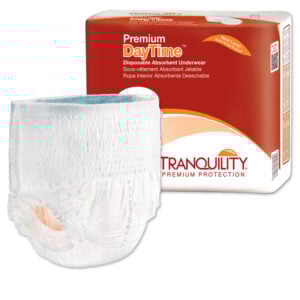
Looking for comfortable protection from leaks while you work out? Tranquility® DayTime™ Underwear let you live to the fullest in all-day confidence provided by quiet, form-fitting materials that move with you for leak-free security.

Premium DayTime Underwear provide enhanced discretion with a slimmer profile. Unique Kufguards® leg cuffs guide urine to the superabsorbent core, which holds and locks in fluid, so it will not be squeezed out during movement. The breathable sides help protect your skin by allowing heat and moisture to escape and air to flow in and out. The clothlike material is gentle against your skin and quiet when you move, with a moisture-proof backing that ensures fluid will not leak through. Soft leg elastics combine with a full-rise elastic waistband to create a secure fit. When it’s time for a break, just pull off like regular underwear, or if needed, use the tear-away side seams for easy removal.

If you prefer a tape-tab brief style of absorbent product, Tranquility SlimLine® Briefs will keep you moving confidently, with re-adjustable fasteners, a contoured fit, extended-coverage core, and soft leg elastics providing security against leaks.

Try a free tranquility daytime underwear product.sample pack of DayTime Underwear or SlimLine Briefs and experience active comfort for yourself. Contact the friendly Tranquility Customer Care team today for help selecting the right incontinence products to match up with your lifestyle.
About Tranquility

For more than 30 years, Tranquility® brand products have supported individuals in managing their most challenging incontinence care needs, providing a calm and confident space to live well. We offer a variety of styles, in a wide range of sizes from Youth to 5XL, and in three protection levels. Tranquility offers two-pack samples for most of their products, so you have the chance to experience maximum incontinence protection before committing to one item. Just answer a few quick questions on this form to request your free sample. If you have questions about which products are right for you, contact our dedicated Customer Care Center at 1-866-865-6101, Monday-Friday 8 a.m. to 5 p.m. ET or email CustomerService@pbenet.com, anytime.

Sources

Comments

Leave a Reply

Your email address will not be published. Required fields are marked *

This site uses Akismet to reduce spam. Learn how your comment data is processed.

Related Articles

An older couple walks hand in hand on a forest path, smiling at each other. Sunlight filters through green trees, creating a peaceful, natural setting. Thanks to reliable bladder leak pads, they enjoy their stroll with confidence and comfort.

Ask The Expert: Can You Live Without a Bladder?

Are you or someone you love scheduled for bladder removal surgery (cystectomy)? While it can be a surprise to find out you’ll need a cystectomy, whether partial or radical, know that you aren’t alone. 

In fact, bladder cancer is listed among the top 10 most diagnosed cancers worldwide.

We sat down with Aleece Fosnight, MSPAS, PA-C, CSC, CSE, IF, MSCP, HAES, to ask whether you can live without a bladder, how long you can live without one, why you might need a cystectomy, and more. 

A confident woman in a suit sits at a desk, embodying the role of a health advocate, with text about a podcast offering tips for managing urinary incontinence at work. The Life Without Leaks podcast logo and Listen Now message are also visible.

Showing incontinence who’s the boss in the workplace

Managing urinary incontinence is challenging enough, but bladder leaks, sudden urgency and frequent trips to the restroom can be especially stressful when you’re trying to get through a busy workday.

In this episode, we share practical strategies for managing bladder symptoms on the job, whether you’re commuting to an office, sitting through a long meeting, working from home or navigating a packed schedule. We’ll talk about bladder training and bathroom planning, hydration and potential bladder triggers, keeping a bladder diary, preparing for unexpected leaks, choosing incontinence products, staying active and more.

A group of six smiling adults takes a selfie outdoors in a grassy area, with trees and a road in the background. Everyone appears happy and relaxed, enjoying each other’s company—there’s no sign anyone is worried about a UTI, just laughter and good times shared among friends.

Why Bladder Health Matters More as We Age

Aging and the Bladder: What Changes?
As we grow older, the urinary system naturally undergoes changes that can affect bladder function.
Common age-related changes include:
Reduced bladder capacity
Increased bladder sensitivity
Changes in pelvic floor muscle strength
Hormonal changes, particularly after menopause
Enlarged prostate in men
Increased prevalence of chronic conditions such as diabetes, stroke, and neurological disorders
These changes can contribute to symptoms such as:
Urinary urgency
Frequent urination
Overactive bladder (OAB)
Urinary incontinence
Nocturia (waking at night to urinate)
While these symptoms become more common with age, they should never be viewed as something people simply have to live with.
The Hidden Connection Between Bladder Problems and Falls
One of the most overlooked consequences of bladder symptoms in older adults is an increased risk of falling.
Many falls occur during urgent trips to the bathroom, particularly at night. An individual may wake suddenly with a strong urge to urinate, rush through a dark room, become dizzy when standing, or trip over furniture, rugs, or other obstacles.
Research has shown that urinary urgency, frequency, and nocturia are associated with a higher risk of falls and fractures in older adults.
For seniors, a fall can have life-changing consequences, including:
Broken bones
Head injuries
Hospitalization
Loss of independence
Reduced mobility
Increased risk of future falls
In many cases, addressing bladder symptoms can be an important part of a comprehensive fall-prevention strategy.
How Nocturia Impacts Healthy Aging
Waking multiple times each night to urinate is more than a sleep disturbance.
Nocturia can contribute to:
Daytime fatigue
Reduced concentration
Memory difficulties
Mood changes
Increased fall risk
Lower overall quality of life
Older adults who experience frequent nighttime bathroom trips often report feeling less energetic and less able to participate in activities they enjoy.
Protecting sleep is an important part of protecting overall health.
The Emotional Impact of Bladder Leaks
Many older adults quietly manage bladder leakage without discussing it with family members or healthcare providers.
Unfortunately, untreated bladder symptoms can lead to:
Social withdrawal
Anxiety
Depression
Reduced physical activity
Fear of leaving home
Loss of confidence
Some people stop exercising, traveling, attending social events, or spending time with friends because they worry about finding a bathroom or experiencing leakage in public.
The result can be a cycle of isolation that negatively affects both physical and mental health.
Healthy Aging Includes Bladder Health
The good news is that many bladder conditions can be improved or successfully managed.
Treatment options may include:
Pelvic Floor Muscle Training
Strengthening the pelvic floor muscles can help improve bladder control and reduce leakage.
Bladder Training
Scheduled voiding and urge-suppression techniques may help reduce urgency and frequency.
Lifestyle Modifications
Small changes can make a meaningful difference, including:
Managing constipation
Maintaining a healthy weight
Limiting bladder irritants when appropriate
Staying physically active
Monitoring fluid intake patterns
Medical Treatments
Depending on the cause of symptoms, treatment options may include:
Medications
Neuromodulation therapies
Vaginal estrogen for postmenopausal women
Prostate treatments for men
Surgical interventions in select cases
Fall Prevention Tips for Older Adults with Bladder Symptoms
If urgency or nighttime bathroom trips are a concern, consider these safety measures:
Keep pathways clear of clutter
Use nightlights between the bedroom and bathroom
Wear supportive, non-slip footwear
Install grab bars when appropriate
Rise slowly from bed to avoid dizziness
Discuss medications with your healthcare provider
Seek evaluation for persistent bladder symptoms
Addressing both bladder health and home safety can significantly reduce fall risk.
A Conversation Worth Having
Too often, people assume bladder leakage is simply the price of getting older. The reality is that while bladder problems become more common with age, they are not an inevitable part of aging.
National Senior Citizens Day reminds us that healthy aging means more than managing chronic diseases—it means preserving independence, confidence, mobility, and quality of life.
If bladder symptoms are interfering with sleep, daily activities, or peace of mind, don’t ignore them. Talk with a healthcare provider and explore your options. Effective treatments and management strategies are available.
Because aging well isn’t just about adding years to life—it’s about adding life to those years.

An older couple walks hand in hand on a forest path, smiling at each other. Sunlight filters through green trees, creating a peaceful, natural setting. Thanks to reliable bladder leak pads, they enjoy their stroll with confidence and comfort.

Ask The Expert: Can You Live Without a Bladder?

Are you or someone you love scheduled for bladder removal surgery (cystectomy)? While it can be a surprise to find out you’ll need a cystectomy, whether partial or radical, know that you aren’t alone. 

In fact, bladder cancer is listed among the top 10 most diagnosed cancers worldwide.

We sat down with Aleece Fosnight, MSPAS, PA-C, CSC, CSE, IF, MSCP, HAES, to ask whether you can live without a bladder, how long you can live without one, why you might need a cystectomy, and more.