
Women’s Bladder And Bowel Health Conditions
JOIN OUR NEWSLETTER
Receive custom tools to help you manage your condition and get the latest in bladder and bowel health from NAFC!
Women’s Bladder And Bowel Health Conditions
If you’re dealing with bladder or bowel control problems, you might feel embarrassed, frustrated, or even a little alone. But the truth is, millions of women are going through the same thing. These challenges are more common than you think, and they are nothing to be ashamed of.
A lot of people believe incontinence is just soemthing that happens after having children or getting older, and that nothing can be done. But that’s not true. In fact, most bladder and bowel issues can be treated or managed so you can get back to living life on your terms.
It all starts with understanding what’s happening in your body. Once you know more, you and your doctor can create a plan that works for you. Below, you’ll find information about the most common types of bladder and bowel conditions, like urinary incontinence, and inflammatory bowel disease, along with links to help you learn more and take the next step toward feeling better.
Bedwetting
Bedwetting is a very common condition for adults -so common that it’s one of the most visited pages on our site! If you struggle with adult bedwetting, you’re not alone.
Bowel Health
If you are unable to make it to the bathroom without bowel leakage, you most likely are dealing with bowel incontinence. From dietary changes to exercise, there is much that you can do in order to take charge of your life with bowel incontinence.
FEMALE STRESS URINARY INCONTINENCE (SUI)
When physical activity exerts pressure on the bladder, leakage occurs. This could be when you lift something heavy, laugh, cough, or even sneeze. Many women experience this as a result of pregnancy and childbirth.
FISTULA
A fistula is an abnormal connection or passageway that connects two organs or vessels that do not usually connect. It can cause urine leakage, UTIs, vomiting, nausea, and diarrhea, among other symptoms. There are several types of fistulas, and various treatments for them as well.
INFLAMMATORY BOWEL DISEASE
IBD is a common, hard to diagnose condition that is often characterized by loose stools, abdominal pain, weight loss, fatigue or fever, but symptoms can be different for everyone.
Irritable Bowel Syndrome
IBS is a common digestive disorder that causes symptoms like stomach pain, bloating, gas, and changes in bowel habits such as diarrhea, constipation, or both.
MIXED INCONTINENCE
Having more than one type of incontinence is incredibly common. Many people may suffer not only from stress incontinence, but also overactive bladder.
NEUROLOGICAL CONDITIONS
Having a neurological condition can bring about a lot of unwanted side effects, and sometimes, incontinence can be one of them. Things like MS, Parkinson’s Disease, or spinal cord injuries can all lead to bladder leaks.
Nocturia
According to the American Urological Association (AUA), Nocturia is “the need to urinate at least twice during the night.” This is condition begins to show up in women around the age of 60. So if you’re making a couple of trips to the bathroom a night, you might want to learn more about this common and manageable condition.
OVERACTIVE BLADDER (OAB)
Overactive Bladder is a condition that results from sudden, involuntary contraction of the muscle in the wall of the urinary bladder. You experience a sudden and unstoppable need to urinate (urinary urgency). Overactive bladder should not be considered a normal part of aging.
PELVIC ORGAN PROLAPSE (POP)
The word prolapse means to fall out of place. When the pelvic wall weakens or ruptures, the bladder, uterus and rectum (or a combination of all three) can drop into the vaginal canal. This creates a blockage and creates difficulty emptying the bladder. In addition, POP can also cause incontinence or leakage as well.
PREGNANCY AND CHILDBIRTH
The physical trauma of childbirth can lead to both Stress Incontinence and Overactive Bladder. However, precautions can be taken to prepare the body and prevent or lessen the impact of childbirth on your urinary system.
URINARY RETENTION
Sometimes the problem isn’t leakage, but not being able to fully empty your bladder. If you have trouble starting a urine stream, a weak flow, or have to go to the bathroom frequently (even after you just went), you may have urinary retention.
URINARY TRACT INFECTION
Urinary tract infections (UTIs) are incredibly common, and are easily spotted by their hallmark symptoms – a burning sensation when you pee, having to empty your bladder frequently, and having to go RIGHT NOW!
UTERINE FIBROIDS
Uterine fibroids are growths that occur on the uterus. Symptoms may include heavy or prolonged menstrual bleeding, abdominal pain, trouble emptying your bladder, back pain, or pain during sex, among others.
RELATED ARTICLES

Understanding IBD: From Diagnosis to Remission… What You Need to Know – Copy
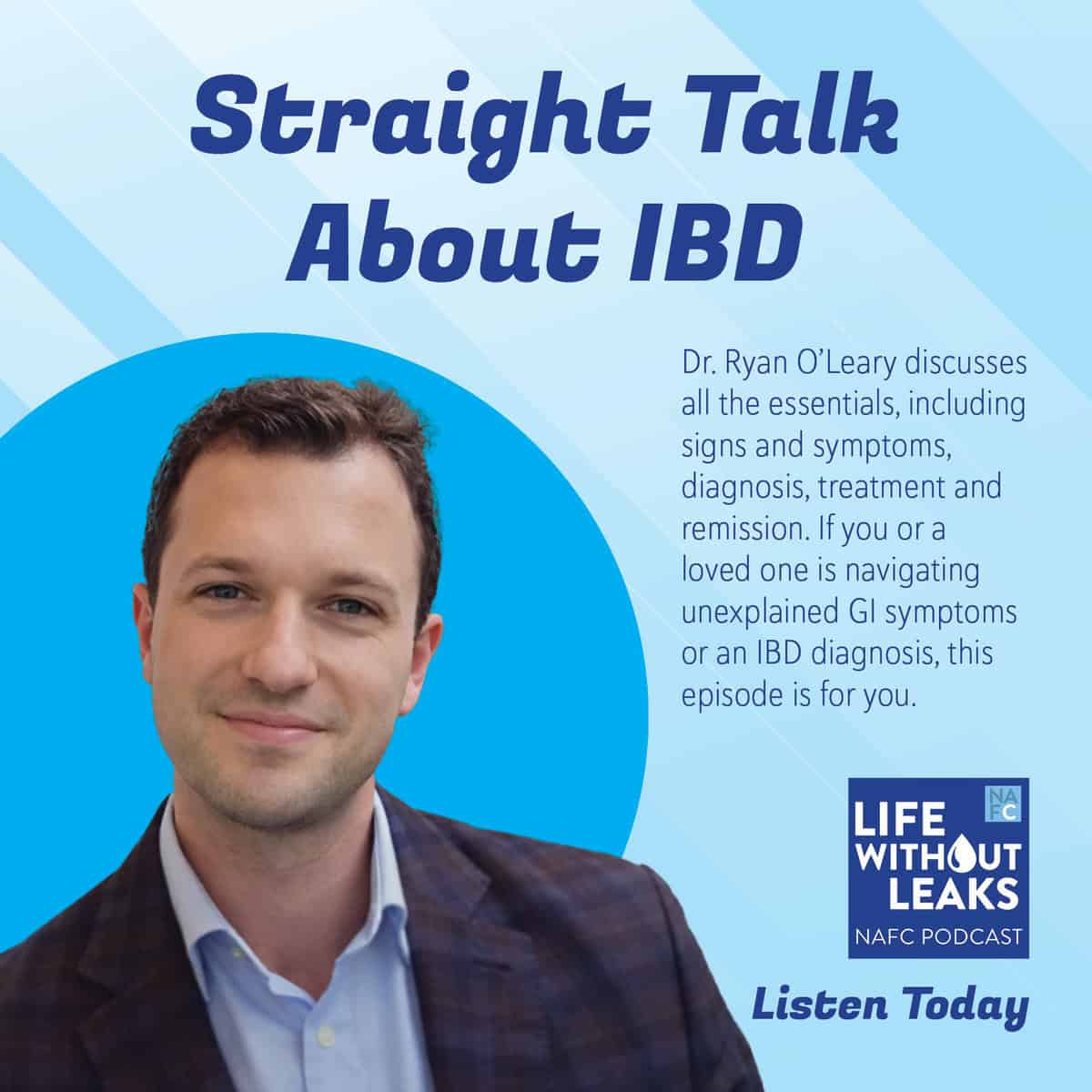
In this episode of Life Without Leaks, we’re joined by Dr. Ryan O’Leary, advanced fellow in inflammatory bowel disease, for a deep dive into inflammatory bowel disease (IBD).
Dr. O’Leary breaks down what sets Crohn’s disease and ulcerative colitis apart from other digestive conditions, explaining how IBD can affect patients at any age, from early childhood to later adulthood, and why diagnosis can sometimes be delayed. He explores the complexity of inflammation, the role of the immune system and how IBD can impact far more than the gut, including joints, skin, eyes and mental health.
The conversation also covers realistic treatment goals, the expanding range of medications available today, dietary considerations, when surgery becomes part of care and why personalized treatment plans are essential. Importantly, Dr. O’Leary addresses the emotional toll of living with a chronic condition and emphasizes the importance of persistence, advocacy and specialist care.
If you or a loved one is navigating unexplained GI symptoms or an IBD diagnosis, this episode offers clarity, reassurance and a hopeful look at what’s possible with modern care.
Learn more about a wide range of bowel conditions and get free resources here.
No One Believed Me: One Man’s Fight for a Crohn’s Diagnosis – and Recovery
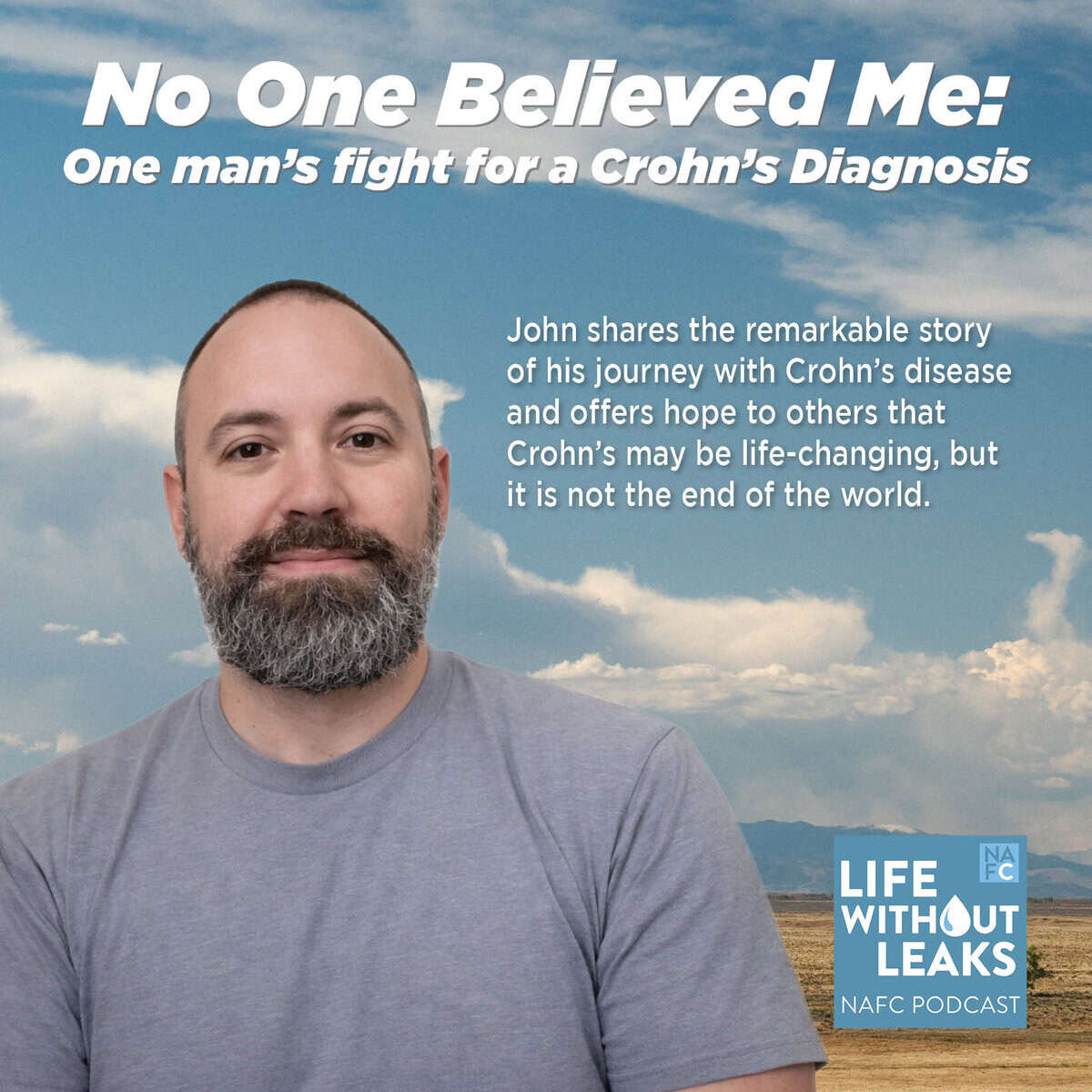
In this gripping episode of Life Without Leaks, we speak with John, a law enforcement officer, father of two and competitive strongman, about his harrowing journey to a Crohn’s disease diagnosis.
From Pain ‘Like Lava’ to Remission: Living Fully with Crohn’s Disease
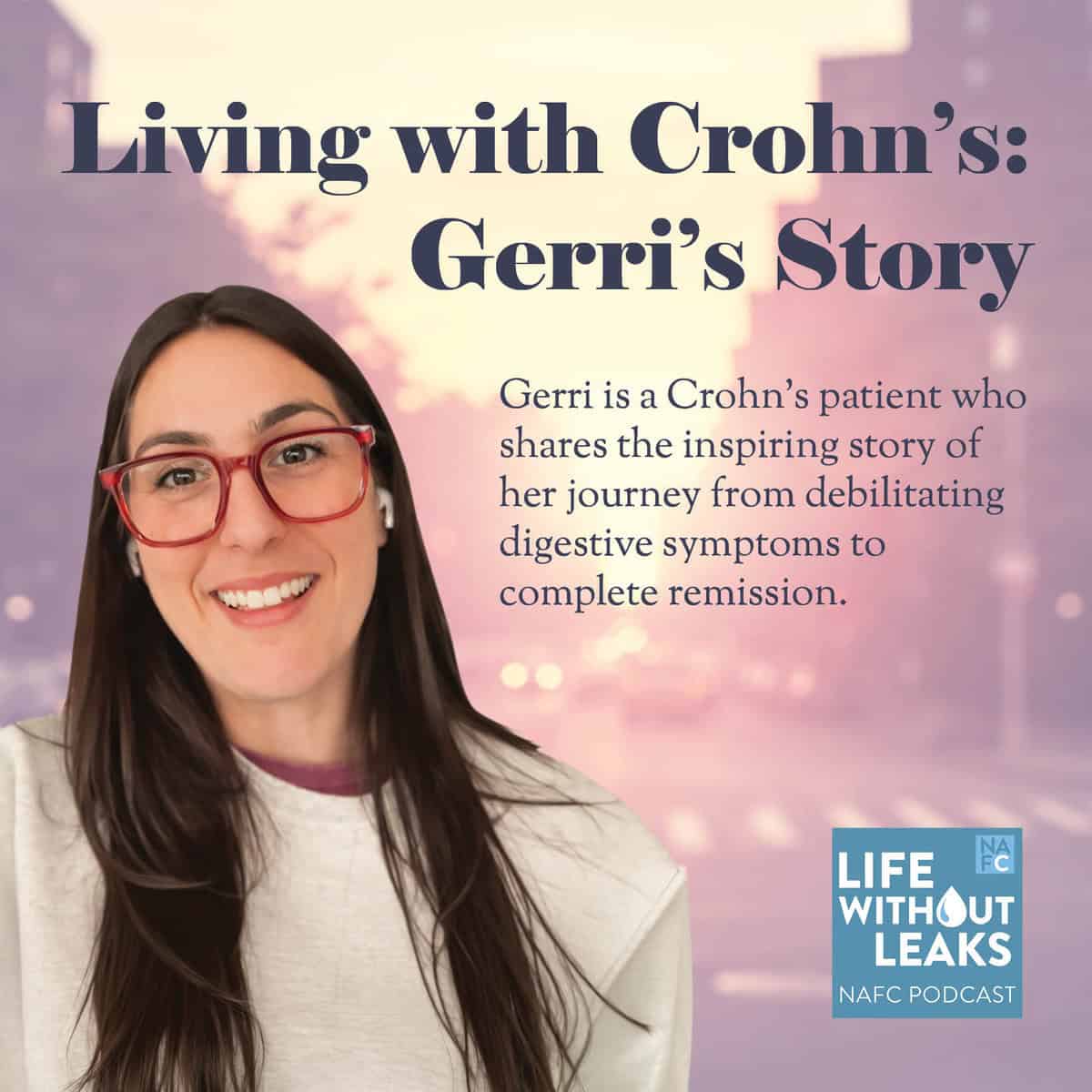
In this moving patient story, we speak with Gerri, a Crohn’s patient, about her journey from debilitating digestive symptoms to complete remission.
Gerri shares what it was like to live in New York City while navigating relentless urgency, severe abdominal pain she describes as “hot lava,” and the constant need to locate the nearest restroom. After months of worsening symptoms and a turning point moment with her mom, she sought specialist care, leading to bloodwork, testing, colonoscopy and, ultimately, a diagnosis.
Understanding IBD: From Diagnosis to Remission… What You Need to Know – Copy
In this episode of Life Without Leaks, we’re joined by Dr. Ryan O’Leary, advanced fellow in inflammatory bowel disease, for a deep dive into inflammatory bowel disease (IBD).
Dr. O’Leary breaks down what sets Crohn’s disease and ulcerative colitis apart from other digestive conditions, explaining how IBD can affect patients at any age, from early childhood to later adulthood, and why diagnosis can sometimes be delayed. He explores the complexity of inflammation, the role of the immune system and how IBD can impact far more than the gut, including joints, skin, eyes and mental health.
The conversation also covers realistic treatment goals, the expanding range of medications available today, dietary considerations, when surgery becomes part of care and why personalized treatment plans are essential. Importantly, Dr. O’Leary addresses the emotional toll of living with a chronic condition and emphasizes the importance of persistence, advocacy and specialist care.
If you or a loved one is navigating unexplained GI symptoms or an IBD diagnosis, this episode offers clarity, reassurance and a hopeful look at what’s possible with modern care.
Learn more about a wide range of bowel conditions and get free resources here.