Synim N. Rivers currently serves as senior director, R&D communications at Horizon Therapeutics, a biopharmaceutical company dedicated to meeting unmet medical needs, specifically in the rare/orphan disease space..
Synim five years at the FDA in various roles with increasing levels of responsibility. At the FDA, she on minority health and health disparities as well as how to engage with diverse communities.
Synim earned a BS in biology from Xavier University of Louisiana She also holds a Master of Public Health in health education and communications from Tulane University School of Public Health & Tropical Medicine
Synim is active in her community and supports several non-profit organizations. She serves on the board of directors of HealthyWomen, Washington Government Relations Group (WGRG) Foundation, and Girls 4 Science.

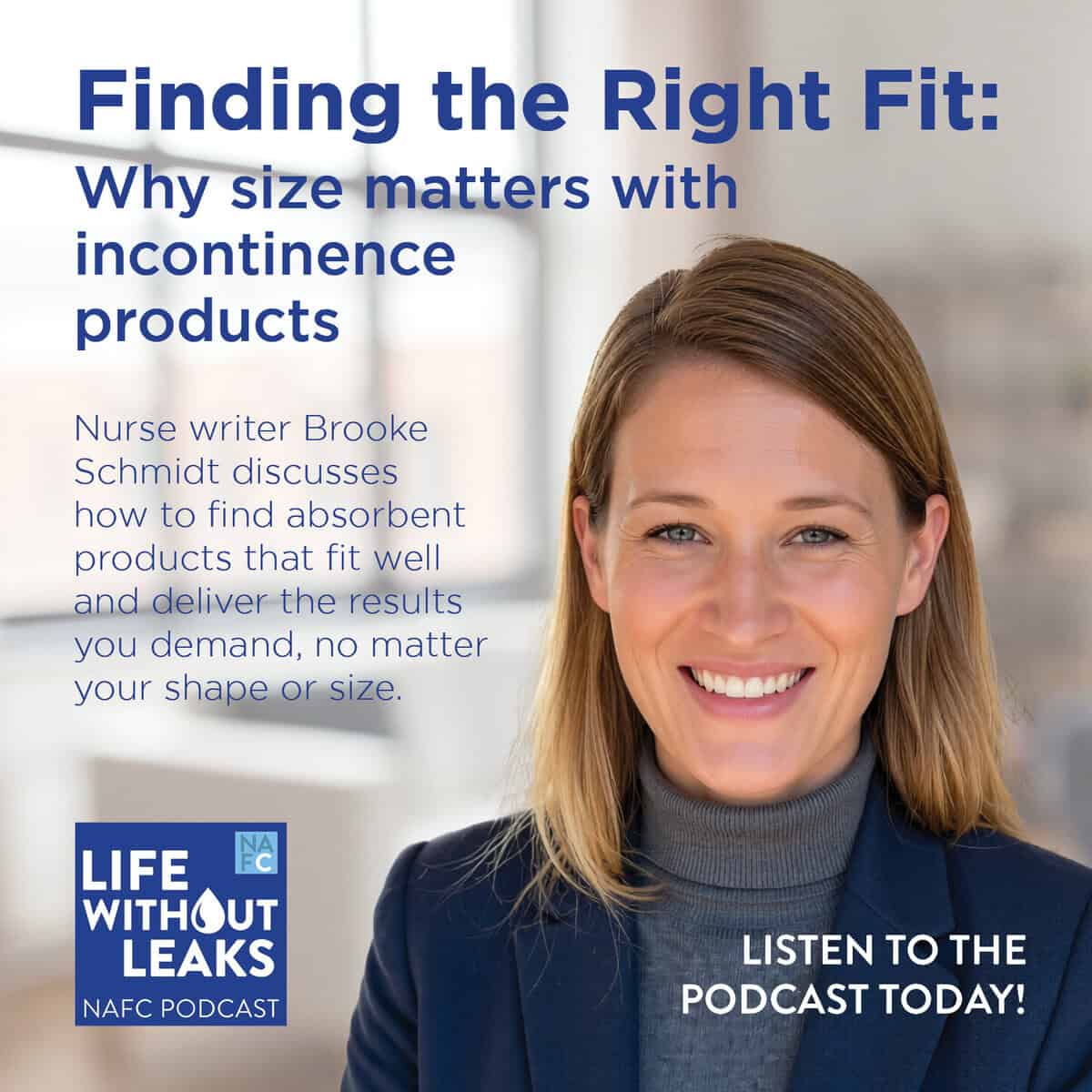
Finding the Right Fit: Why Size Matters With Incontinence Products
In this episode of Life Without Leaks, we welcome registered nurse and health writer Brooke Schmidt for a practical conversation about selecting and using absorbent products. Drawing on more than a decade of nursing experience, Brooke explains how to measure for a proper fit, why sizing varies between products, and what to consider when shopping for plus-size options.

Managing Male Bladder Leaks in Everyday Life: A Practical Guide to Comfort, Fit, and Discretion
A few drops after leaving the bathroom. Leakage when you cough or lift something. A sudden urge that makes it difficult to reach the restroom in time.
Bladder leaks can show up in different ways, and even a small leak may change how you feel about a commute, a meeting, a walk, or a night away from home. Understanding your pattern of leakage can help you find both appropriate medical care and a daily routine that works for you.

Ask The Expert: How Can I Manage The Odors, Furniture Stains & Skin Irritation With Leaks?
Helping a loved one manage heavy to severe incontinence can be physically and emotionally demanding, and it’s natural to worry about whether you’re doing enough to support and protect them. While incontinence is often unpredictable, there are many practical steps you can take to maintain your loved one’s comfort, dignity and well-being while also protecting your home from unexpected accidents.
Finding the Right Fit: Why Size Matters With Incontinence Products
In this episode of Life Without Leaks, we welcome registered nurse and health writer Brooke Schmidt for a practical conversation about selecting and using absorbent products. Drawing on more than a decade of nursing experience, Brooke explains how to measure for a proper fit, why sizing varies between products, and what to consider when shopping for plus-size options.