


Lyndi Hirsch is Chief Marketing Officer at AdhereTech, an industry leader providing adherence solutions impacting health outcomes through innovative technology and support. She joined AdhereTech in April of 2020 bringing her substantial pharmaceutical experience in commercialization and comprehensive expertise in product launches, Direct-to-Patient, Direct-to-Consumer and Digital marketing. Prior to joining AdhereTech, Lyndi was Head of Consumer Marketing at Dermira responsible for launching the award-winning campaigns, “Check Your Sweat” and “QBREXZA”. She spent the majority of her twenty five-year career launching specialty products in Neurology, Rheumatology, Nephrology, Endocrinology and Dermatology. Understanding the eventual and inevitable reliance the healthcare industry would have on digital and virtual communications, she made a career shift to Senior Vice President of Marketing Strategy for MedPage Today/Everyday Health from 2013 to 2017.
Lyndi enjoys sharing her experience and speaks regularly, including as a guest speaker at UC Santa Clara MBA program, Life Sciences Summits: Stanford Biotech, Wharton Biotech and virtual series during the pandemic, as well as being a featured speaker at multiple DTC Perspectives, Digital Pharma East, Digital Pharma West.
Community support is fundamental for Lyndi. In 2020 Lyndi joined the National Association for Continence (NAFC) Board of Directors. She has worked with Habitat for Humanity, Second Harvest Food Banks, Wounded Warrior Project, Lupus and Arthritis Foundations, National MS Society and has been a Patron Chair for The Race to Erase MS since 1997.
Lyndi graduated from the University of Northern Colorado with a BA in Human Communications and Public Relations. She is a native New Yorker who now lives on Long Island, close to family and with her black lab Tessa.



Ask The Expert: Why Do I Experience More Incontinence at Night Than During the Day?
Q: My elderly parent(s) experience incontinence, and for the first time, I am being asked to help with their clothing and absorbent product changes. I feel like I’m in over my head. Do you have any tips or suggestions?
A: When it comes to helping your aging loved ones with managing incontinence changes and cleanups, the conversations around these intimate activities can be awkward for both sides. It can even change the dynamics of your relationship. Here are a few tips to make it easier on you and on them.
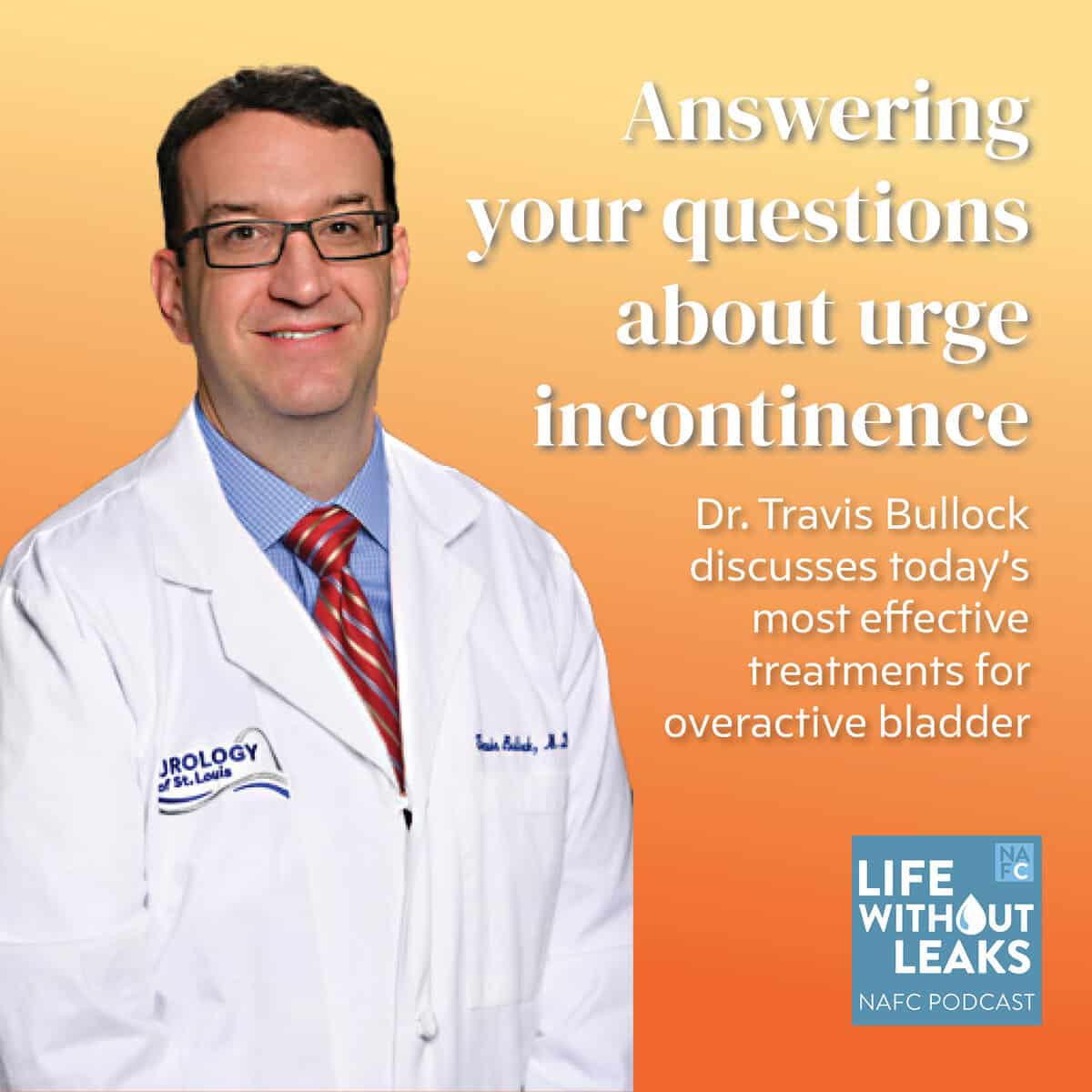
Answers to your questions about urge incontinence and neuromodulation
Urgency, frequent bathroom trips and unexpected leaks can disrupt daily life, but they’re more treatable than many people realize. Dr. Travis Bullock joins Life Without Leaks to answer questions from his recent webinar, explain the difference between overactive bladder and other forms of incontinence, and discuss new therapies like neuromodulation that can help restore bladder control and quality of life.
For more information about the National Association for Continence, click here, and be sure to follow us on Facebook, Instagram and Pinterest.

Managing Overnight Incontinence for a Better Night’s Sleep
A good night’s sleep plays an important role in maintaining overall health, comfort, and emotional well-being. For individuals managing incontinence, nighttime can sometimes feel uncertain. Overnight leaks may interrupt sleep, create concern about bedding or clothing, and make mornings feel more stressful than restful. These experiences are common, and they are something many adults navigate at different stages of life.

Ask The Expert: Why Do I Experience More Incontinence at Night Than During the Day?
Q: My elderly parent(s) experience incontinence, and for the first time, I am being asked to help with their clothing and absorbent product changes. I feel like I’m in over my head. Do you have any tips or suggestions?
A: When it comes to helping your aging loved ones with managing incontinence changes and cleanups, the conversations around these intimate activities can be awkward for both sides. It can even change the dynamics of your relationship. Here are a few tips to make it easier on you and on them.
