Stress Incontinence In Women
JOIN OUR NEWSLETTER
Receive custom tools to help you manage your condition and get the latest in bladder and bowel health from NAFC!
Stress Urinary Incontinence In Women
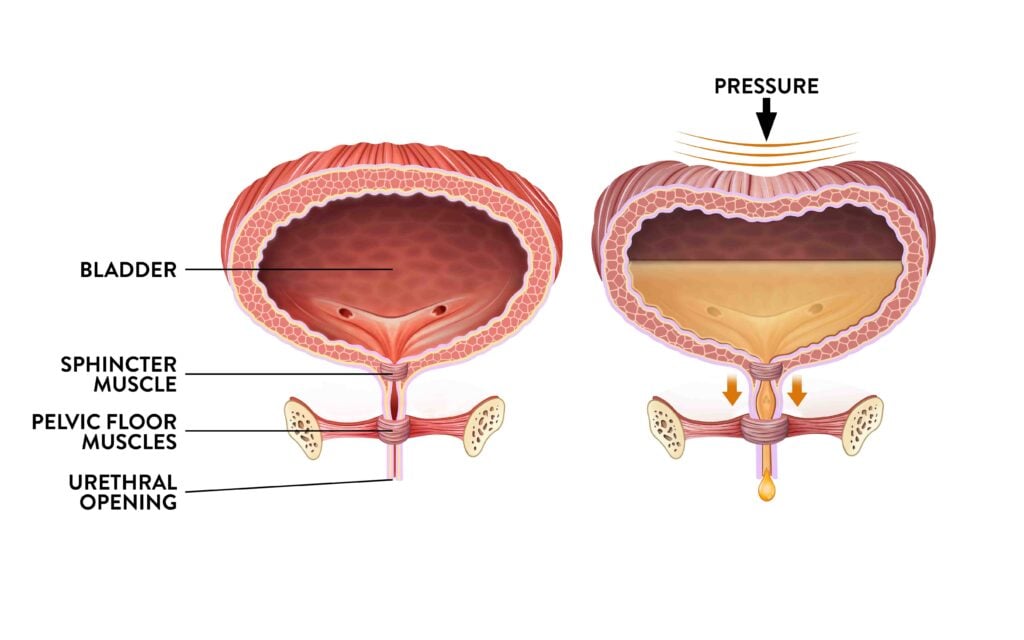
Stress Urinary Incontinence is when pressure (or stress) placed on the bladder causes urinary leakage. This often happens with physical movement. If you’ve ever wondered why you pee when you laugh, pee when you cough, or pee when you exercise – that’s stress urinary incontinence.
In order to understand why Stress Urinary Incontinence (also referred simply as “stress incontinence” or “SUI”) occurs, a quick refresher course on the female urinary anatomy might be helpful. The bladder has two functions. The first is to store urine produced by the kidneys and the second is to contract and push the urine through the urethra. Controlling the flow of urine out of the bladder is the sphincter muscle. The nervous system detects when the bladder is ready to be emptied and tells the sphincter to relax, allowing you to pee. When there is any sort of abdominal stress on the pelvic organs—the bladder, vagina, uterus, and rectum—SUI can occur.
It is important to understand the difference between stress incontinence (SUI) and urge incontinence (UUI) as they are treated differently. While Urge incontinence (UUI) involves the sudden and unstoppable loss of urine, SUI is not accompanied by the sensation of a sudden urge to urinate. The underlying cause for stress incontinence is different from that of UUI. Stress incontinence is caused by a weak sphincter muscle and/or pelvic floor. Some people have both SUI and UUI, known as mixed incontinence. This means that they leak urine when they cough, sneeze, or exert pressure on their abdominal muscles; but they also feel the urgent need to go to the toilet and may not make it in time.
Symptoms Of Stress Urinary Incontinence
Women with stress urinary 
Coughing
Sneezing
Laughing
Exercising or Working out
Having sex
Lifting something heavy
Standing up
Getting in or out of a car
Leakage may include just a small drop or two of urine or even a whole stream. Any amount is unwanted, so don’t dismiss your concerns simply because your leakage doesn’t seem as bad as it might otherwise be. If you find yourself wet, you can find yourself a treatment option.
Causes Of Stress Incontinence In Women
Stress incontinence is the most commonly occurring form of incontinence in women under the age of 60 and accounts for more than half the cases. As we’ve mentioned, anything that creates pressure on the pelvic floor muscles and your bladder may cause urine leakage.
While pregnancy and childbirth head the list for causes of stress incontinence, there are other health factors that may put you at risk, too. They include:
Loss of pelvic muscle tone. This can often occur with aging or childbirth, although people of all ages can develop SUI.
Hysterectomy (or any other surgery that affects your pelvic floor)
Nerve and muscle damage from childbirth or surgical trauma
Obesity
Menopause
Chronic coughing due to smoking and lung disease
Anatomical predisposition
Repeated heavy lifting or high-impact sports
How Does Stress Urinary Incontinence AFfect Your Life?
Stress urinary incontinence can have a huge effect on your quality of life. The physical and emotional demands created by stress incontinence can leave you feeling exhausted, embarrassed, and even depressed. Some of the common byproducts of SUI are:
Depression. Many people with SUI are deeply ashamed of their condition and live in constant fear of having an accident. This can lead to them avoiding things they once loved, like hanging out with friends or family, attending social events, or even working out. This restrictive nature of SUI can lead to isolation, loneliness, and depression in many if left untreated.
Skincare Issues. Constant moisture, especially urine, can cause your skin to be irritated and sore. It’s important to use proper protection for incontinence to avoid this from happening. Absorbent pads with wicking materials help keep moisture away from the body and avoid irritation, while moisture barrier creams can help protect skin from coming into contact with urine.
Stress urinary Incontinence Treatment Options
There are many treatment options as well as simple management techniques that can help you get your life back the way you want it.
With the increased attention on incontinence issues, incredible progress and innovation has been made in the arena of products for everyday use. Items ranging from absorbents to urethral inserts can be just the thing you need to get back your confidence and get on with your life. Click here to read about the various products for stress incontinence.
Behavioral Modifications & Noninvasive Options
Physicians generally pursue non-invasive therapeutic interventions before attempting to treat SUI with surgery. Ask your physician if one of these might improve your condition:
Loss of Excess Weight (see Diet & Exercise). Obesity is a risk factor in developing stress urinary incontinence due to the extra pressure placed on the pelvic floor and the bladder. Following a healthy diet and losing weight can help ease symptoms.
Smoking Cessation. You already know that smoking can cause or contribute to more diseases than we could ever list here, but you might not realize that it’s also a real factor in the development of SUI. All that coughing can put stress on your pelvic floor, and that can lead to muscle weakness and leakage. Just one more reason why quitting today can make a meaningful difference in your life.
Pelvic Floor Muscle Exercises. Kegel exercises help to strengthen the pelvic floor muscles so you’re able to better hold in urine. Kegels can be hard to master and should be incorporated with a range of core exercises. In addition, pelvic floor exercises are not for everyone and can actually do more harm than good for some people. It’s a good idea to see a physical therapist to get a proper evaluation and to learn how to do these exercises correctly.
(Note: Talk to your PT about products that may be able to help you strengthen your pelvic floor. New innovative products can assist in helping you strengthen your pelvic floor muscles.)
Biofeedback. Biofeedback is often done in conjunction with Kegels. A physical therapist may use a biofeedback instrument to measure your pelvic floor strength and monitor your improvement.
Bladder Retraining. This involves timing your trips to the toilet and slowly increasing the length of time between each visit. This can lessen the amount of fluid you have in your bladder and also help condition your bladder to hold urine for longer periods of time.
Pelvic Floor Stimulation or E-Stim. This therapy delivers a small amount of electrical stimulation to the nerves and muscles of the pelvic floor and bladder to help them tighten or contract, thereby strengthening them.
Injection Therapy. This technique uses a bulking agent that’s injected into the tissues around the urethra to help close the sphincter without interfering with urination, helping to reduce leaks.
Pessary. This is a ring-like device that your doctor will fit for you inside the vagina. The device helps to support the base of the bladder to prevent urine leaks. This is especially helpful for those who may have experienced a pelvic organ prolapse.
Medications For Stress Incontinence
Though millions of individuals suffer from SUI, there are no FDA-approved pharmaceutical medications to treat the condition. A couple of off-label medications that have shown to mitigate some symptoms of SUI are imipramine and pseudophedrine. Duloxetine is the only medication used to treat SUI, but it is not FDA-approved for this indication in the United States.
Topical Estrogen. Your doctor may prescribe local, low dosage estrogen administered vaginally to gently lubricate the tissues of the vagina. Many clinicians observe improvement in symptoms of SUI in many women. This should not be confused with Hormone Replacement Therapy (HRT), which has been not proven to relieve incontinence in postmenopausal women.
Urethral Bulking
Bulkamid. Bulkamid is a urethral bulking agent that is used to treat SUI. It is a smooth, water-based gel that remains in the body over time, similar to a facial filler, without causing reactions in the surrounding tissue. The Bulkamid procedure consists of 3-4 injections into the wall of the urethra. Adding additional volume to the wall of the urethra helps prevent urine from leaking out of the bladder during normal daily activities. Here are some key things to know about Bulkamid:
- Highly effective with a 92% success rate1
- Long-lasting
- Outpatient procedure1 with no hospital stay2 and short recovery time3
For more information on Bulkamid, visit Bulkamid.com.
Surgical Treatment Options For Stress Incontinence

Surgical slings are the most common procedure to address stress incontinence. A piece of plastic mesh tape is inserted into the pelvis to support the urethra. This is a minimally invasive procedure that involves the placement of a small piece of polypropylene mesh around the pubic bones underneath the urethra. Some important facts about surgical slings are:
- Outpatient procedure
- 80-90% success rate6
- Women who plan to get pregnant may want to wait until after their last pregnancy to have SUI surgery.
- Up to 2 days hospital stay6
- Up to 6 weeks of recovery time6
You can read about the types of surgeries for SUI and what to expect on this dedicated page here.
Track Your Progress
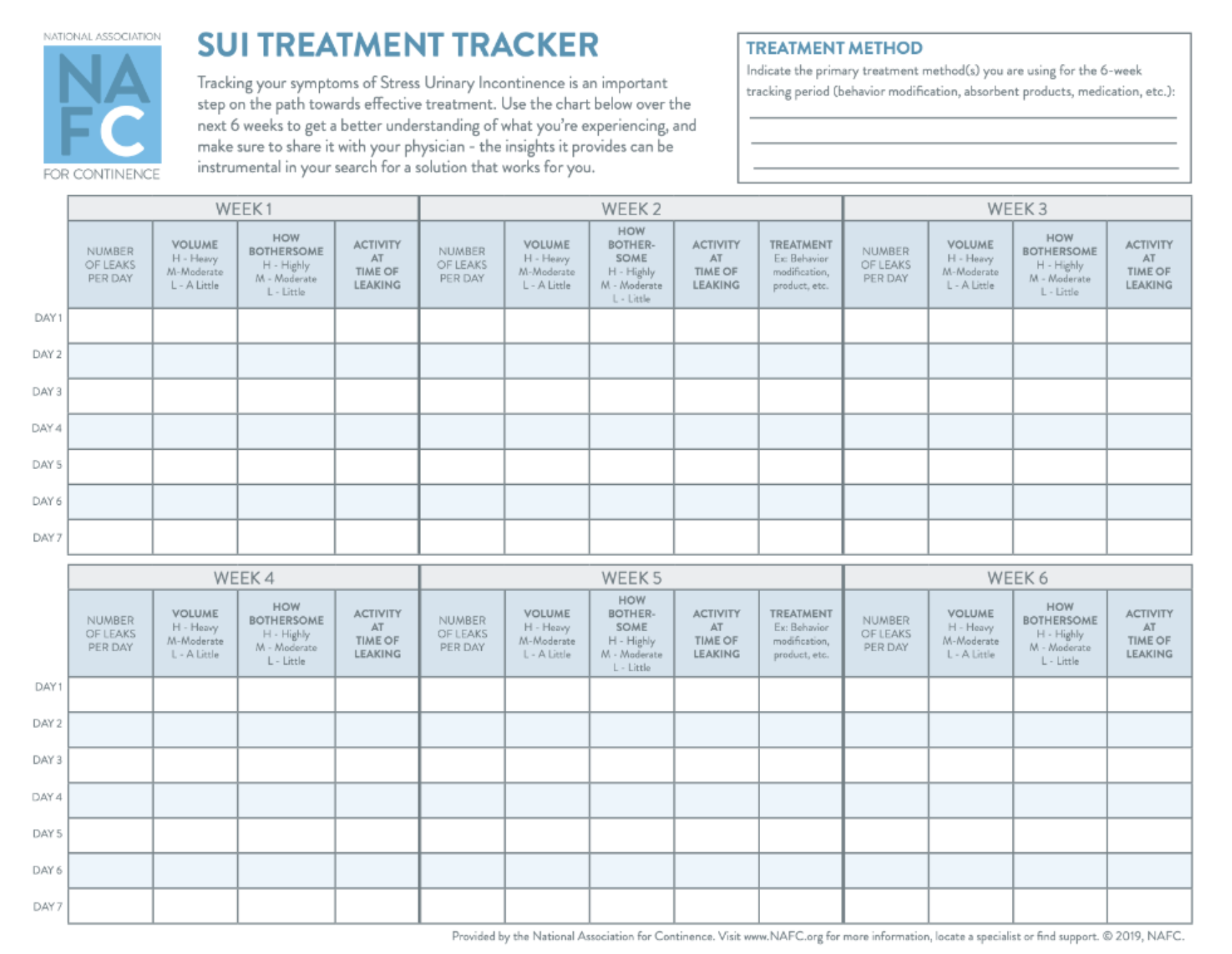
Whatever treatment option you choose, be sure to track your progress. NAFC makes this easy for you by offering a new SUI Treatment Tracker, which tracks your symptoms over a period of 6 weeks.
This tracker allows you to see your progress over the course of several weeks to see how you’re improving (or not) on your treatment plan. Once you’re done completing the sheet, take it to your doctor to evaluate your treatment options and to see if any changes may be needed. Sign up for this six-week program below, and receive free weekly reminders and tips from NAFC along the way!
Click Here To Get Your Treatment Tracker!
Talking TO Your Doctor About Stress Urinary Incontinence
You may feel hesitant to speak with your doctor about urinary incontinence, but you can rest assured that your doctor has likely treated many people with this condition – you’re not the first and you certainly won’t be the last to ask about SUI. Talking about your condition is the first step toward treatment, and it’s an important one, so it’s good to be prepared. Here are some things you can do to help make your visit more productive:
Track your symptoms. Click here to download an NAFC bladder diary and use it for at least 3 days, then take it in to your doctor. This will help inform your doctor of things like the severity of your bladder leaks and when you’re experiencing urine leaks, all of which may help to uncover any patterns happening with leakage.
Bring a list of any medications, vitamins or other supplements you are taking. Be prepared to talk about your doses and how often you take these medications.
Jot down a list of questions you want to ask. This can be a hard conversation to have and you may find yourself feeling anxious during your appointment. Having your questions at the ready can help ease your mind a bit and ensure that you don’t forget anything or leave important topics uncovered.
Do your research. Learn about all the various treatment options available to you and think about your preferences. Not ready for surgery? Make sure you tell that to your doctor. Interested in trying a new product? Let them know.
Demand treatment. There are a lot of myths out there about SUI, but one of the biggest is that it’s a normal part of aging. This couldn’t be further from the truth: SUI is common, but it’s NOT normal, and it’s NOT something you should have to live with.
Talk to a specialist. It’s very important to talk to a bladder specialist – most often a urogynecologist or urologist who knows how to diagnose and treat SUI. To find a specialist near you, visit www.FindRealRelief.com .
This page has been reviewed for medical accuracy by Lara S. MacLachlan, MD.
Sources
- The Lewin Group, Inc. National Women’s Health Resource Center 2007 2.
- Sokol ER, Karram MM, Dmochowski R. Efficacy and safety of polyacrylamide hydrogel for the treatment of female stress incontinence: a randomized, prospective, multicenter North American study. J Urol. 2014 Sep;192(3):843-9 3.
- Bulkamid Patient Information Leaflet 2021 OUS 110-0256-003rB 06/202
- Dwyer et al., “Voice your choice”: A study of women’s choice of surgery for primary stress urinary incontinence, International Urogynecology Journal (2020), 31:769-777. 2.
- Itkonen Freitas et al., Tension free vaginal tape vs polyacrylamide hydrogel injection for primary stress urinary incontinence: a randomized controlled trial., J Urol., 2020 Feb., Vol. 203, 372-378
- Mid-urethral Sling (MUS) Procedures for Stress Incontinence RV3. IUGA Patient Information Leaflet
RELATED ARTICLES

Ask The Expert: Can You Live Without a Bladder?
Are you or someone you love scheduled for bladder removal surgery (cystectomy)? While it can be a surprise to find out you’ll need a cystectomy, whether partial or radical, know that you aren’t alone.
In fact, bladder cancer is listed among the top 10 most diagnosed cancers worldwide.
We sat down with Aleece Fosnight, MSPAS, PA-C, CSC, CSE, IF, MSCP, HAES, to ask whether you can live without a bladder, how long you can live without one, why you might need a cystectomy, and more.

Why Bladder Health Matters More as We Age
Aging and the Bladder: What Changes?
As we grow older, the urinary system naturally undergoes changes that can affect bladder function.
Common age-related changes include:
Reduced bladder capacity
Increased bladder sensitivity
Changes in pelvic floor muscle strength
Hormonal changes, particularly after menopause
Enlarged prostate in men
Increased prevalence of chronic conditions such as diabetes, stroke, and neurological disorders
These changes can contribute to symptoms such as:
Urinary urgency
Frequent urination
Overactive bladder (OAB)
Urinary incontinence
Nocturia (waking at night to urinate)
While these symptoms become more common with age, they should never be viewed as something people simply have to live with.
The Hidden Connection Between Bladder Problems and Falls
One of the most overlooked consequences of bladder symptoms in older adults is an increased risk of falling.
Many falls occur during urgent trips to the bathroom, particularly at night. An individual may wake suddenly with a strong urge to urinate, rush through a dark room, become dizzy when standing, or trip over furniture, rugs, or other obstacles.
Research has shown that urinary urgency, frequency, and nocturia are associated with a higher risk of falls and fractures in older adults.
For seniors, a fall can have life-changing consequences, including:
Broken bones
Head injuries
Hospitalization
Loss of independence
Reduced mobility
Increased risk of future falls
In many cases, addressing bladder symptoms can be an important part of a comprehensive fall-prevention strategy.
How Nocturia Impacts Healthy Aging
Waking multiple times each night to urinate is more than a sleep disturbance.
Nocturia can contribute to:
Daytime fatigue
Reduced concentration
Memory difficulties
Mood changes
Increased fall risk
Lower overall quality of life
Older adults who experience frequent nighttime bathroom trips often report feeling less energetic and less able to participate in activities they enjoy.
Protecting sleep is an important part of protecting overall health.
The Emotional Impact of Bladder Leaks
Many older adults quietly manage bladder leakage without discussing it with family members or healthcare providers.
Unfortunately, untreated bladder symptoms can lead to:
Social withdrawal
Anxiety
Depression
Reduced physical activity
Fear of leaving home
Loss of confidence
Some people stop exercising, traveling, attending social events, or spending time with friends because they worry about finding a bathroom or experiencing leakage in public.
The result can be a cycle of isolation that negatively affects both physical and mental health.
Healthy Aging Includes Bladder Health
The good news is that many bladder conditions can be improved or successfully managed.
Treatment options may include:
Pelvic Floor Muscle Training
Strengthening the pelvic floor muscles can help improve bladder control and reduce leakage.
Bladder Training
Scheduled voiding and urge-suppression techniques may help reduce urgency and frequency.
Lifestyle Modifications
Small changes can make a meaningful difference, including:
Managing constipation
Maintaining a healthy weight
Limiting bladder irritants when appropriate
Staying physically active
Monitoring fluid intake patterns
Medical Treatments
Depending on the cause of symptoms, treatment options may include:
Medications
Neuromodulation therapies
Vaginal estrogen for postmenopausal women
Prostate treatments for men
Surgical interventions in select cases
Fall Prevention Tips for Older Adults with Bladder Symptoms
If urgency or nighttime bathroom trips are a concern, consider these safety measures:
Keep pathways clear of clutter
Use nightlights between the bedroom and bathroom
Wear supportive, non-slip footwear
Install grab bars when appropriate
Rise slowly from bed to avoid dizziness
Discuss medications with your healthcare provider
Seek evaluation for persistent bladder symptoms
Addressing both bladder health and home safety can significantly reduce fall risk.
A Conversation Worth Having
Too often, people assume bladder leakage is simply the price of getting older. The reality is that while bladder problems become more common with age, they are not an inevitable part of aging.
National Senior Citizens Day reminds us that healthy aging means more than managing chronic diseases—it means preserving independence, confidence, mobility, and quality of life.
If bladder symptoms are interfering with sleep, daily activities, or peace of mind, don’t ignore them. Talk with a healthcare provider and explore your options. Effective treatments and management strategies are available.
Because aging well isn’t just about adding years to life—it’s about adding life to those years.

Not All Leaks Are the Same: Understanding the Difference Between LBL (Light Bladder Leakage) and HBL (Heavy Bladder Leaks)
Most incontinence products on the market were made for Light Bladder Leakage (LBL), such as the occasional drip or the small dribble triggered by a sneeze or laugh. For millions of people, that’s not the full story. Heavy Bladder Leaks (HBL) involve larger volumes and/or multiple full releases throughout the day or night. Store-brand products, even those labeled “maximum” or “overnight”, aren’t designed to handle that level of need.
If products keep failing, it can start to feel personal. But when a product was never built for your reality in the first place, that’s not a personal failure. It’s a product gap.
Understanding the difference between LBL and HBL is the first step toward finding trusted protection that actually works.

Ask The Expert: Can You Live Without a Bladder?
Are you or someone you love scheduled for bladder removal surgery (cystectomy)? While it can be a surprise to find out you’ll need a cystectomy, whether partial or radical, know that you aren’t alone.
In fact, bladder cancer is listed among the top 10 most diagnosed cancers worldwide.
We sat down with Aleece Fosnight, MSPAS, PA-C, CSC, CSE, IF, MSCP, HAES, to ask whether you can live without a bladder, how long you can live without one, why you might need a cystectomy, and more.