Skip to content
Donate Now
Search
Search
Healthcare Providers
Donate Now
Subscribe
Conditions
Urinary And Pelvic Floor Conditions
Bowel Conditions
Men’s Conditions
Women’s Conditions
What Could it Be? Take a Quiz
Management & Support
Managing Your Condition
Where Do I Start?
Diet And Exercise
Incontinence Products
Therapies and Procedures
Pelvic Floor Health Center
Download your FREE Pelvic Floor Muscle Training Toolkit
OAB Resource Center
Bowel Health Center
Incontinence Diaries
Treatment Tips
Glossary
Bladder Health at Any Age
Preventing Incontinence Before It Starts
Pregnancy & Childbirth
The Midlife Years
Menopause
All About Digestive Health
Caregiving
What Family Members Should Know
Myths About Urinary Incontinence
Homecare
Fall Prevention And Safe Toileting
Printed Resources
Trusted Partners
Find an Expert
Doctor Finder
Talking With Your Doctor
Ask The Doctor Series
Sign Up For The NAFC Newsletter
NAFC Medical Advisory Board
Centers of Excellence
Apply
List Of Centers Of Excellence
The Incontinence Community
Sign Up For The NAFC Newsletter – Carer Giveaway
Bhealth Blog
Visit The NAFC Incontinence Message Boards
Life Without Leaks Podcast
Pelvic Floor Power Podcast Series
Current Research Opportunities
Featured Campaigns
IBD Patient Stories
We Count – Urinary Incontinence Facts
Download your FREE Pelvic Floor Muscle Training Toolkit
Pelvic Floor Power Podcast Series
X
Conditions
Urinary And Pelvic Floor Conditions
Bowel Conditions
Men’s Conditions
Women’s Conditions
What Could it Be? Take a Quiz
Management & Support
Managing Your Condition
Where Do I Start?
Diet And Exercise
Incontinence Products
Therapies and Procedures
Pelvic Floor Health Center
Download your FREE Pelvic Floor Muscle Training Toolkit
OAB Resource Center
Bowel Health Center
Incontinence Diaries
Treatment Tips
Glossary
Bladder Health at Any Age
Preventing Incontinence Before It Starts
Pregnancy & Childbirth
The Midlife Years
Menopause
All About Digestive Health
Caregiving
What Family Members Should Know
Myths About Urinary Incontinence
Homecare
Fall Prevention And Safe Toileting
Printed Resources
Trusted Partners
Find an Expert
Doctor Finder
Talking With Your Doctor
Ask The Doctor Series
Sign Up For The NAFC Newsletter
NAFC Medical Advisory Board
Centers of Excellence
Apply
List Of Centers Of Excellence
The Incontinence Community
Sign Up For The NAFC Newsletter – Carer Giveaway
Bhealth Blog
Visit The NAFC Incontinence Message Boards
Life Without Leaks Podcast
Pelvic Floor Power Podcast Series
Current Research Opportunities
Featured Campaigns
IBD Patient Stories
We Count – Urinary Incontinence Facts
Download your FREE Pelvic Floor Muscle Training Toolkit
Pelvic Floor Power Podcast Series
Conditions
Urinary And Pelvic Floor Conditions
Bowel Conditions
Men’s Conditions
Women’s Conditions
What Could it Be? Take a Quiz
Management & Support
Managing Your Condition
Where Do I Start?
Diet And Exercise
Incontinence Products
Therapies and Procedures
Pelvic Floor Health Center
Download your FREE Pelvic Floor Muscle Training Toolkit
OAB Resource Center
Bowel Health Center
Incontinence Diaries
Treatment Tips
Glossary
Bladder Health at Any Age
Preventing Incontinence Before It Starts
Pregnancy & Childbirth
The Midlife Years
Menopause
All About Digestive Health
Caregiving
What Family Members Should Know
Myths About Urinary Incontinence
Homecare
Fall Prevention And Safe Toileting
Printed Resources
Trusted Partners
Find an Expert
Doctor Finder
Talking With Your Doctor
Ask The Doctor Series
Sign Up For The NAFC Newsletter
NAFC Medical Advisory Board
Centers of Excellence
Apply
List Of Centers Of Excellence
The Incontinence Community
Sign Up For The NAFC Newsletter – Carer Giveaway
Bhealth Blog
Visit The NAFC Incontinence Message Boards
Life Without Leaks Podcast
Pelvic Floor Power Podcast Series
Current Research Opportunities
Featured Campaigns
IBD Patient Stories
We Count – Urinary Incontinence Facts
Download your FREE Pelvic Floor Muscle Training Toolkit
Pelvic Floor Power Podcast Series
Search
Search
Subscribe
Healthcare Providers Portal
Donate
Donate Now
[give_form id="19690"]
Family And Caregiving
Browse By Topic
Urinary incontinence
Bowel health
Pelvic floor
Caregiving
More +
Search
Search
URINARY INCONTINENCE
BOWEL HEALTH
PELVIC HEALTH
CAREGIVING
MORE+
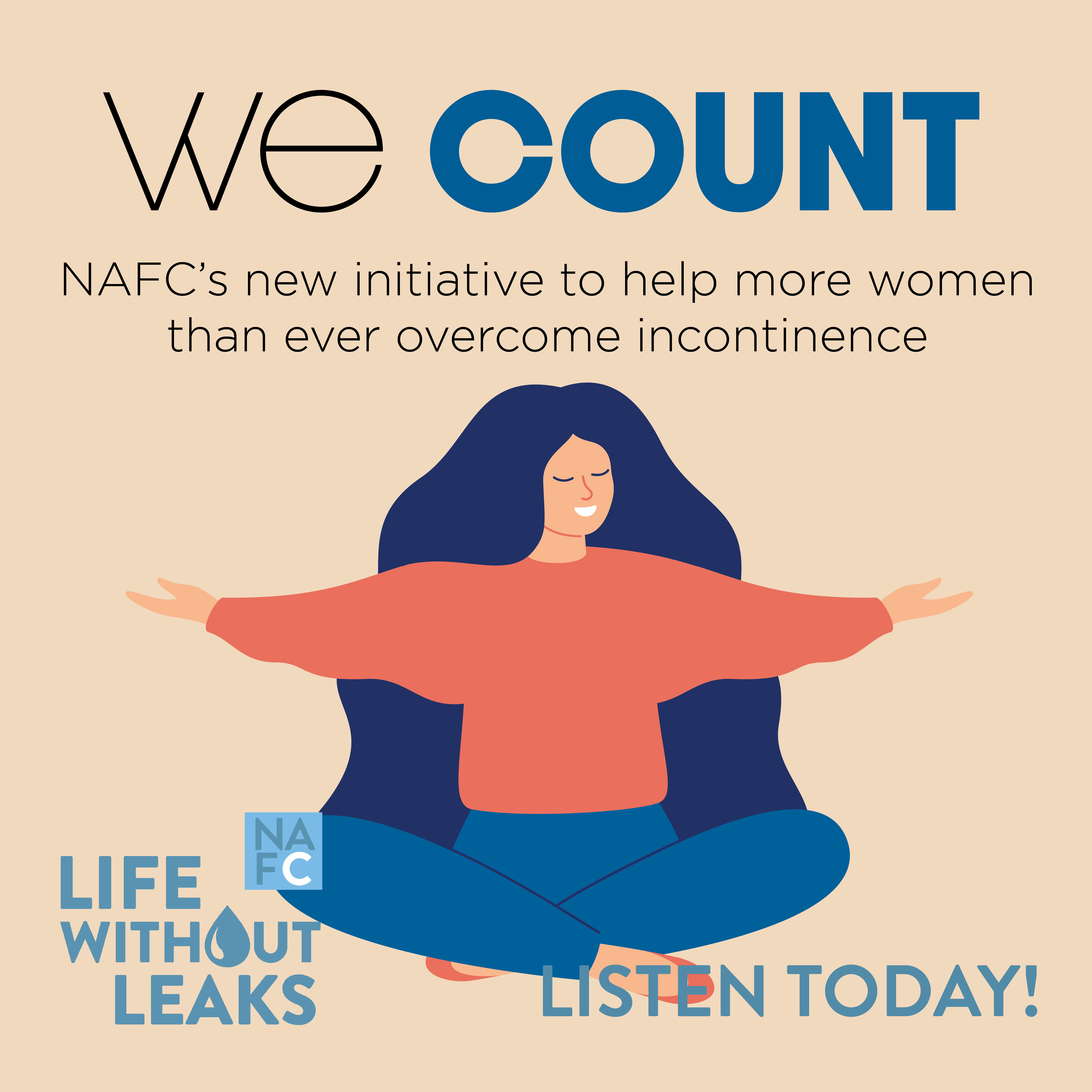
We Count! A new campaign to help women with incontinence
Overactive Bladder (OAB): Understanding Third-Line Therapies for Management
Get Treated Earlier Rather Than Later
How To Talk To Your Partner About Incontinence
Does Medicaid Cover Incontinence Supplies?
Debunking myths about incontinence and urology
What’s the difference between a UTI, a kidney infection and kidney stones?
The Diaper Need is Real, and You Can Help
Finding The Perfect Fit For Briefs
Can UTI’s cause Incontinence? And How They are Related as Women Age
7 Caregiving Tips For Your Loved One With Bladder Cancer
A Life Without Falls
« Previous
Page
1
Page
2
Page
3
Page
4
Page
5
Page
6
Page
7
Next »