

NAFC recently conducted a large scale survey of more than 1,100 patients living with incontinence to determine the extent it has on their lives. What we found was both surprising, and astounding.
We learned that incontinence affects people all the time, and in more ways than you might think. From the physical aspects, to emotional distress, and even financial burdens, incontinence is a condition that takes its toll in every way.
Read below to learn about some of our findings, and then watch our short video with the results.
Want access to the full report? Click here to download it.

Incontinence is a constant burden…
80% of respondents deal with incontinence either on an everyday basis, or 3 to 5 times per week.

…And It’s Life-Limiting
Incontinence symptoms reduce patients’ ability and willingness to participate in everyday activities.

The emotional toll can be debilitating…
90% of patients report feeling either isolated, depressed or hopeless as a result of their condition.
…Yet, the stigma is real.
27% of respondents have not spoken with their doctor about their incontinence symptoms, and 50% are uncomfortable talking with close friends or family members about it.
Too many go undiagnosed…
36% of people reporting leakage, frequent trips, and sudden urges were undiagnosed. 27% haven’t spoken with their doctors at all about their incontinence!
…And conditions worsen over time.
Seeing improvement in incontinence symptoms in the last 12 months is rare. Only 2% of patients have reported improvement in their symptoms in the last year.

Watch our short video to learn more about the survey results!
What Can I Do About Incontinence?
It may feel like a hopeless condition, but incontinence condition that you can treat. Learn more about incontinence, talk to people who understand, and find a specialist to help you put a treatment plan together. Click the links below to discover just a few of the resources on nafc.org. Then take your time, settle in, and start exploring the rest of the site. No matter what bladder or bowel condition you’re here for, chances are we have something for you.


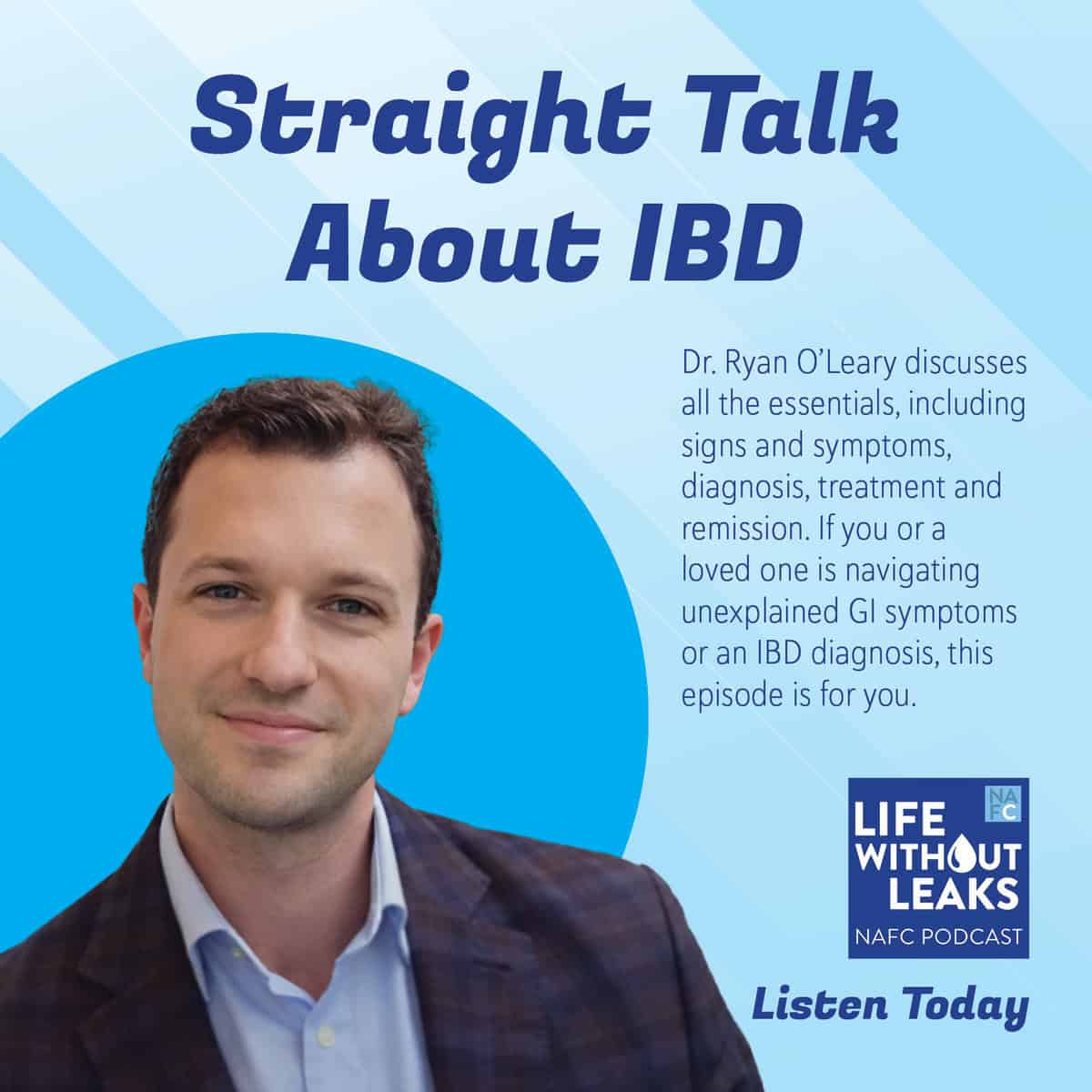
Understanding IBD: From Diagnosis to Remission… What You Need to Know – Copy
In this episode of Life Without Leaks, we’re joined by Dr. Ryan O’Leary, advanced fellow in inflammatory bowel disease, for a deep dive into inflammatory bowel disease (IBD).
Dr. O’Leary breaks down what sets Crohn’s disease and ulcerative colitis apart from other digestive conditions, explaining how IBD can affect patients at any age, from early childhood to later adulthood, and why diagnosis can sometimes be delayed. He explores the complexity of inflammation, the role of the immune system and how IBD can impact far more than the gut, including joints, skin, eyes and mental health.
The conversation also covers realistic treatment goals, the expanding range of medications available today, dietary considerations, when surgery becomes part of care and why personalized treatment plans are essential. Importantly, Dr. O’Leary addresses the emotional toll of living with a chronic condition and emphasizes the importance of persistence, advocacy and specialist care.
If you or a loved one is navigating unexplained GI symptoms or an IBD diagnosis, this episode offers clarity, reassurance and a hopeful look at what’s possible with modern care.
Learn more about a wide range of bowel conditions and get free resources here.
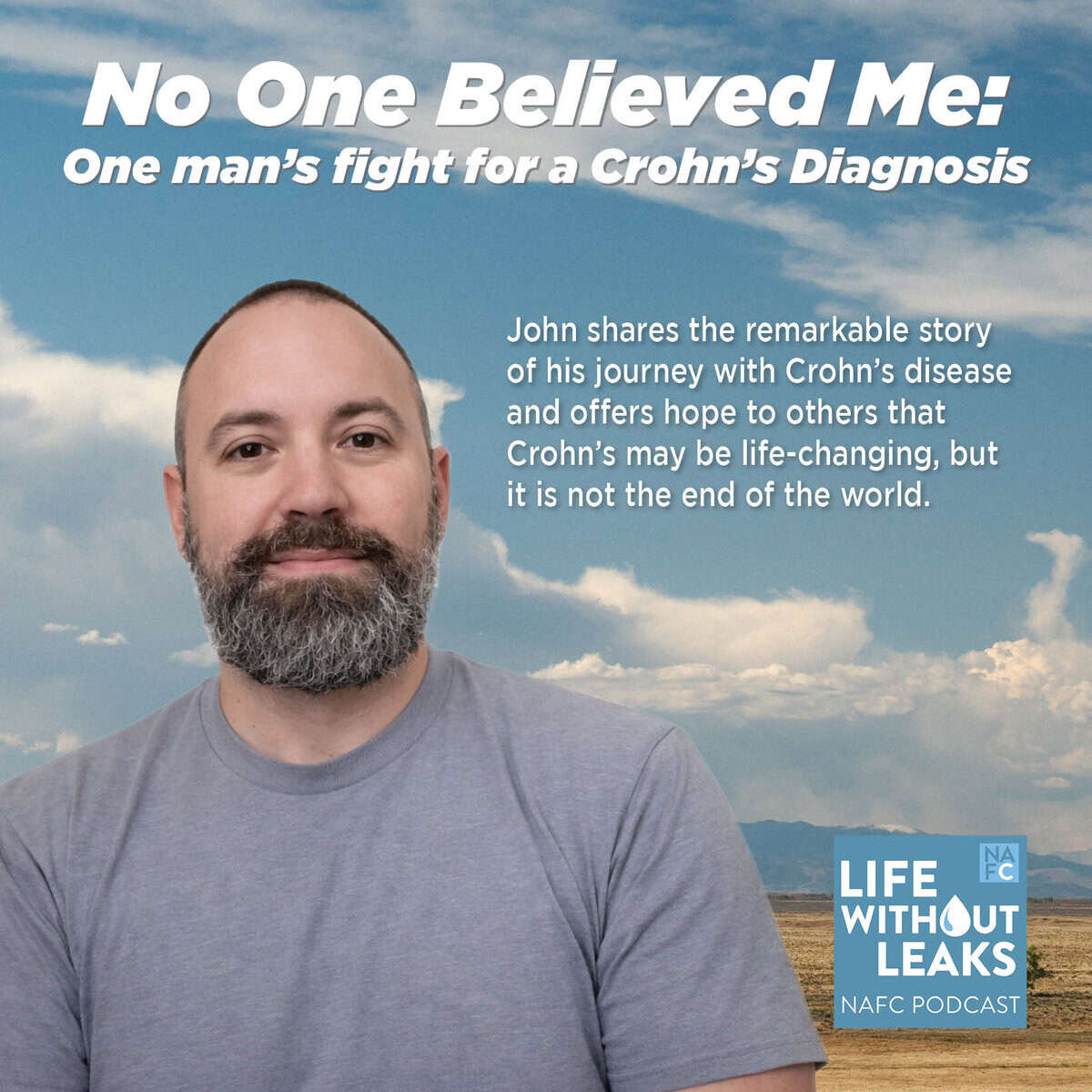
No One Believed Me: One Man’s Fight for a Crohn’s Diagnosis – and Recovery
In this gripping episode of Life Without Leaks, we speak with John, a law enforcement officer, father of two and competitive strongman, about his harrowing journey to a Crohn’s disease diagnosis.

From Pain ‘Like Lava’ to Remission: Living Fully with Crohn’s Disease
In this moving patient story, we speak with Gerri, a Crohn’s patient, about her journey from debilitating digestive symptoms to complete remission.
Gerri shares what it was like to live in New York City while navigating relentless urgency, severe abdominal pain she describes as “hot lava,” and the constant need to locate the nearest restroom. After months of worsening symptoms and a turning point moment with her mom, she sought specialist care, leading to bloodwork, testing, colonoscopy and, ultimately, a diagnosis.
Understanding IBD: From Diagnosis to Remission… What You Need to Know – Copy
In this episode of Life Without Leaks, we’re joined by Dr. Ryan O’Leary, advanced fellow in inflammatory bowel disease, for a deep dive into inflammatory bowel disease (IBD).
Dr. O’Leary breaks down what sets Crohn’s disease and ulcerative colitis apart from other digestive conditions, explaining how IBD can affect patients at any age, from early childhood to later adulthood, and why diagnosis can sometimes be delayed. He explores the complexity of inflammation, the role of the immune system and how IBD can impact far more than the gut, including joints, skin, eyes and mental health.
The conversation also covers realistic treatment goals, the expanding range of medications available today, dietary considerations, when surgery becomes part of care and why personalized treatment plans are essential. Importantly, Dr. O’Leary addresses the emotional toll of living with a chronic condition and emphasizes the importance of persistence, advocacy and specialist care.
If you or a loved one is navigating unexplained GI symptoms or an IBD diagnosis, this episode offers clarity, reassurance and a hopeful look at what’s possible with modern care.
Learn more about a wide range of bowel conditions and get free resources here.
