

Overactive Bladder (OAB): Understanding Third-Line Therapies for Management

Overactive Bladder (OAB) is a common condition that affects millions of people worldwide, leading to symptoms such as frequent and urgent urination, nocturia (waking up at night to urinate), and sometimes even urinary incontinence. While OAB can significantly impact a person’s quality of life, many individuals can manage symptoms effectively with a combination of lifestyle changes, medications, and behavioral therapies. However, for those whose symptoms remain resistant to first- and second-line treatments, third-line therapies may offer additional options for relief.
No One Needs to Know: 6 Tips for Wearing Protection in Public

For many people, the end of the year is a time to merrily look ahead to attending social gatherings or hitting the road to reunite with friends and family. But if you are self-conscious about wearing incontinence protection or feel anxious about finding a restroom when you need one, the thought of crowded parties and […]
Non-Invasive Approach To Treating Urinary Incontinence

Urinary incontinence is the unintentional loss of bladder control, resulting in the leakage of urine. It can range from occasional dribbling when coughing or sneezing to a sudden, strong urge to urinate that prevents reaching a restroom in time. Commonly affecting older adults, urinary incontinence can occur in both men and women due to various causes, including weakened pelvic muscles, medical conditions, or certain medications.
Ask The Doc: Insurance Coverage For Pelvic Floor Strengthener

Leva explains how to get insurance coverage for pelvic floor strengtheners
Bladder Health Reminders
Bladder Incontinence is a common condition that affects many individuals1. Understanding the facts and available treatments can empower you to take control of your health. As a board-certified urogynecologist who has treated thousands of women struggling with incontinence, here are some reminders for people struggling with bladder incontinence issues:
Getting the conversation going about bladder health…

Today’s guest is Aleece Fosnight, a board-certified physician assistant specializing in incontinence conditions and a medical advisor for Aeroflow Urology, and she’s dedicated her career to helping people overcome their reluctance to talk about their bladder conditions. She offers important insight and guidance so you can find your voice and develop a relationship with your provider that will allow you to get on the path towards a life without leaks.
Get Treated Earlier Rather Than Later

Many people dealing with urinary incontinence adjust their routines, believing it’s just part of life or that it will improve on its own. Pads, liners, and other products have become normalized, making it easy to delay seeking real solutions. But relying on these quick fixes can increase the problem over time.
Finding Relief: My Journey With Bladder Leaks
Today, I’m sharing something personal in the hopes that it might reach someone out there who feels the way I did—alone, embarrassed, and unsure where to turn. This is the story of my journey with Stress Urinary Incontinence (SUI) and how it unexpectedly brought me closer to my mom.
How Pat overcame her leaks – One patient’s success story

Too many patients suffering from leaks think that they’re sentenced to struggle with their condition for the rest of their lives. That couldn’t be further from the truth. Today’s guest is Pat, and she shares her story about how he finally had enough with trying to manage her problems and found a solution that made an incredible, immediate difference for her…
“Do I tell somebody before a first date that I pee myself?” One patient’s surprising journey to drier days.

There’s a misconception out there that incontinence is usually something that happens as you get older. Hannah is here to tell us that it’s something that can happen at any age. She shares her story about how she developed severe overactive bladder after a surgery in her early 30s, how it nearly derailed her career, and how she finally found relief after she had nearly given up hope.
From Zero Control to Total Control – How One Patient Overcame Bowel Incontinence
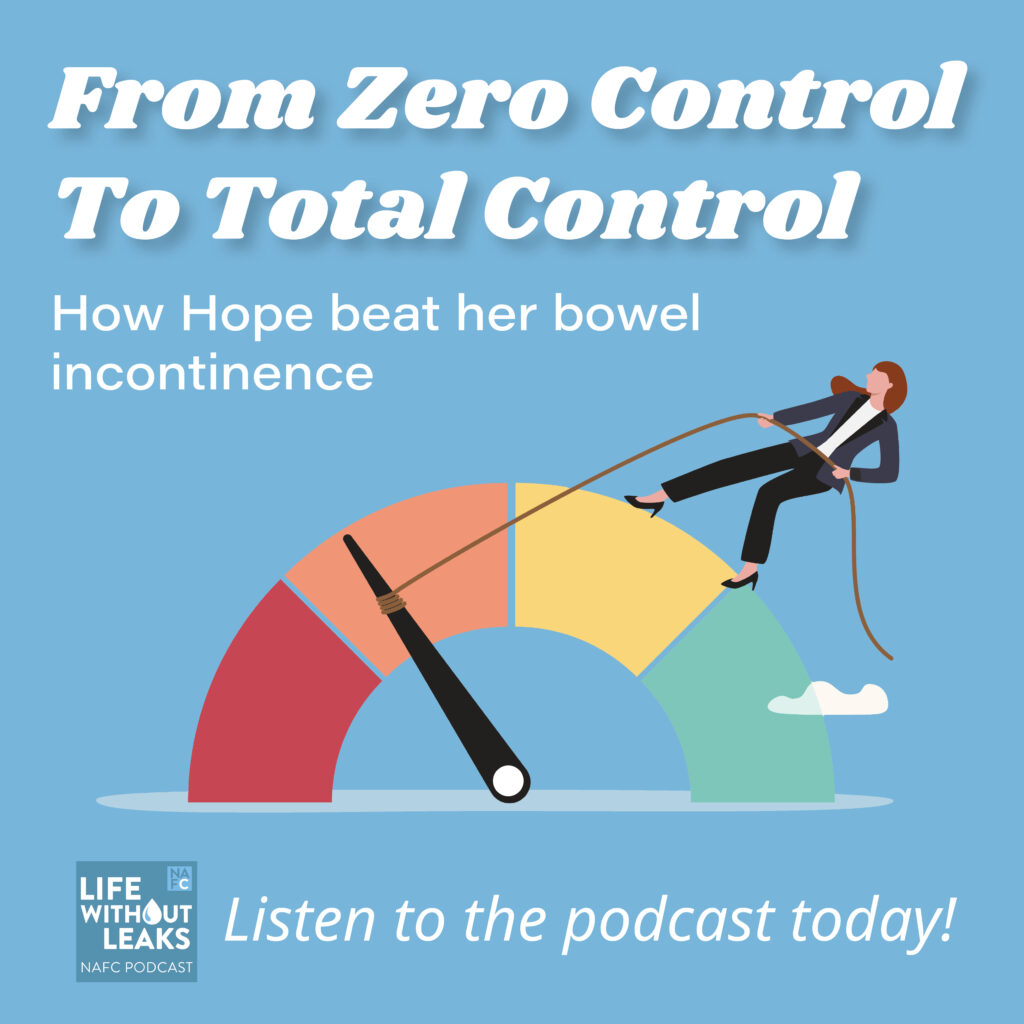
Imagine being a 35-year-old woman who suddenly develops bowel and bladder incontinence following childbirth – incontinence so difficult to treat that even a major surgery fails to deliver lasting, meaningful relief. That’s the situation today’s guest, Hope, found herself in – that is, until she discovered a simple procedure that changed her life completely, giving her back control after 17 years of struggling. Listen now to find out how she overcame her incontinence…
How To Talk To Your Partner About Incontinence

If your partner is experiencing incontinence, you might suddenly feel like you are in uncharted territory. Incontinence is both a physical condition and a lifestyle change.
Intellectually, we understand that incontinence is a medical condition outside of our control. Emotionally, however, it’s a different story. Losing the ability to fully control our bladder and bowels – a skill gained in early childhood – can bring with it intense feelings of shame, embarrassment, anger and denial. For those in a partnership, incontinence also brings fear of loss of sexual attraction, and sometimes fear of diminished affection.
