


Dr. Deng is assistant professor in the Department of Urology at the University of California at San Francisco. Her current research involves examining the molecular basis and hormonal effects on incontinence. Widely published in peer-review journals and major textbooks, Dr. Deng is currently pursuing a graduate degree in global health, focusing on women’s and urologic health of the developing world.


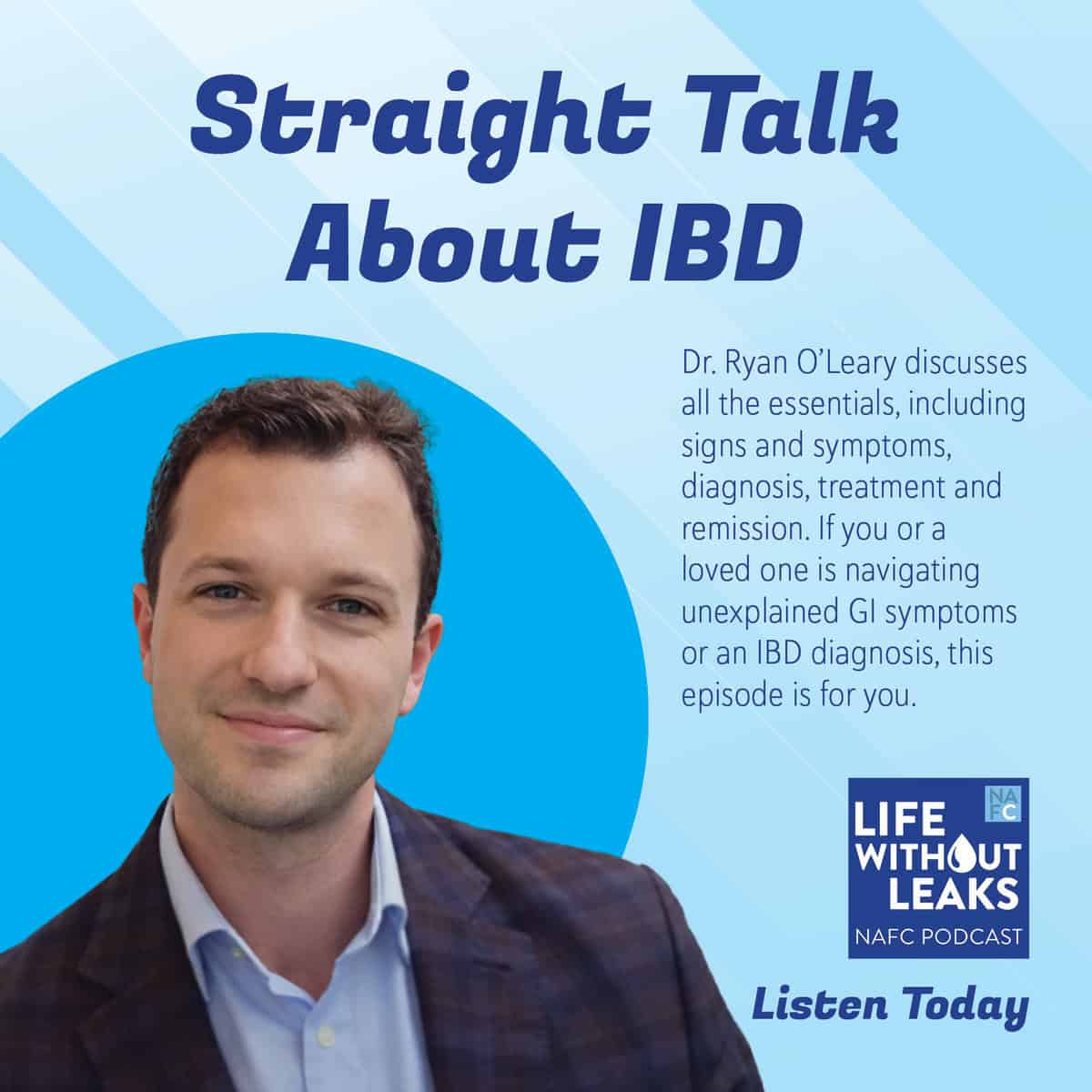
Understanding IBD: From Diagnosis to Remission… What You Need to Know – Copy
In this episode of Life Without Leaks, we’re joined by Dr. Ryan O’Leary, advanced fellow in inflammatory bowel disease, for a deep dive into inflammatory bowel disease (IBD).
Dr. O’Leary breaks down what sets Crohn’s disease and ulcerative colitis apart from other digestive conditions, explaining how IBD can affect patients at any age, from early childhood to later adulthood, and why diagnosis can sometimes be delayed. He explores the complexity of inflammation, the role of the immune system and how IBD can impact far more than the gut, including joints, skin, eyes and mental health.
The conversation also covers realistic treatment goals, the expanding range of medications available today, dietary considerations, when surgery becomes part of care and why personalized treatment plans are essential. Importantly, Dr. O’Leary addresses the emotional toll of living with a chronic condition and emphasizes the importance of persistence, advocacy and specialist care.
If you or a loved one is navigating unexplained GI symptoms or an IBD diagnosis, this episode offers clarity, reassurance and a hopeful look at what’s possible with modern care.
Learn more about a wide range of bowel conditions and get free resources here.
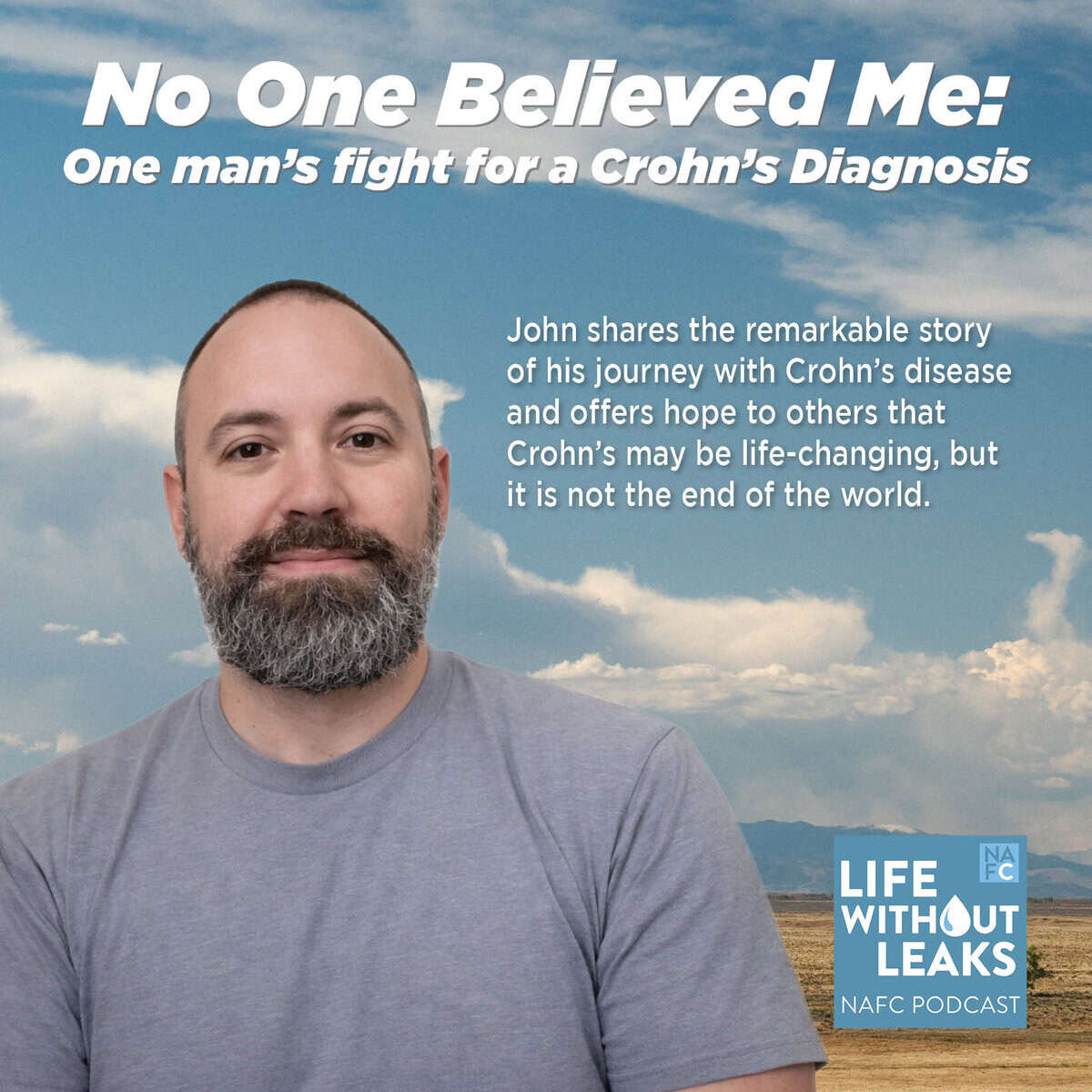
No One Believed Me: One Man’s Fight for a Crohn’s Diagnosis – and Recovery
In this gripping episode of Life Without Leaks, we speak with John, a law enforcement officer, father of two and competitive strongman, about his harrowing journey to a Crohn’s disease diagnosis.
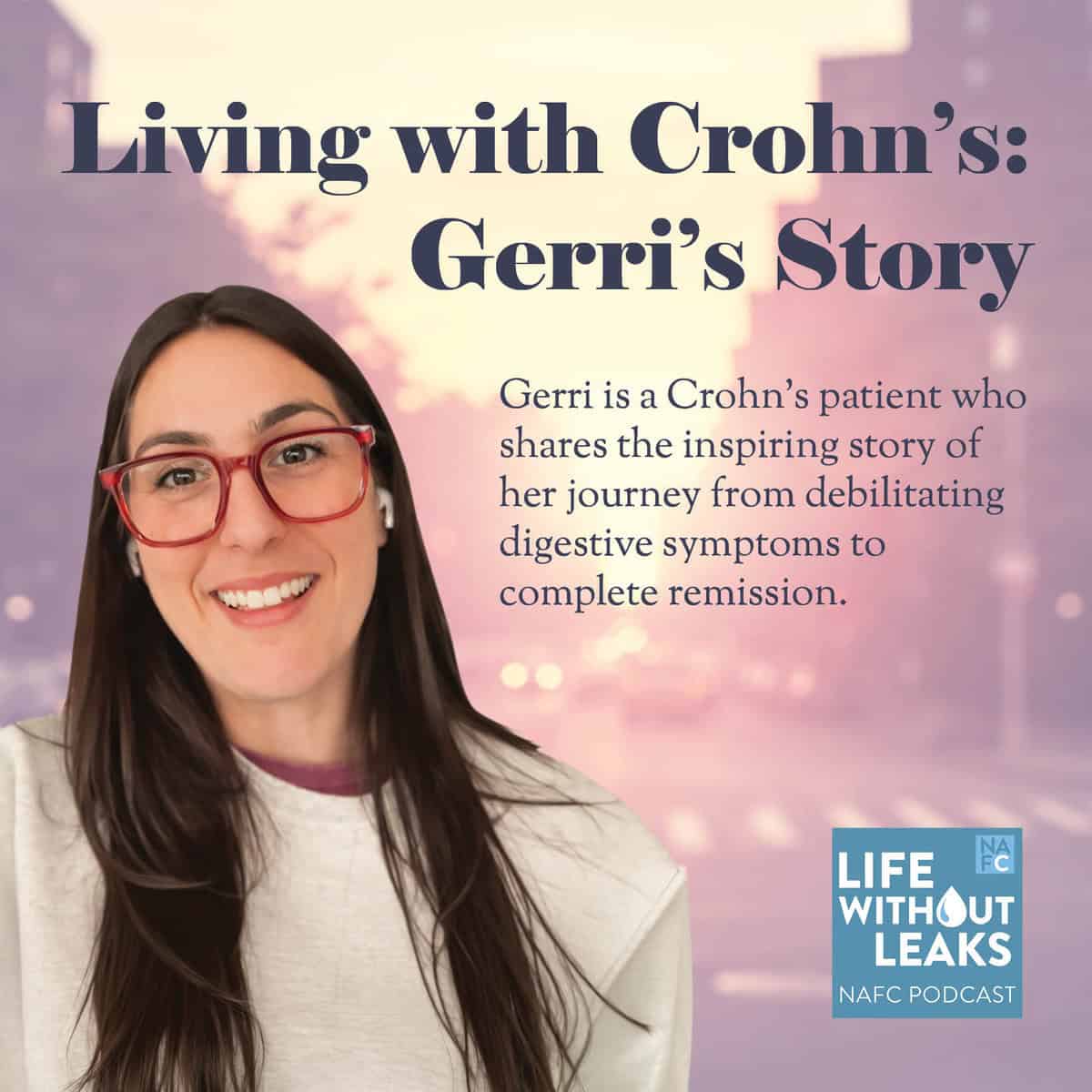
From Pain ‘Like Lava’ to Remission: Living Fully with Crohn’s Disease
In this moving patient story, we speak with Gerri, a Crohn’s patient, about her journey from debilitating digestive symptoms to complete remission.
Gerri shares what it was like to live in New York City while navigating relentless urgency, severe abdominal pain she describes as “hot lava,” and the constant need to locate the nearest restroom. After months of worsening symptoms and a turning point moment with her mom, she sought specialist care, leading to bloodwork, testing, colonoscopy and, ultimately, a diagnosis.
Understanding IBD: From Diagnosis to Remission… What You Need to Know – Copy
In this episode of Life Without Leaks, we’re joined by Dr. Ryan O’Leary, advanced fellow in inflammatory bowel disease, for a deep dive into inflammatory bowel disease (IBD).
Dr. O’Leary breaks down what sets Crohn’s disease and ulcerative colitis apart from other digestive conditions, explaining how IBD can affect patients at any age, from early childhood to later adulthood, and why diagnosis can sometimes be delayed. He explores the complexity of inflammation, the role of the immune system and how IBD can impact far more than the gut, including joints, skin, eyes and mental health.
The conversation also covers realistic treatment goals, the expanding range of medications available today, dietary considerations, when surgery becomes part of care and why personalized treatment plans are essential. Importantly, Dr. O’Leary addresses the emotional toll of living with a chronic condition and emphasizes the importance of persistence, advocacy and specialist care.
If you or a loved one is navigating unexplained GI symptoms or an IBD diagnosis, this episode offers clarity, reassurance and a hopeful look at what’s possible with modern care.
Learn more about a wide range of bowel conditions and get free resources here.
