
Edit Content
Search
[give_form id="19690"]

Prostate Health

Talking To doctor Blog article

Speaking Up About Incontinence

For many people living with bladder leaks, the hardest part isn’t the symptoms themselves.
It’s deciding to talk about them.
Bladder leaks can feel too small to mention, too embarrassing to explain, or not “serious enough” to justify a doctor’s visit. Many people quietly manage symptoms for years—adjusting their routines, limiting activities, and hoping things don’t get worse.
If this sounds familiar, you’re not alone. And you’re not wrong for feeling this way.

NAFCIncontinenceByNumbers2026

Incontinence by the Numbers

How common it is, why it’s increasing, and what an aging population means for patients and families
Incontinence is often treated as something people should keep private — but the reality is that it’s extremely common, and it affects millions of Americans every day.
As our population ages, especially with Baby Boomers entering older adulthood, more people are living with bladder and bowel control problems. That means more patients seeking answers, more caregivers providing support, and greater impact on families and the healthcare system.
Understanding the numbers helps reduce stigma — and reminds people that they are not alone and help is available.

Podcast Webpage Image - Dr Eric Rovner - Prostate

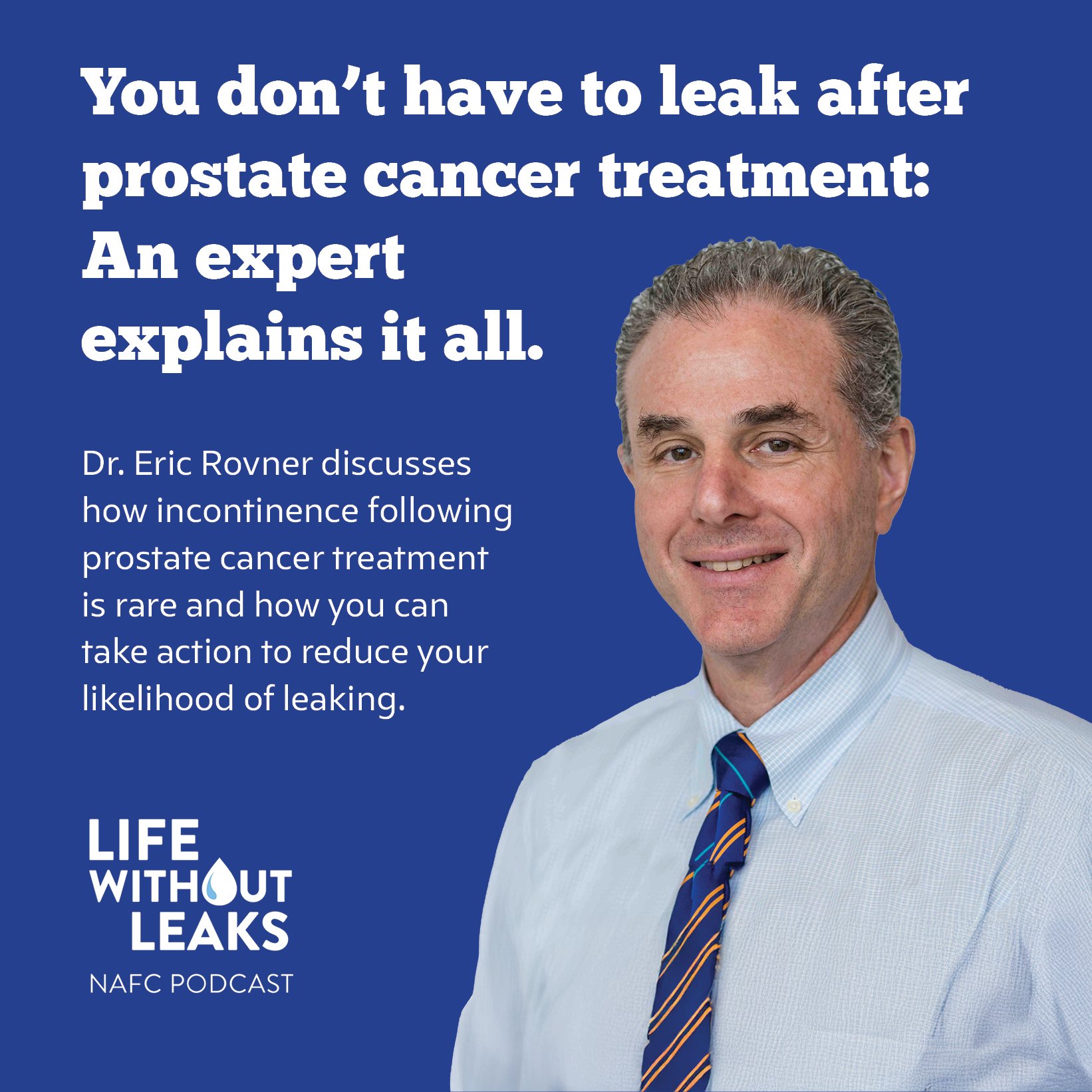
You DON’T have to leak after prostate cancer treatment

In this episode, Dr. Eric Rovner addresses a common fear that men have about prostate cancer treatment: incontinence. Drawing on his clinical experience, Dr. Rovner explains that treatment does not automatically mean a lifetime of bladder leakage. In fact, only a small percentage of patients experience long-lasting symptoms. He discusses why temporary changes in bladder control can occur, what factors influence recovery and – most importantly – what men can do before and after treatment to reduce their risk and regain control. Our conversation offers clarity, reassurance and actionable guidance for men navigating prostate cancer care.

Podcast Webpage Image - Dave Lehman - Prostate

Managing Incontinence After Radiation Treatment for Prostate Cancer

With all there is to think about when getting treated for prostate cancer, the idea of incontinence might not be high on your list. But if you’re undergoing radiation or surgery, there’s a good chance it will be. Incontinence is remarkably common for men following these treatments, but there are things you can do to manage your symptoms and return to more normal function. Today’s guest is a patient who’s gone through it all firsthand, and he’s here to share what he’s learned to help make your own care journey a little easier.

man talking to his doctor.

Taking Charge: A Man’s Guide to Staying on Top of Health Over 40

Turning 40 can feel like hitting a checkpoint in life. You’ve likely weathered a few storms, gained some wisdom, and maybe even started noticing a few new aches and pains. It’s the perfect time to take charge, prioritize your well-being, and set yourself up for decades of energy, strength, and longevity.
Men often put their health on the back burner—blame it on busy schedules, reluctance to go to the doctor, or simply not knowing where to start. But staying healthy after 40 doesn’t have to be complicated. It just takes a proactive mindset and a little bit of structure.

Men's Health Podcast.

Something all men eventually face…

Mike Leventhal is straight up when he explains that there are three things all men eventually face: death, taxes and an enlarged prostate. He should know – as the Executive Director for the Tennessee affiliate of Men’s Health Network, Mike has spent his career helping men improve their physical and mental well being. Today he talks with us about caring for your prostate as you get older and, for those men who have had their prostates removed, how to manage the incontinence that’s usually associated with the procedure.

Know The Symptoms Of Prostate Cancer

Common Prostate Cancer Symptoms

The Most Common Symptoms of Prostate Cancer Prostate cancer is the second most commonly diagnosed form of cancer among men in the United States. Early

Get A Free EBook: 21 Ways To Manage Bladder Leaks!

Join Our Mailing List and Get a FREE EBook: 21 Ways To Manage Bladder Leaks!