[give_form id="19690"]

How One Young Woman Turned Incontinence Into Innovation
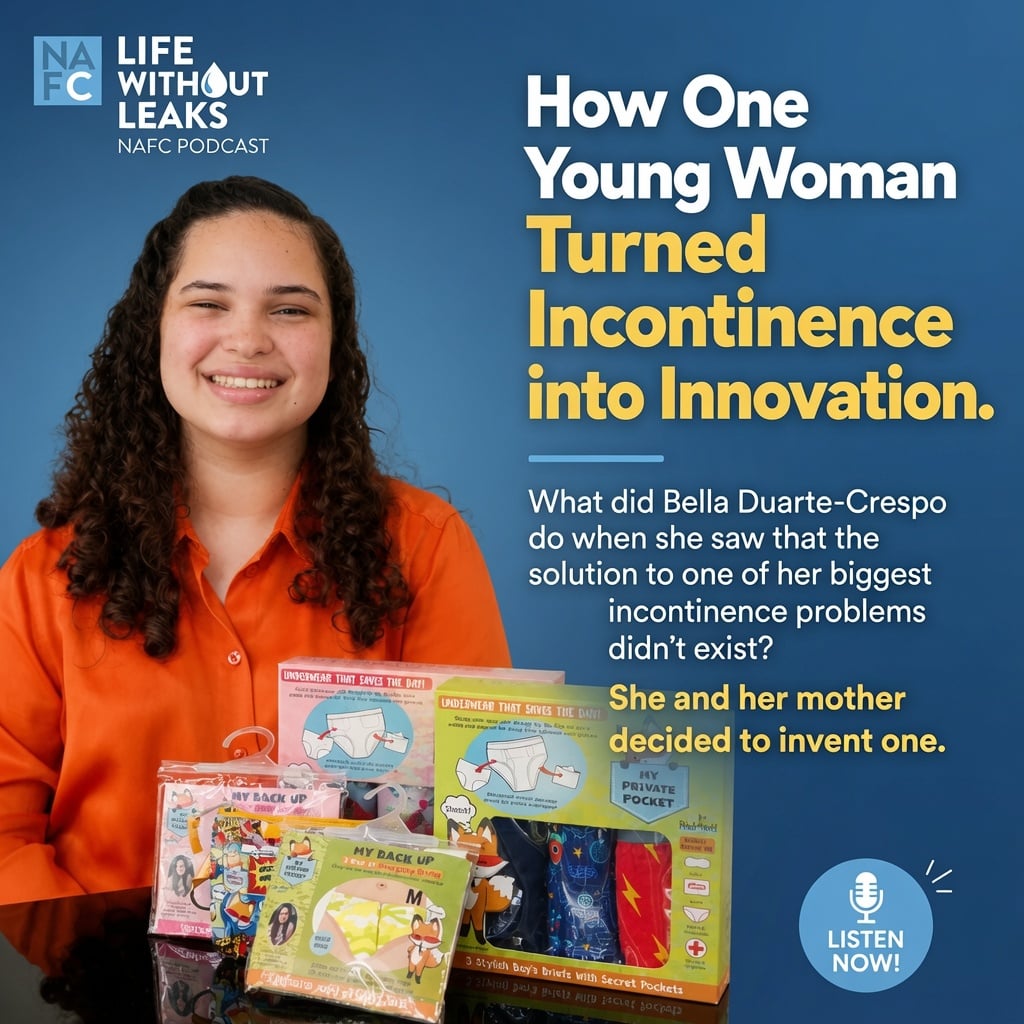
A smiling young woman sits with a display of incontinence products. Text describes how she and her mother, both passionate health advocates, invented solutions after noticing missing options. The image promotes the Life Without Leaks NAFC podcast.

Growing up with spina bifida meant Bella Duarte-Crespo faced challenges most children never have to think about, including managing bladder and bowel incontinence at school. When she and her mother couldn’t find a product that met her needs, they decided to create one themselves.

In this inspiring episode, Bella shares how a personal struggle became the foundation for a fast-growing business, a passion for design and a lifelong commitment to disability advocacy. Along the way, she discusses living with spina bifida, overcoming embarrassment, building confidence and why being prepared has become her key to living life without leaks.

Bladder & Urological Cancer Awareness: What You Need to Know

A person wearing a peach top and beige skirt holds a teal awareness ribbon pinned to their waist, standing against a light green background—highlighting the importance of gut health and raising awareness about how to improve gut health.

When it comes to cancer awareness, conditions such as breast, lung, and colorectal cancer often receive the most attention. Yet cancers of the urinary tract and male reproductive system—collectively known as urological or genitourinary cancers—affect hundreds of thousands of Americans each year.

Upcoming webinar titled Managing IBD While Becoming Independent, presented by Dr. Marla Dubinsky on October 27, 2026, at 7:00 p.m. ET, hosted by the National Association for Continence and supported by Johnson & Johnson.

Heading to college, starting a job, or taking more responsibility for your health? Join Dr. Marla Dubinsky for a free webinar on managing Crohn’s disease or ulcerative colitis while becoming more independent. Learn tips for managing medications and appointments, navigating school and social life, and speaking up about your needs. Young adults and the parents or caregivers supporting them are welcome.